
MENU
  • About us
  • Field reports
  • Blog
  • Wildlife Expeditions
  • Contact
  • 日本語
WildHerping
  • About us
  • Wildlife Expeditions
  • Field report
  • Blog
  • Contact
  • 日本語
  1. Home
  2. Field reports
  3. Herping
  4. Encountering a Green Anaconda in the Ecuadorian Amazon|Herping Ecuador

Encountering a Green Anaconda in the Ecuadorian Amazon|Herping Ecuador

2025 3/16
Herping
2025/3/16
Wataru HIMENO
The Green Anaconda (Scientific Name:Eunectes murinus )

The Green Anaconda (Scientific Name:Eunectes murinus ) is known as the largest snake in the world. While it may be shorter than the Reticulated Python, it is undoubtedly one of the most famous snakes globally, thanks in part to its portrayal in popular films.

However, encountering an anaconda in the Amazon rainforest is not easy. I hope this article serves as a helpful guide for those who plan to search for one.


Feature ① Preference for Water Habitats

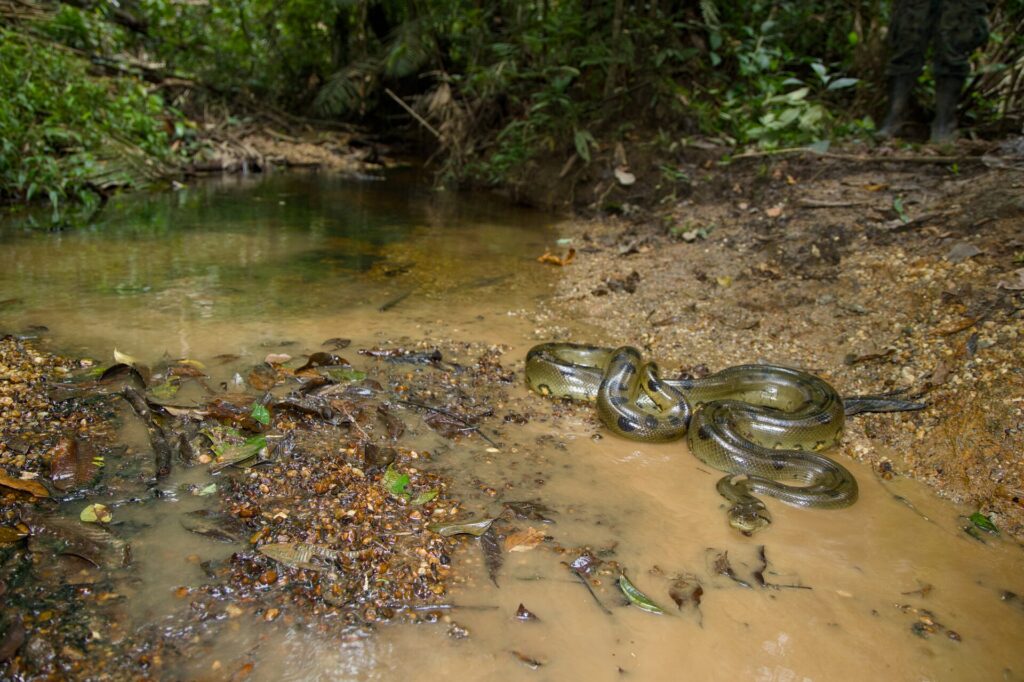
Due to its massive body, the anaconda does not favor movement on land. In the wild, it often moves by swimming through rivers, swamps, and even small pools of water.

The Amazon consists of diverse environments. While riverbanks are obvious locations, anacondas may also inhabit small water pools hidden within densely forested jungle areas.
Encountering a Beautiful Wild Anaconda in the Amazon Jungle Will Be a Once-in-a-Lifetime Experience

Feature ② Ambush Hunting in Mammal-Rich Areas

Larger anacondas tend to prefer mammals as their primary food source. As a result, they often ambush prey in areas frequented by mammals.

The individual I observed was lurking just behind a clay lick, a site where mineral-rich soil is exposed. It is likely that this anaconda was waiting for mammals that visit the clay lick to consume minerals.
All the individuals I encountered were found near water.

Feature ③ Camouflage and Ambush Strategies

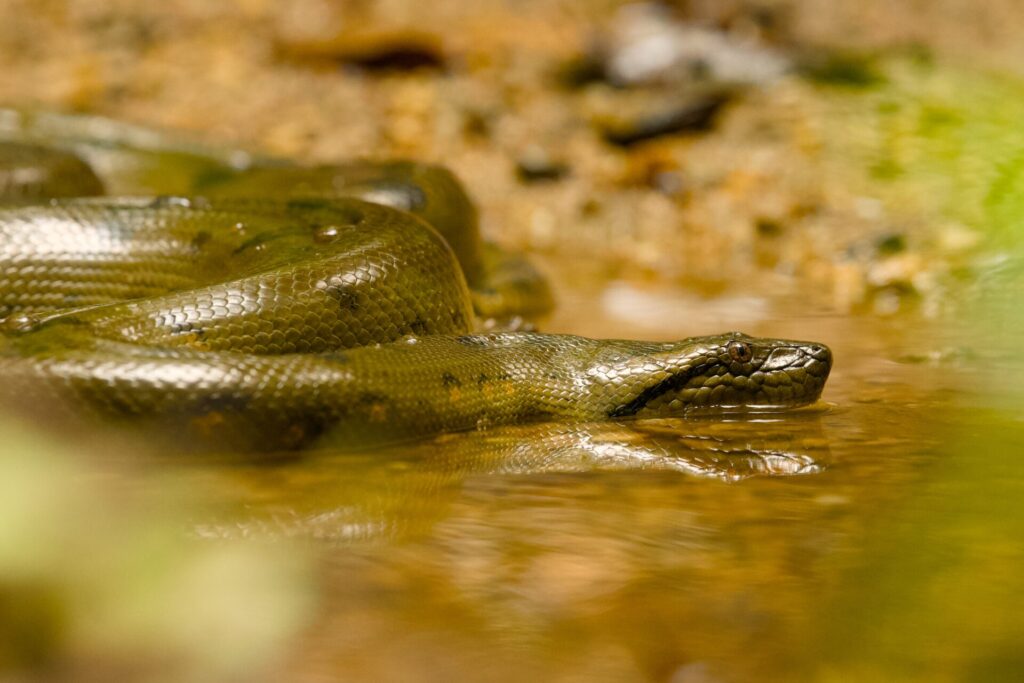
The anaconda’s body features an irregular pattern of round spots. While these markings stand out beautifully on land, they provide excellent camouflage on the leaf-covered riverbed.

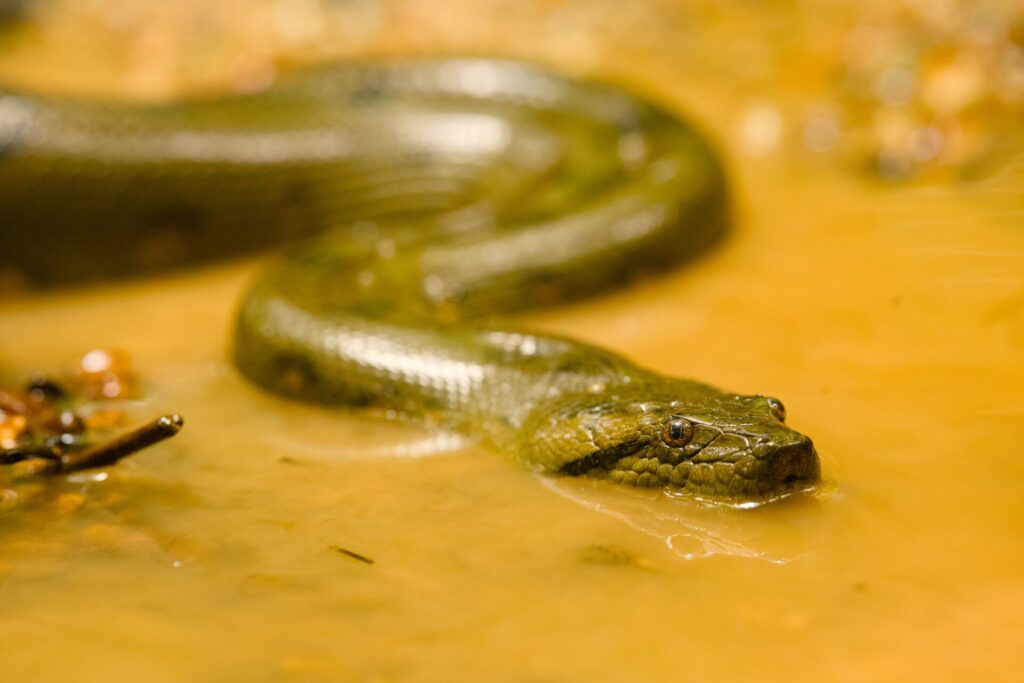
Additionally, its eyes and nostrils are positioned on the upper part of its head, allowing it to keep only these features above water while waiting for prey. Such adaptations increase the chances of encountering an anaconda in these environments.
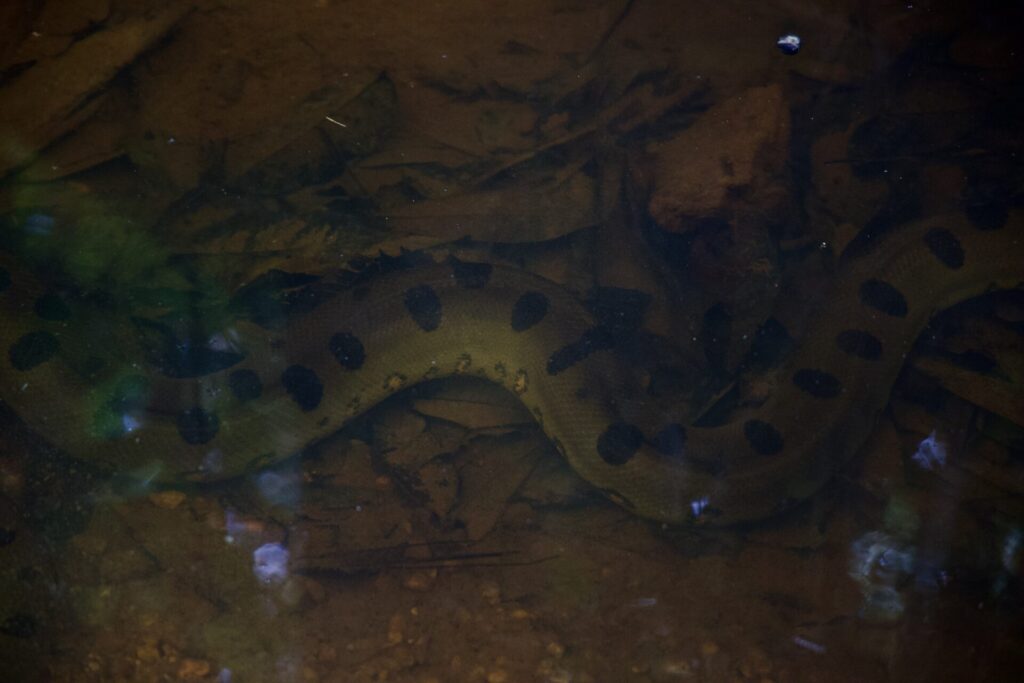
An anaconda showcasing its remarkable camouflage.

Conclusion

Observing a wild anaconda is by no means an easy task. However, with proper preparation, the likelihood of an encounter can be significantly increased.

A close encounter with a magnificent anaconda in the Amazon jungle is a once-in-a-lifetime experience. If you ever visit the Amazon, I encourage you to search for one!
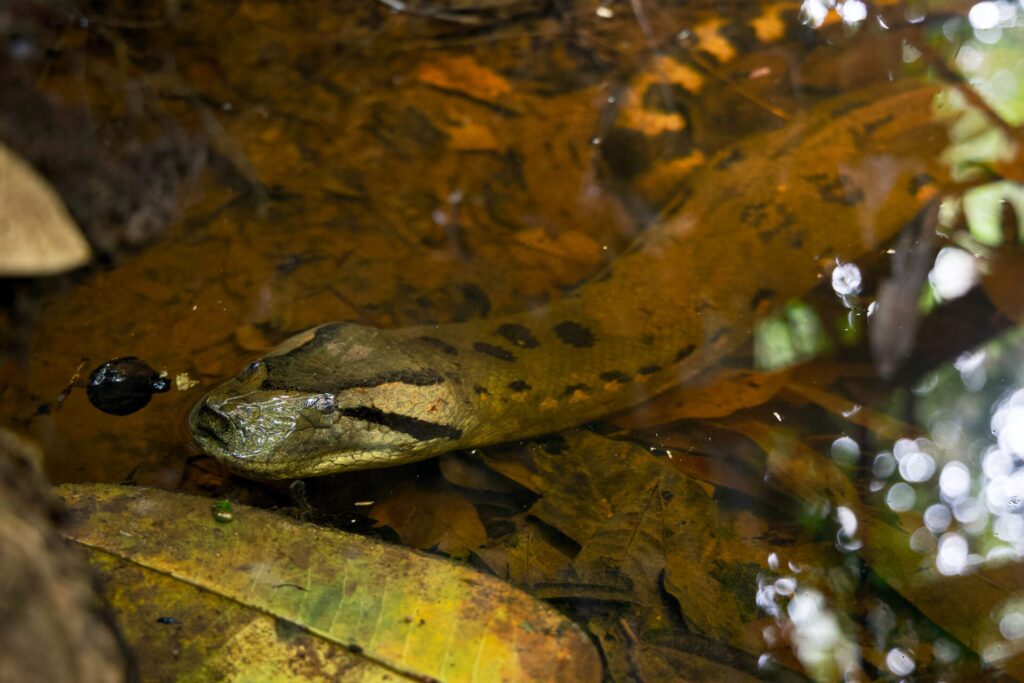
A giant anaconda lying in ambush for its prey.
Herping
  • Discovering Manakins in Panama|A Manakins Paradise
  • The Most Feared Creature in the Amazon Jungle by Indigenous People

関連記事

  • Responsible Herping in Japan: How to Enjoy Wildlife Without Harming It
  • Giant Salamander Tour Japan | See the Giant Salamanders in Kyoto
  • Best Places to See Japanese Giant Salamanders in Kyoto (Local Guide)
  • The Ultimate Guide to Seeing Japanese Giant Salamanders in the Wild (2026)
  • Things to Do in Kyoto at Night: A Hidden Wildlife Experience Most Tourists Never Discover
  • Kyoto Giant Salamander Tour: Discover Japan’s Largest Amphibian in the Wild
  • Okinawa and Amami Herping | Wildlife of the Ryukyu Islands, Japan
  • Habu Morphs of the Ryukyu Islands | Okinawa Herping Japan
Recent Posts
  • Responsible Herping in Japan: How to Enjoy Wildlife Without Harming It
  • Giant Salamander Tour Japan | See the Giant Salamanders in Kyoto
  • Best Places to See Japanese Giant Salamanders in Kyoto (Local Guide)
  • The Ultimate Guide to Seeing Japanese Giant Salamanders in the Wild (2026)
  • Things to Do in Kyoto at Night: A Hidden Wildlife Experience Most Tourists Never Discover
Categories
  • Birding
  • Blog
  • Bugs
  • Expeditions
  • Field reports
  • Herping
  • Mammal
  • Others

Contact

Privacypolicy

facebookアイコンXアイコンinstagramアイコン

© WildHerping.All rights reserved.