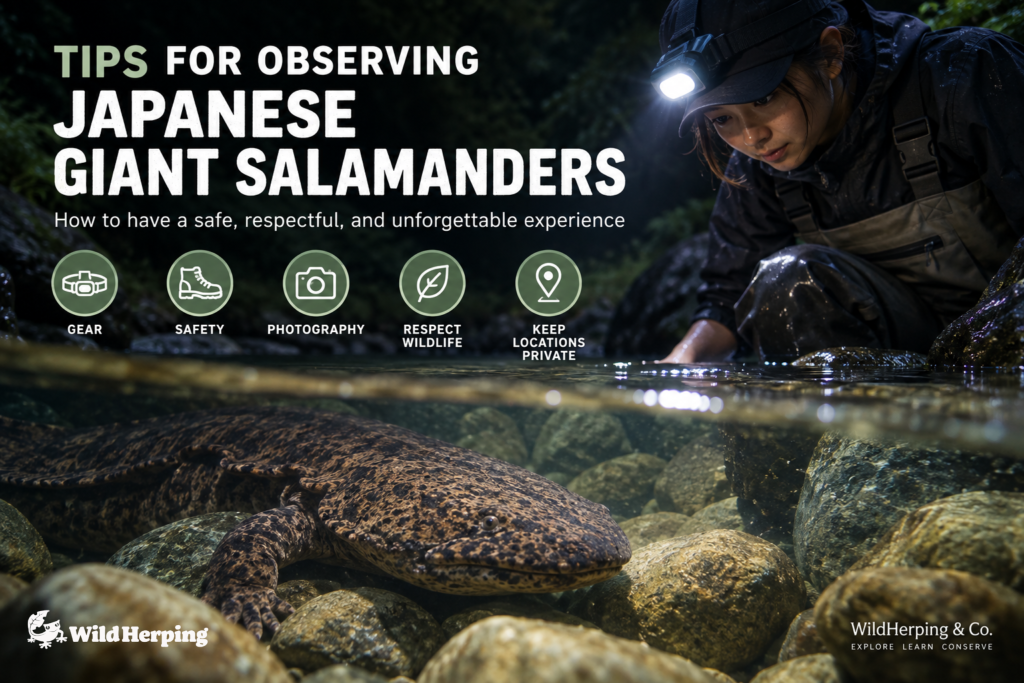
For everyone joining our Giant Salamander Tour:
To help you have a safe and enjoyable experience, we have put together some important tips based on our experience in the field.
When observing wildlife, even small actions can affect the animals and how long we are able to observe them.
Please take a few minutes to read this guide before joining the tour.
1. Walk Safely and Keep Your Hands Free
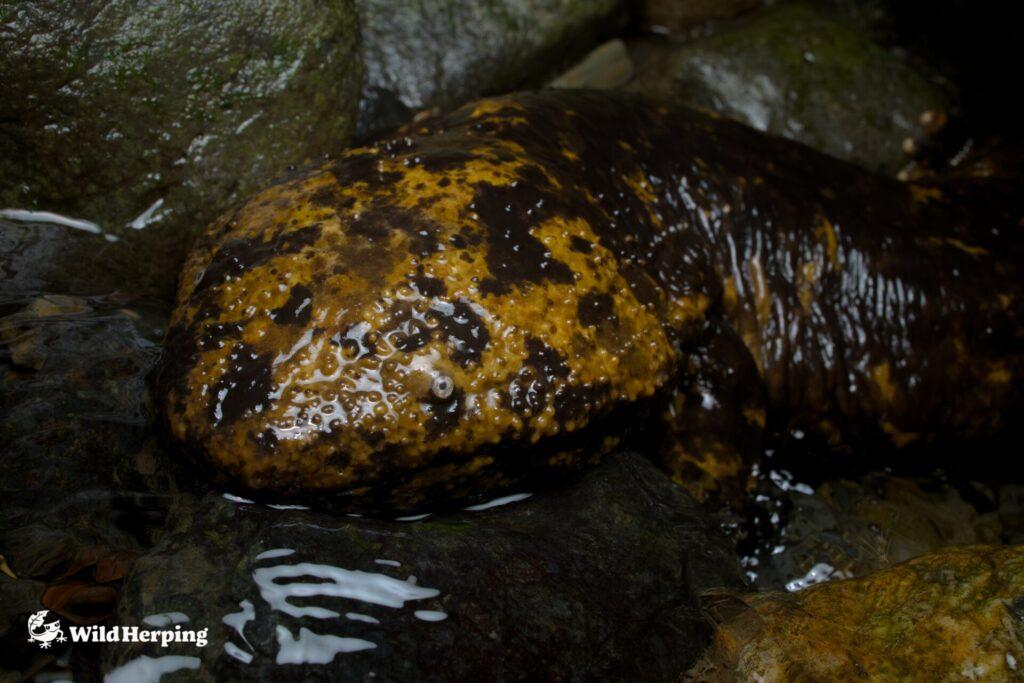
Japanese Giant Salamanders live in rivers with large rocks, flowing water, and uneven terrain.
During the tour, we may need to walk through areas that can be unstable for people. Wet rocks can be slippery, and at night it can be difficult to see where you are stepping.
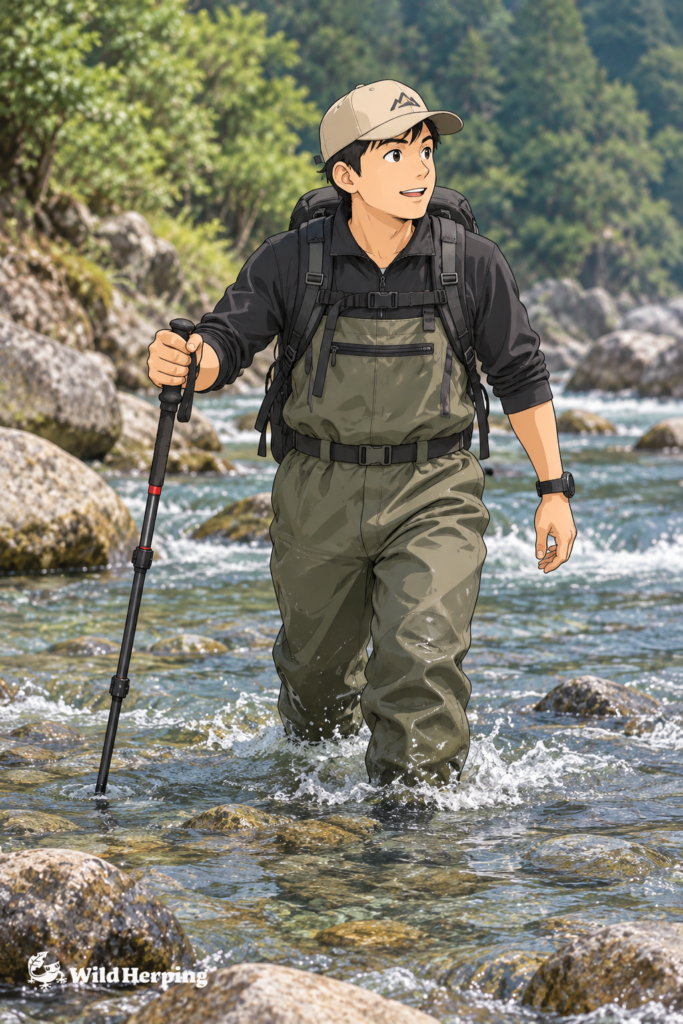
For your safety, please keep your hands free whenever possible while walking.
We recommend keeping cameras and phones in a backpack or secured with a strap while moving, and taking them out once we reach a safe place to stop.
A trekking pole can also be helpful for maintaining your balance while walking in the river. Trekking poles are available to borrow free of charge.
2. Bring a Good-Quality Headlamp
During our night tours, we may spend 3–4 hours in the field after dark.
Many of the places we visit have no streetlights at all. If your light stops working, the area can become completely dark and potentially dangerous.
A weak headlamp may also make it difficult to see rocks, holes, and changes in the riverbed, increasing the risk of slipping or falling.
As a general guideline, we recommend a headlamp with:
• Brightness: 700 lumens or more
• Battery life: At least 5 hours
Please make sure your headlamp is fully charged before the tour. If possible, bringing a spare battery or backup light is also recommended.
We also have headlamps available for rent. If you would like to rent one, please let us know in advance.
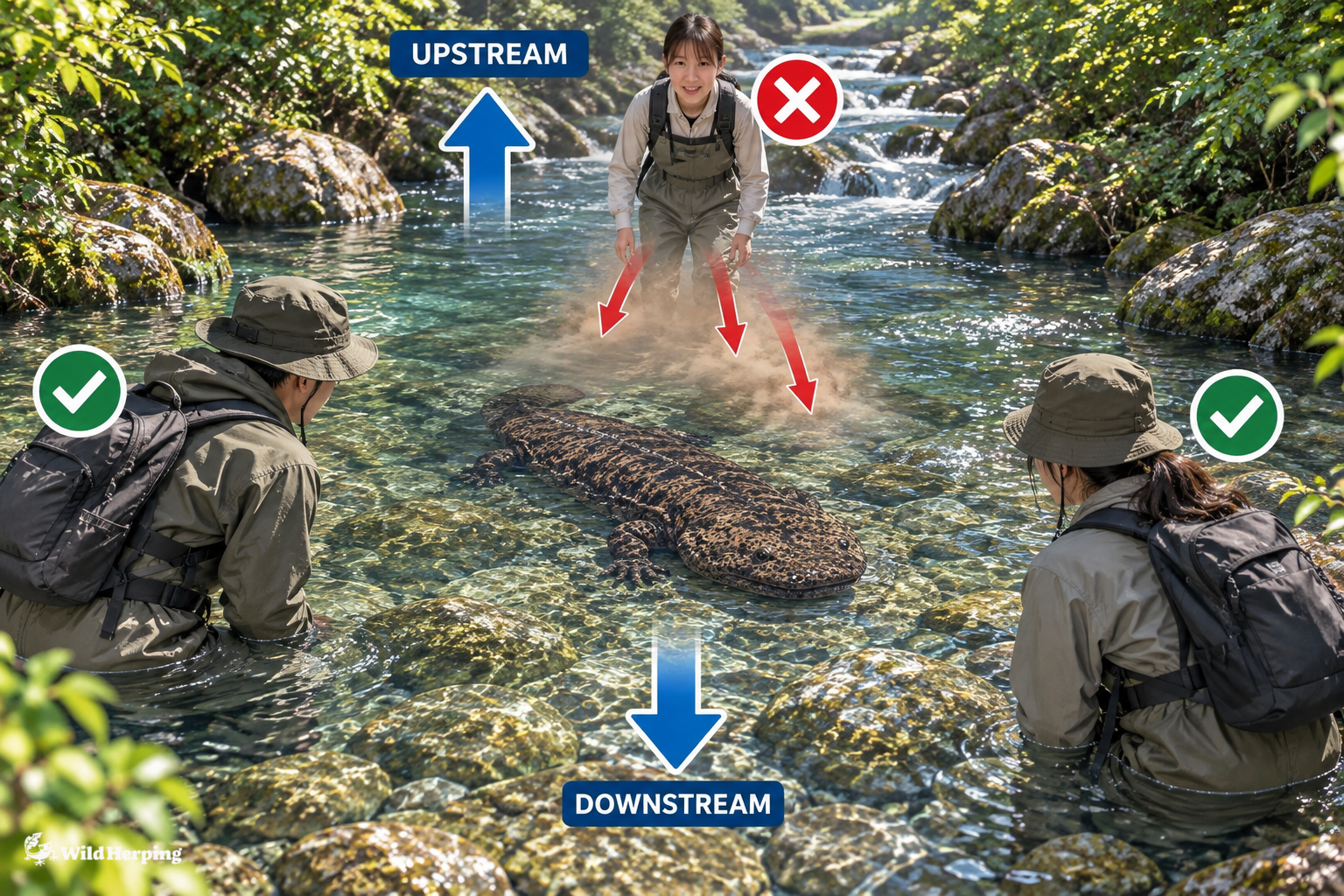
3. Do Not Move Upstream of the Salamander
When we find a Giant Salamander, please do not move upstream of the animal.
Giant salamanders are sometimes found in shallow sections of flowing water.
If a person walks upstream of the salamander, they may disturb the water flow or cause sediment to move downstream toward the animal. This can cause the salamander to become alert and move away.
Giant salamanders are powerful swimmers and can use the current to move quickly downstream. Once they start moving, they can disappear from view surprisingly fast.
When we find one, please follow your guide’s instructions and observe it quietly from downstream or from the side whenever possible.
4. Do Not Touch the Giant Salamanders
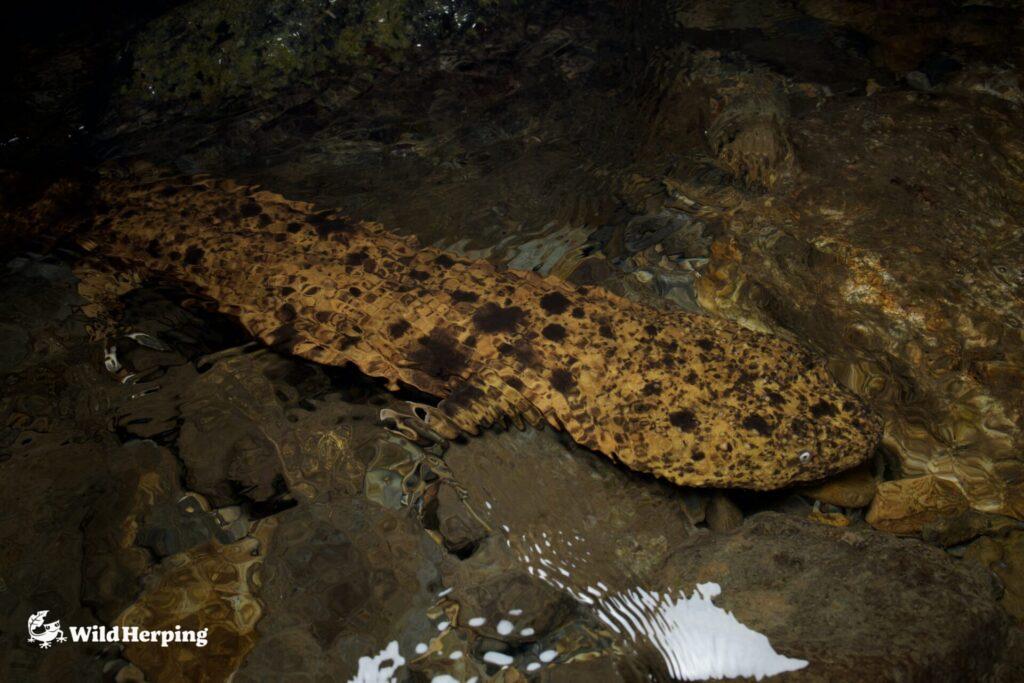
The Japanese Giant Salamander is designated as a Special Natural Monument of Japan and is legally protected.
They must not be captured, handled, moved, or intentionally disturbed without the appropriate authorization.
On our tours, we do not catch or reposition giant salamanders for photographs.
Our goal is to observe them where we find them, behaving naturally in their habitat.
Please follow your guide’s instructions and maintain an appropriate distance from the animal.
5. Please Keep Observation Locations and GPS Information Private
Japanese Giant Salamanders and some of the other wildlife we encounter are rare and sensitive species.
Publishing detailed location information online can lead to excessive visitation, disturbance, or potentially illegal collection.
To help protect these animals and ensure that they can continue living in these habitats, please do not publicly share:
• GPS coordinates
• Exact observation locations
• Information or photographs that clearly reveal the location
You are very welcome to share your photographs and videos from the tour on social media. We simply ask that you avoid revealing information that could identify the exact location.
6. Insect Repellent and Perfume
Mosquitoes and other insects can be common during the warmer months.
However, because we enter sensitive habitats used by giant salamanders and other wildlife, please do not apply insect repellent at the river or observation site.
If you need to use insect repellent, please apply it before entering the habitat and away from the river.
We also recommend avoiding strong perfumes or other heavily scented products on the day of the tour, as strong scents may affect wildlife observation.
During warmer months, wearing long sleeves is one of the best ways to reduce mosquito bites while in the field.
7. What to Wear
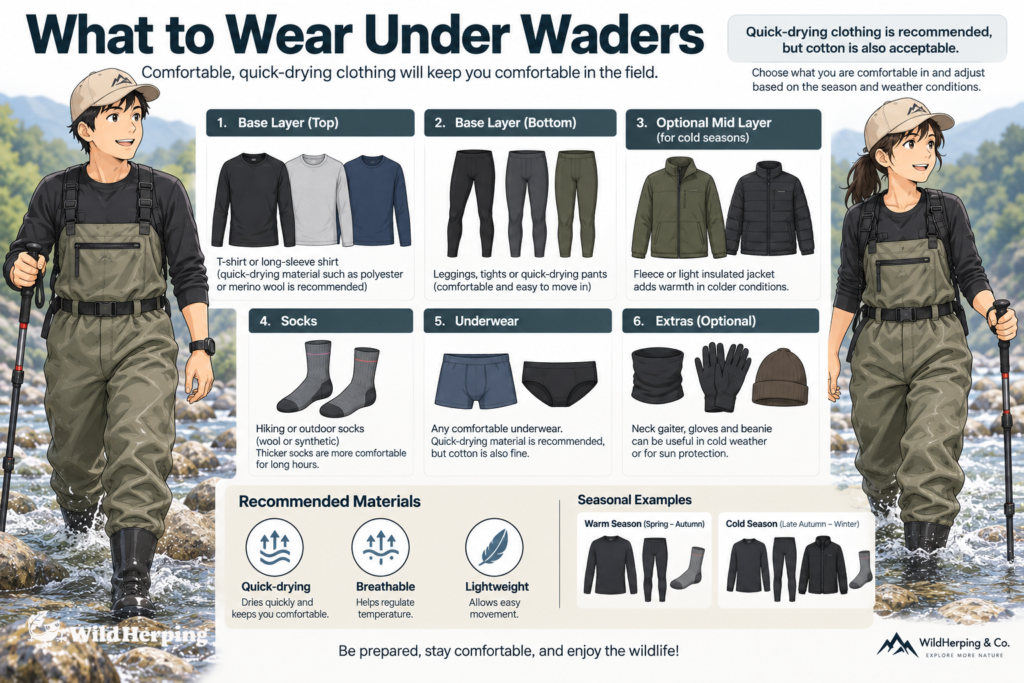
For safety and to help prevent the introduction or spread of pathogens that could affect Giant Salamanders and other aquatic wildlife, all participants are required to wear waders when entering the river.
Waders are waterproof clothing with built-in boots that extend up to the chest. You will remove your normal shoes before putting them on.
Under your waders, please wear:
• Long trousers/pants
• Socks
We do not recommend wearing waders with shorts or bare legs, as the friction can cause skin irritation or even bleeding.
※On the full-day tour, we will also be walking through the forest. Even if you are renting waders from us, please make sure to wear long pants and bring appropriate footwear, such as trekking shoes or rubber boots, to ensure your safety.
Please also bring sun protection, such as a hat.
8. Bring Your Camera
We are often asked:
“Should I bring my DSLR or mirrorless camera even if it isn’t waterproof?”
Our answer is yes, we recommend bringing it.
Giant salamanders are sometimes found in extremely shallow water, making it possible to photograph them without entering deep water.
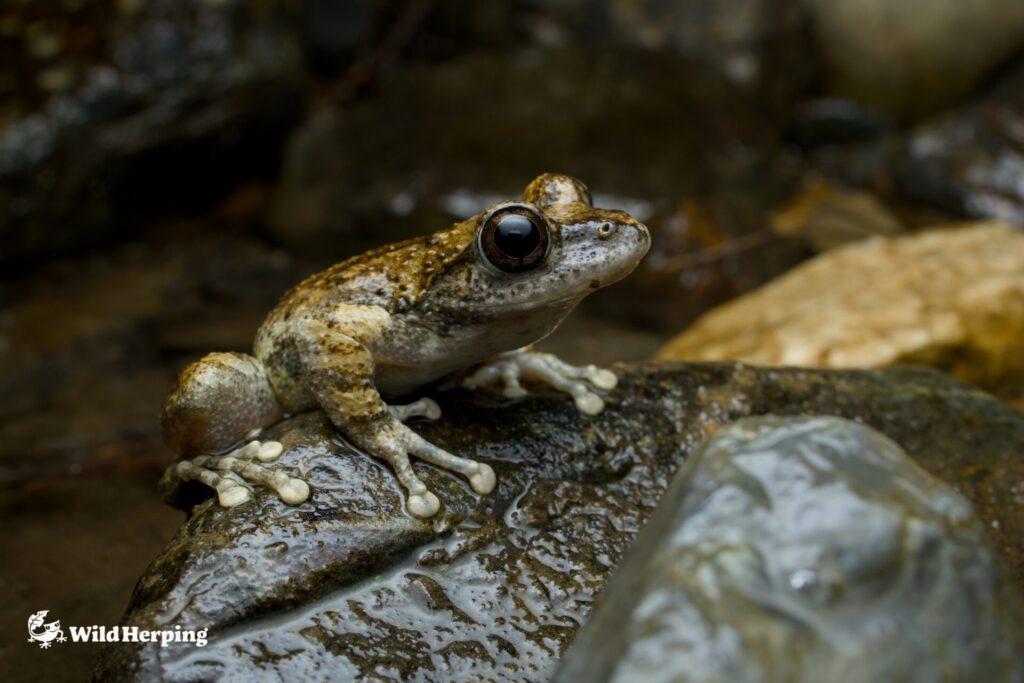
We may also encounter other wildlife on land during the tour, so there can be many unexpected photography opportunities.
Flash and external strobes can be used when appropriate, but please follow your guide’s instructions when photographing wildlife.
For safety, we recommend keeping your camera secured in a backpack or with a suitable strap while walking over difficult terrain.
9. Travel to the Observation Area
Depending on river conditions, weather, and recent wildlife activity, the exact observation area may change.
The drive from the meeting or pickup location to the field site can take approximately 45 minutes to 1.5 hours.
Some routes include winding mountain roads.
If you are prone to motion sickness, we recommend bringing appropriate motion-sickness medication with you.
10. Tours in Rainy Weather
Light or moderate rain does not necessarily prevent us from observing wildlife, and tours can often operate as normal.
However, conditions can change quickly in mountain rivers.
Even when it is not raining at the observation site, heavy rainfall upstream can cause the river level to rise or the water to become muddy.
Entering a river during high water can be dangerous.
If your guide determines that conditions are not safe, the tour may be cancelled, postponed, or the itinerary may be changed.
As this is a wildlife tour conducted in a natural environment, we appreciate your understanding.
One Last Thing
Japanese Giant Salamanders are wild animals living naturally in mountain rivers.
At WildHerping & Co., our goal is not simply to “see” a giant salamander. We want to observe these incredible animals with as little disturbance as possible and experience their natural behavior in their natural habitat.
By moving carefully, keeping an appropriate distance, and following your guide’s instructions, we can often spend more time watching the animals behave naturally.
Thank you for helping us keep the tour safe and protect the habitats that make these encounters possible.
If you have any questions or are unsure about anything, please feel free to ask us.
We look forward to exploring the river with you!