
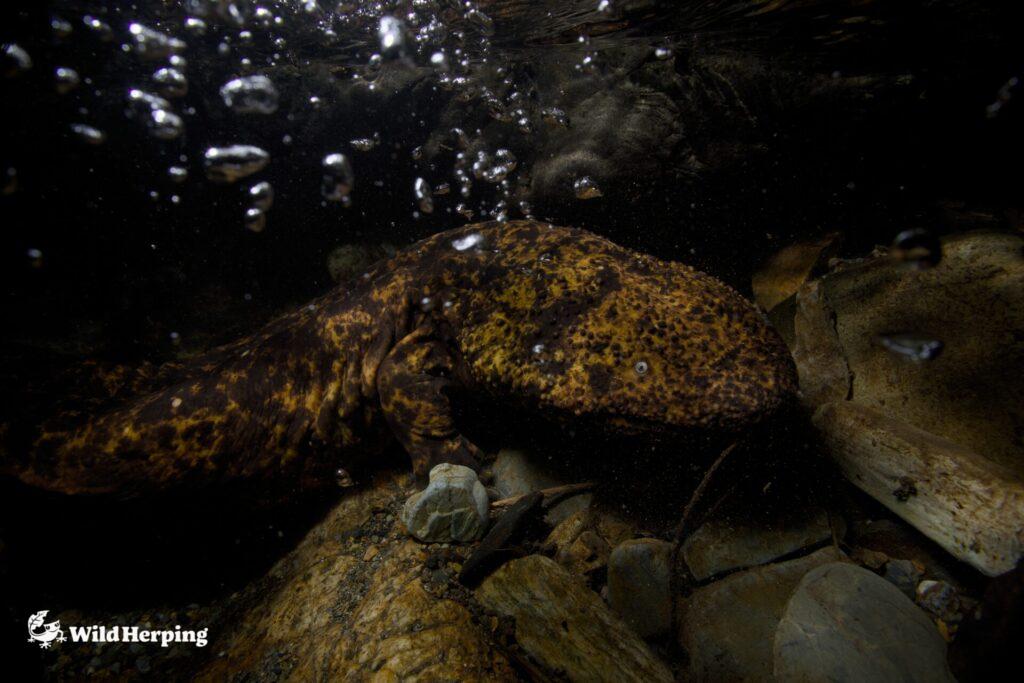
September 9 is Giant Salamander Day in Japan — a day dedicated to one of the country’s most extraordinary amphibians, the Japanese giant salamander (Andrias japonicus).
But why September 9?
The date has an interesting connection to both the appearance of the giant salamander and an important period in its natural life cycle.
Giant Salamander Day was established by Kyoto Aquarium and officially recognized in 2018. September 9 was chosen partly because the curved body of a giant salamander can resemble the number 9.
September is also an important time of year for Japanese giant salamanders, as it coincides with their breeding season.
Together, these connections made September 9 — 9/9 — Giant Salamander Day.
Why Is Giant Salamander Day on September 9?
There are two main reasons why Giant Salamander Day is celebrated on September 9.
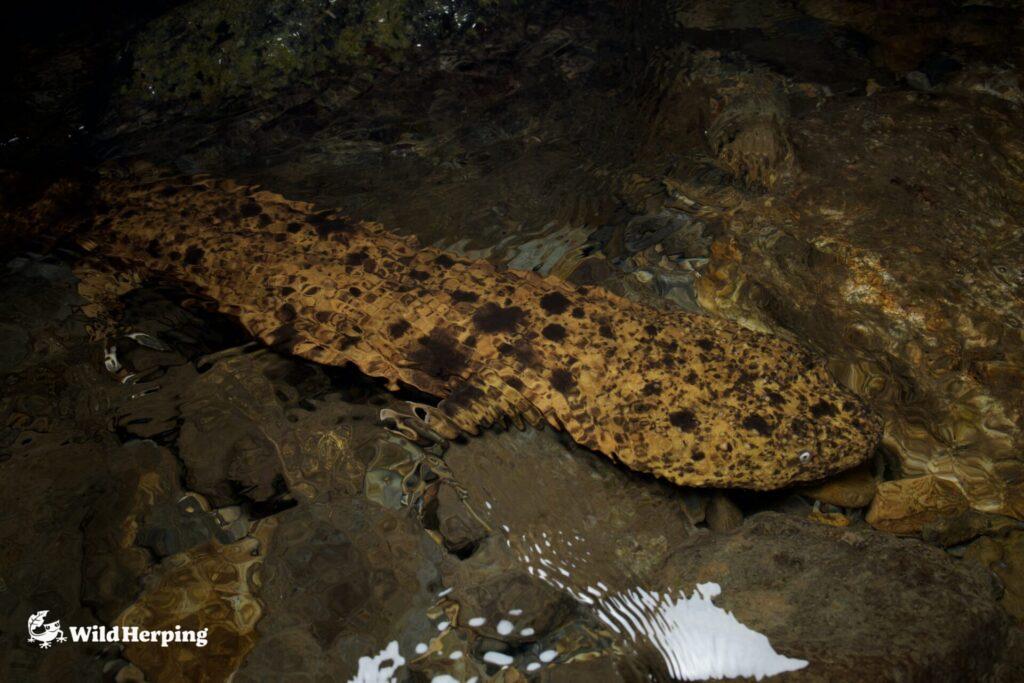
First, take a look at a giant salamander from above.
With its enormous head, long body and curved tail, its shape can sometimes look surprisingly similar to the number 9.
That explains one connection with the number nine.
More importantly, September is also closely connected to the biology of the Japanese giant salamander.
Around this time of year, giant salamanders enter an important part of their breeding season.
Animals that may spend much of the year hidden beneath rocks or inside underwater shelters can become more active as they move through river habitats.
This combination inspired September 9 (9/9) to become a day dedicated to giant salamanders.
When Did Giant Salamander Day Begin?
Giant Salamander Day was established by Kyoto Aquarium.
The aquarium has played an important role in introducing visitors to Japanese giant salamanders and raising awareness about their biology, habitat and conservation.
September 9 was officially recognized as Giant Salamander Day by the Japan Anniversary Association in April 2018.
Since then, Kyoto Aquarium has held special events and educational programs around September 9 to encourage more people to learn about these remarkable amphibians.
You can learn more from the official Kyoto Aquarium website.
What Is the Japanese Giant Salamander?
The Japanese giant salamander (Andrias japonicus) is one of the largest amphibians in the world.
It is native to Japan and inhabits cool, flowing rivers and streams, particularly in western parts of the country.
Its appearance is unmistakable.
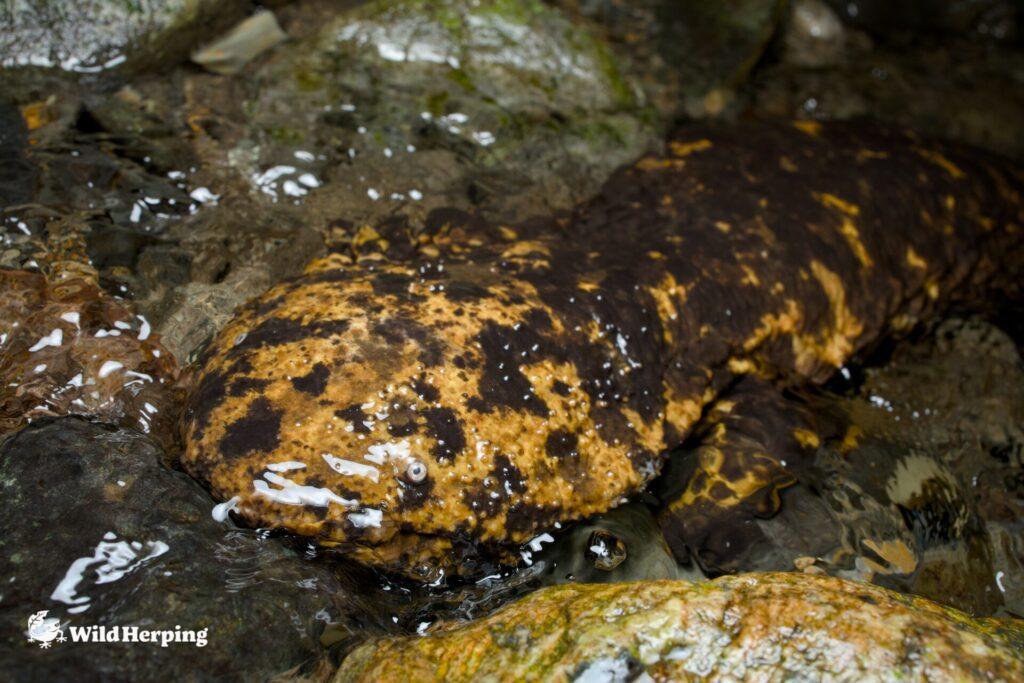
Japanese giant salamanders have an extremely broad and flattened head, tiny eyes, a powerful body and wrinkled folds of skin along their sides.
Their brown or olive-colored bodies are covered with irregular darker markings, providing excellent camouflage among rocks on the riverbed.
Despite their unusual appearance, these animals are perfectly adapted to life in flowing water.
They spend much of their lives underwater and may remain hidden beneath rocks or inside shelters for long periods.
They periodically rise toward the surface to breathe before returning underwater.
For many wildlife enthusiasts visiting Japan, encountering one in its natural habitat is an unforgettable experience.

Why Are Giant Salamanders So Important in Japan?
The Japanese giant salamander is more than simply an unusually large amphibian.
It is also an important part of Japan’s natural heritage.
Japanese giant salamanders are designated as a Special Natural Monument of Japan, reflecting their cultural and conservation importance.
They have inhabited Japanese river systems for an extraordinary period of evolutionary history and represent one of the country’s most remarkable freshwater animals.
Protecting giant salamanders therefore also means protecting the rivers, forests and freshwater ecosystems on which they depend.
Kyoto and the Japanese Giant Salamander
Kyoto is internationally famous for temples, shrines, traditional architecture and Japanese culture.
But there is another side of Kyoto that many international visitors never see.
Beyond the city center, forested mountains are crossed by clear rivers and streams.
These freshwater ecosystems support frogs, salamanders, reptiles, mammals and many other animals.
They are also home to giant salamanders.
For us at WildHerping & Co., this contrast is one of the things that makes wildlife observation in Kyoto so fascinating.
You can spend the day exploring one of Japan’s most famous historical cities and, after dark, enter a completely different world in the surrounding mountains.
Can You See Giant Salamanders in the Wild in Japan?
Yes. Japanese giant salamanders can be observed in the wild.
However, responsible observation is extremely important.
Giant salamanders should never be captured, handled or moved simply to obtain a better photograph or view.
Rocks and shelters used by the animals should not be disturbed, and sensitive observation locations should not be publicly shared.
When we encounter a giant salamander during a WildHerping tour, our goal is simple:
Observe the animal where we find it, while allowing it to behave naturally.
Sometimes we find an animal sitting almost completely motionless beneath the water.
Sometimes one slowly walks across the riverbed.
At other times, we may watch one rise toward the surface to breathe before disappearing beneath the rocks again.
Every encounter is different.
These are completely wild animals, and that unpredictability is part of what makes observing them so special.
Planning to visit Kyoto? WildHerping & Co. offers guided wildlife tours to search for Japanese giant salamanders in their natural habitat.
→ Explore our Kyoto Giant Salamander Tour
September Is a Special Time for Giant Salamanders
There is another reason Giant Salamander Day is particularly meaningful.
September is not simply a symbolic month.
It is an important period in the natural cycle of Japanese giant salamanders.
As the breeding season approaches, their behavior and movements can change.
For people interested in giant salamander ecology, this makes September a fascinating time of year.
However, it also means that responsible observation becomes even more important.
Wildlife observation should never interfere with courtship, breeding, shelter use or other natural behavior.
Our priority is always to keep disturbance as low as possible and allow the salamander to decide what happens next.
How Should You Observe a Wild Giant Salamander?
Finding a giant salamander is exciting, but how you behave after finding one is just as important.
One particularly important rule is not to move upstream of the salamander unnecessarily.
Giant salamanders are often found in shallow sections of flowing water.
Walking upstream of an animal can disturb the current and cause sediment to move downstream toward it.
This may alert the salamander and cause it to move away.
Giant salamanders are powerful swimmers and can use the current to travel downstream surprisingly quickly.
Once an animal starts moving, it can disappear from view within seconds.
Whenever possible, we therefore observe from downstream or from the side and follow the instructions of the guide.
Other important principles include:
- Never touch or move a giant salamander.
- Do not lift rocks simply to search for an animal.
- Keep both hands free while walking through the river.
- Use appropriate footwear or waders.
- Avoid unnecessary disturbance to the riverbed.
- Do not publicly share sensitive observation locations or GPS coordinates.
- Always prioritize the animal’s natural behavior over getting a photograph.
We have created a complete field guide explaining how we observe giant salamanders responsibly:
→ Read: Tips for Observing Giant Salamanders in the Wild
Can You Photograph Wild Giant Salamanders?
Yes, photography can be possible during a wild giant salamander encounter.
However, wildlife photography should never take priority over the welfare of the animal.
We do not move giant salamanders into better positions for photographs.
Instead, photographers work with the situation that nature provides.
That may mean photographing an animal through the surface of the water, waiting quietly for it to move, or sometimes simply enjoying the encounter without getting the perfect photograph.
This approach can require more patience, but the resulting images represent genuine wildlife encounters.
What Happens on a WildHerping Giant Salamander Tour?
Our Giant Salamander Tour is designed around observing these animals in their natural river habitat.
Tours generally take place at night, when giant salamanders may be more active.
We enter suitable habitat with appropriate equipment and slowly search sections of river where salamanders may occur.
Depending on conditions and luck, we may observe salamanders resting in shallow water, walking along the riverbed, surfacing to breathe or moving through the current.
We may also encounter other wildlife living around Japanese mountain streams.
Because we are searching for completely wild animals, sightings and behavior can never be guaranteed.
That is an important part of our philosophy.
The objective is not to produce an encounter at any cost.
The objective is to enter the habitat, understand the ecosystem and, when we are fortunate enough to encounter a salamander, observe it with as little interference as possible.
See Japanese Giant Salamanders in the Wild
If Giant Salamander Day has made you curious about these extraordinary animals, you can experience their habitat for yourself.
WildHerping & Co. offers guided Japanese Giant Salamander Tours in Kyoto.
Rather than viewing animals in a controlled environment, we search natural rivers and observe giant salamanders exactly where we find them.
Our guides provide local field knowledge and explain the salamanders’ ecology, behavior and habitat while helping guests move safely through the river environment.
The tour is suitable not only for amphibian enthusiasts but also for wildlife photographers, naturalists and travelers looking for a completely different side of Kyoto.
Interested in seeing one of the world’s largest amphibians in the wild?
→ Explore the WildHerping Kyoto Giant Salamander Tour
How Can You Celebrate Giant Salamander Day?
You do not need to find a giant salamander to celebrate Giant Salamander Day.
September 9 can simply be an opportunity to learn more about these remarkable animals.
You can visit an aquarium involved in giant salamander education, learn about their ecology and conservation, or discover more about the freshwater ecosystems they inhabit.
And if you are lucky enough to observe one in the wild, the best way to celebrate may be the simplest:
Give the animal space and watch it behave naturally.
Giant Salamander Day Is About More Than One Animal
Japan is famous around the world for its food, history and culture.
But its wildlife is equally fascinating.
After dark, mountain streams and forests reveal another side of the country — frogs calling beside rivers, salamanders moving through clear water and nocturnal animals emerging from the forest.
Among them is one of the largest amphibians on Earth.
Giant Salamander Day is an opportunity to celebrate this extraordinary animal, but it is also an opportunity to think about the rivers and ecosystems that allow it to survive.
September 9 is Giant Salamander Day in Japan.
And perhaps the best way to celebrate it is to understand these animals, protect their habitat and allow them to remain wild.
Frequently Asked Questions About Giant Salamander Day
When is Giant Salamander Day in Japan?
Giant Salamander Day is celebrated on September 9 every year.
Why is Giant Salamander Day on September 9?
The date is associated with the giant salamander’s resemblance to the number 9 when its body is curved. September is also an important period in the species’ breeding cycle.
Who created Giant Salamander Day?
Giant Salamander Day was established by Kyoto Aquarium and officially recognized by the Japan Anniversary Association in 2018.
What is a Japanese giant salamander?
The Japanese giant salamander (Andrias japonicus) is a very large aquatic salamander native to Japan and one of the world’s largest amphibians.
Are there giant salamanders in Kyoto?
Yes. Giant salamanders inhabit river systems in and around Kyoto, although their distribution and conservation situation vary between rivers.
Can tourists see wild giant salamanders in Japan?
Yes, it is possible to observe giant salamanders in the wild. Because they are protected wildlife, observation should be conducted responsibly without capturing, handling or unnecessarily disturbing the animals.
Can I see giant salamanders with WildHerping?
WildHerping & Co. operates guided Giant Salamander Tours in Kyoto, searching for wild salamanders in their natural river habitat.


