
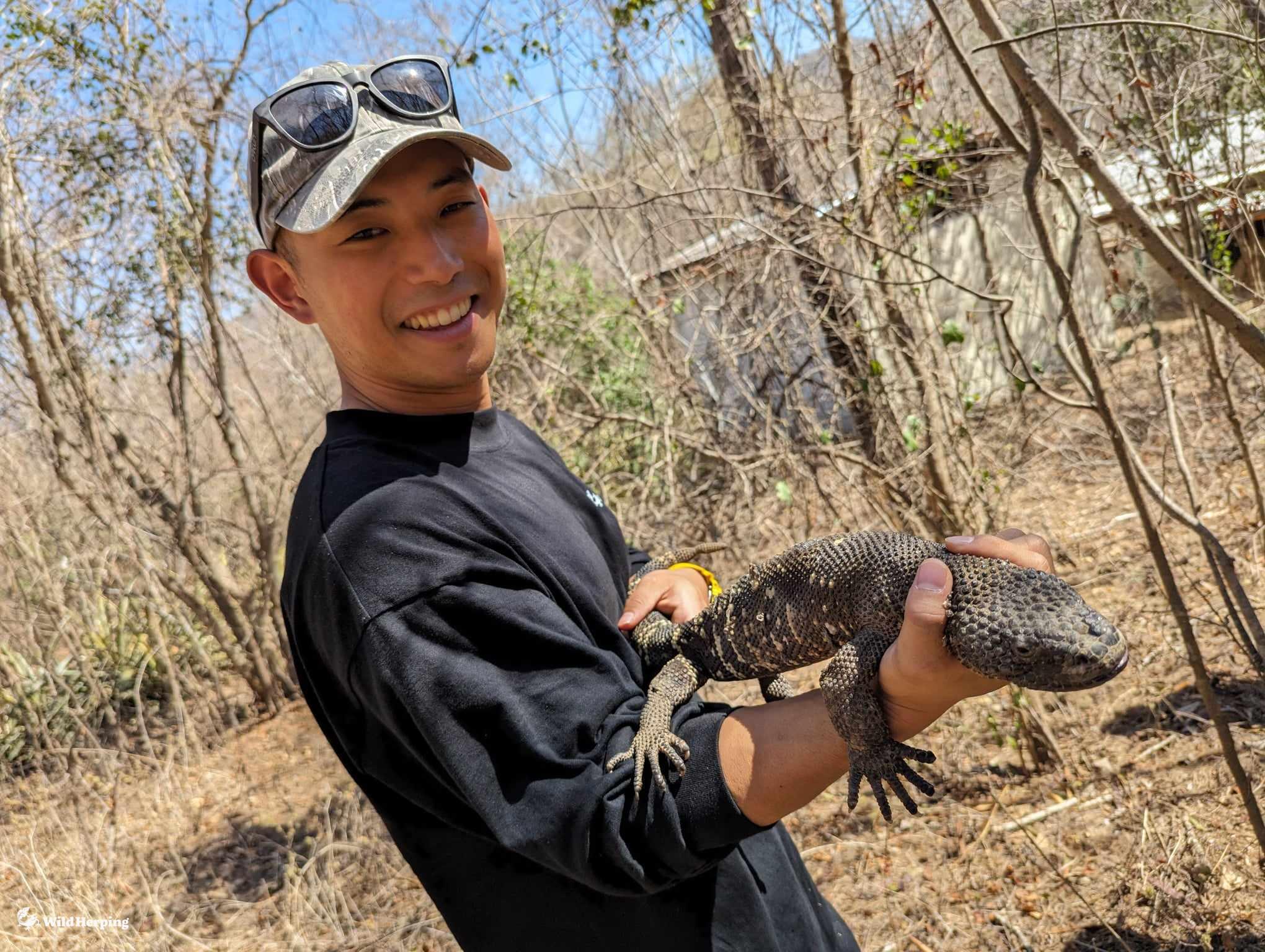
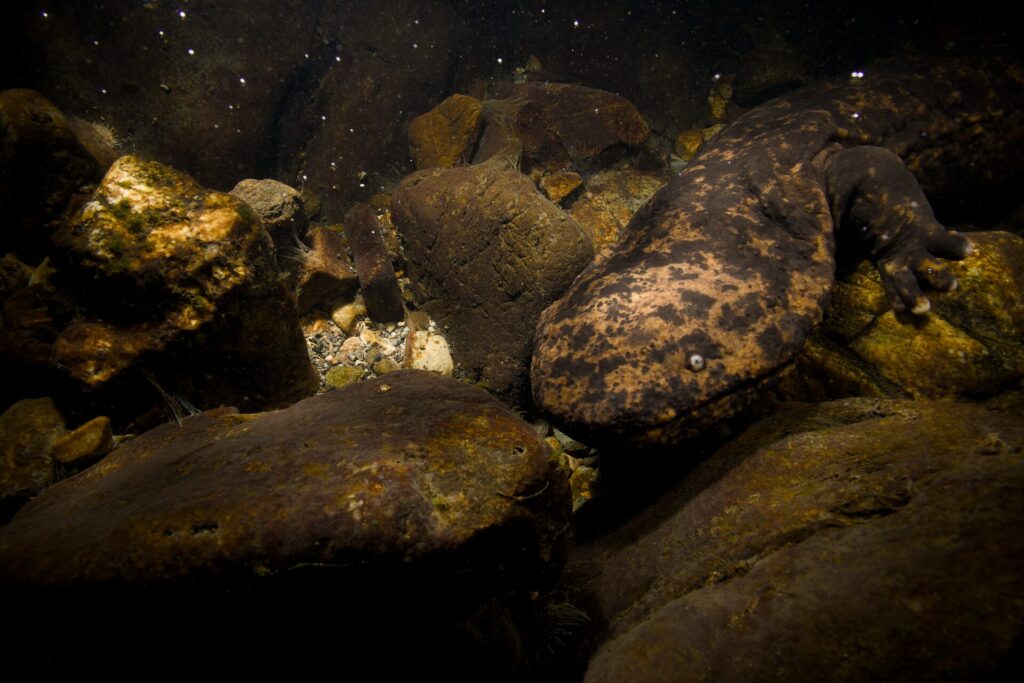
Japan is one of the most exciting countries in the world for herping. From cool mountain streams where the Japanese giant salamander (Andrias japonicus) lives, to subtropical forests in Okinawa and Amami where pit vipers, frogs, geckos, and skinks appear after dark, the country offers remarkable wildlife experiences for herpers, wildlife photographers, birders, and nature lovers.
But Japan’s reptiles and amphibians are not just subjects to find or photograph. They are part of fragile ecosystems, and many species face pressure from habitat loss, road mortality, climate change, illegal collection, invasive species, and disturbance from people.
Responsible herping means enjoying these animals in a way that protects them, their habitats, local communities, and the future of wildlife watching in Japan.
What Is Responsible Herping?
Responsible herping is the practice of observing reptiles and amphibians with minimal impact.
For WildHerping&Co., this means:
- Observing animals without handling or disturbing them
- Following national laws, local rules, and site-specific guidance
- Avoiding damage to rivers, forests, wetlands, and leaf litter
- Keeping exact locations private when needed
- Respecting protected species, private land, and local communities
- Prioritizing animal welfare over photographs
- Helping guests understand the ecology and conservation value of each species
A good wildlife experience should leave the habitat exactly as it was found.
Why Japan Is Special for Herpers
Japan’s long island chain creates a wide range of habitats, from snowy mountain forests to subtropical islands. This diversity supports many fascinating reptiles and amphibians, including species found nowhere else on Earth.
Examples include:
- Japanese giant salamander (Andrias japonicus)
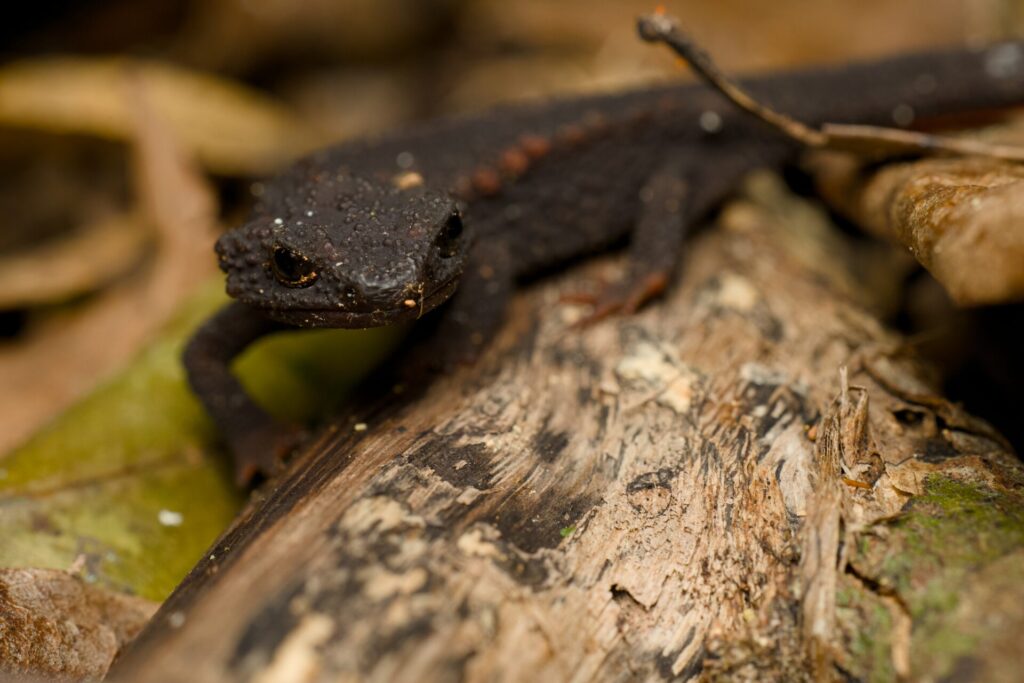
- Anderson’s crocodile newt (Echinotriton andersoni)
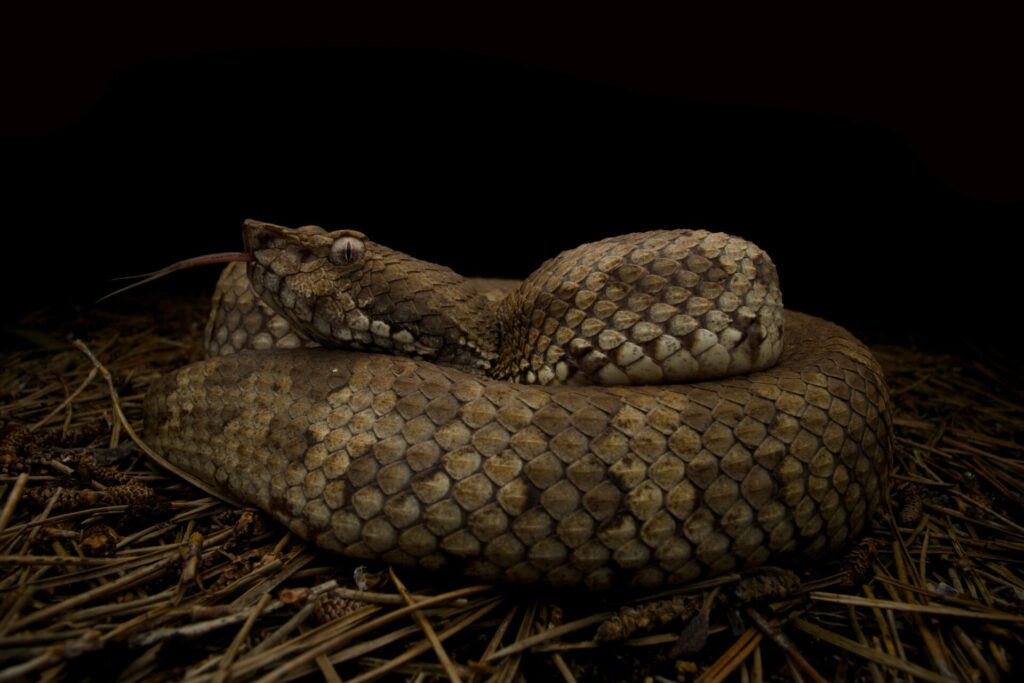
- Okinawa pit viper (Ovophis okinavensis)
- Japanese forest rat snake (Euprepiophis conspicillatus)
- Kajika frog (Buergeria buergeri)
- Japanese wrinkled frog (Glandirana rugosa)
For wildlife photographers, Japan offers beautiful natural settings: mossy streams, rice fields, mountain forests, limestone islands, and subtropical night trails. For birders and nature lovers, herping adds another layer to Japan’s biodiversity, especially after sunset when many amphibians and reptiles become active.
Japanese Giant Salamanders Are Strictly Protected
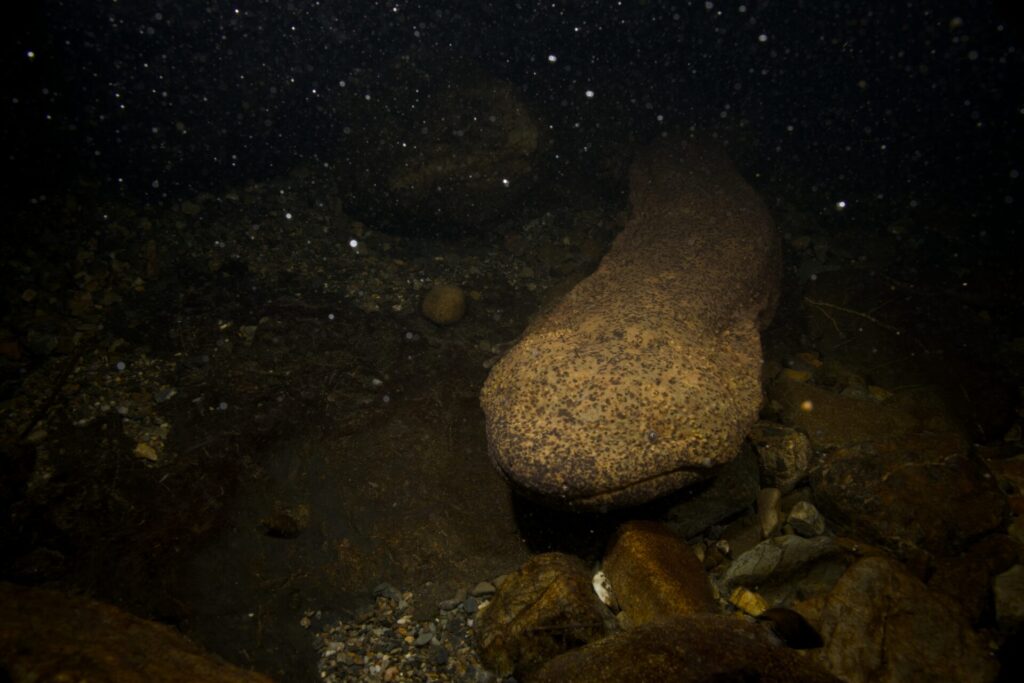
The Japanese giant salamander (Andrias japonicus) is designated as a Special Natural Monument in Japan. This means it is legally protected, and touching, capturing, disturbing, or removing individuals from their habitat is prohibited.
For this reason, responsible observation is essential. Visitors should never handle the animal, enter sensitive breeding areas, block its movement, or alter the stream environment for photography. A proper wildlife experience focuses on quiet observation, respectful distance, and habitat protection.
At WildHerping&Co., the welfare of the animal always comes before the photograph. Seeing a Japanese giant salamander in the wild is a privilege, and protecting the species and its river habitat is part of the experience.
Do Not Handle Wildlife
The simplest rule is also one of the most important: look first, photograph carefully, and do not touch.
Handling can stress animals, remove protective skin secretions, spread pathogens, or cause injury. Amphibians are especially sensitive because many species breathe and absorb moisture through their skin.
Even when a species is not legally protected, unnecessary handling should be avoided. Wild animals are not props. Responsible herping means allowing them to continue their natural behavior with as little interference as possible.
Be Careful With Light
Night herping often requires headlamps or flashlights, but light should be used thoughtfully.
Avoid shining strong light directly into an animal’s eyes for long periods. Use the minimum brightness needed, give the animal space, and allow it to continue its natural behavior.
For photographers, flash can be useful, but repeated close-range flashing should be avoided. The goal is to document wildlife respectfully, not force an image at the animal’s expense.
Protect Microhabitats
Many reptiles and amphibians depend on small, easily damaged microhabitats.
Logs, stones, leaf litter, stream edges, tree hollows, and wetlands can all be important shelter or breeding areas. If something is moved during observation, it should be returned exactly as it was found.
In river habitats, avoid stepping on egg masses, larvae, aquatic insects, or fragile streambeds. In forests, stay aware of moss, roots, burrows, and soft soil.
Good herping is quiet, careful, and patient.
Keep Sensitive Locations Private
Some species are vulnerable to illegal collection, over-visitation, or disturbance. Sharing exact locations online can create real conservation problems.
This is especially important for rare amphibians, island reptiles, breeding sites, and easily accessible populations.
When posting photos, consider removing GPS data and avoiding precise location names. It is usually enough to say “central Japan,” “Kyoto Prefecture,” “the Ryukyu Islands,” or “a mountain stream in Japan,” depending on the sensitivity of the species.
Protecting a location is part of protecting the animal.
Respect Local Rules and Communities
When observing wildlife in Japan, it is important to follow not only national laws but also local rules, site-specific guidelines, and community expectations. Some rivers, forests, wetlands, and mountain roads may have restrictions to protect wildlife, private land, farmland, or local residents.
Responsible herping means observing quietly, parking only in appropriate places, avoiding private property, keeping exact locations discreet, and following the guidance of local experts. These small choices help protect both wildlife and the communities that share the landscape with it.
For protected species such as the Japanese giant salamander (Andrias japonicus), respecting local rules is part of conservation. A good observation should never create problems for the animal, the habitat, or the people who live nearby.
Respect Roads, Farms, Rivers, and Local Communities
Many excellent herping areas in Japan are close to rural communities, farms, rivers, and mountain roads. Responsible visitors should keep noise low, avoid blocking roads, never enter private land without permission, and respect local residents.
Road cruising and night walks can reveal snakes, frogs, turtles, and salamanders, but safety and respect come first. Drive slowly, park responsibly, and never create a hazard for other people.
Wildlife tourism only has a future when local communities feel respected.
Avoid Disturbing Breeding Behavior
Breeding seasons are some of the best times to observe amphibians, but they are also sensitive periods.
Frogs calling, salamanders nesting, newts gathering in ponds, and reptiles using nesting sites should be watched with extra care. Do not disturb egg masses, breeding pairs, dens, or nesting sites.
For Japanese giant salamanders (Andrias japonicus), stream disturbance around breeding habitat can be especially harmful. Observers should keep distance, avoid entering sensitive areas, and follow expert guidance.
A rare behavior is worth more when it happens naturally.
Conservation Comes First
Japan’s herpetofauna includes many species that are locally declining or conservation-sensitive. Habitat loss, river modification, invasive species, road mortality, climate change, and illegal collection all affect reptiles and amphibians.
Responsible herping can support conservation when it is done well. Guided wildlife experiences can help visitors understand why these animals matter, encourage habitat protection, and create value around living wildlife rather than collection or disturbance.
Every tour should send guests home with more than photos. It should leave them with respect for the species, the habitat, and the people working to protect them.
Join a Responsible Herping Tour in Japan
WildHerping&Co. offers expert-led wildlife experiences for herpers, wildlife photographers, birders, and nature lovers who want to see Japan’s reptiles and amphibians responsibly.
Whether you hope to observe the Japanese giant salamander (Andrias japonicus) in a clear mountain stream or explore subtropical island forests for snakes, frogs, and geckos, our tours are designed around respectful observation, habitat awareness, local rule compliance, and conservation.
See Japan’s wildlife the right way.
Book your tour with WildHerping&Co.


