
Kyoto Is More Than Temples and Geisha
When people think of Kyoto, they imagine ancient temples, traditional tea ceremonies, geisha districts, and beautiful gardens.
But few visitors realize that Kyoto is also one of the best places in Japan to observe wildlife.
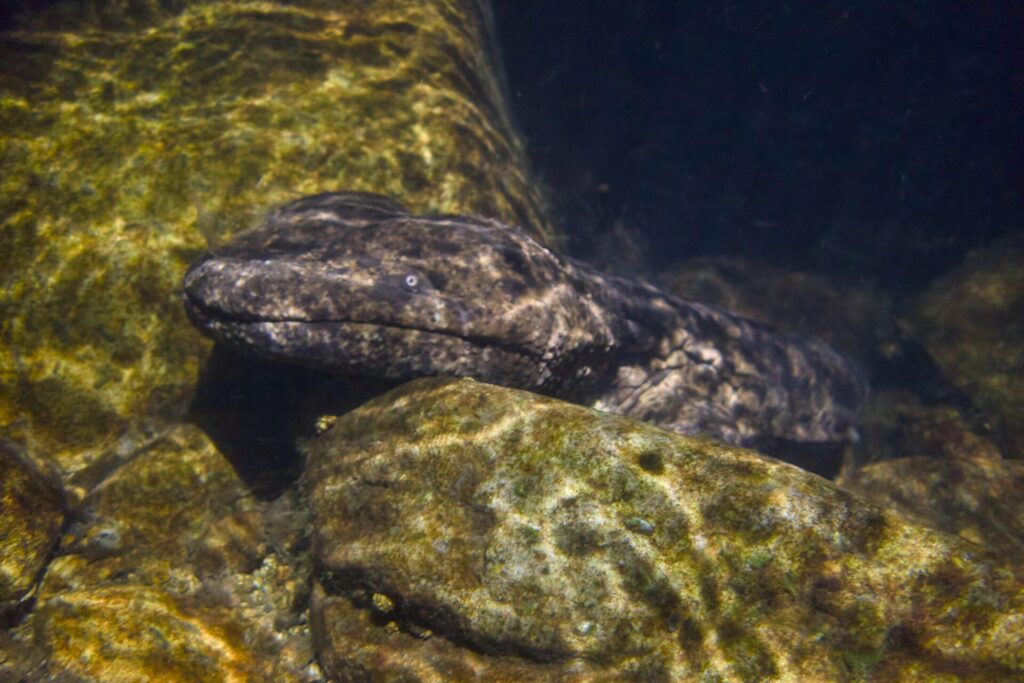
Hidden beneath the clear waters of Kyoto’s rivers lives one of the most extraordinary animals on Earth: the Japanese Giant Salamander.
Known as the world’s second-largest amphibian and a living fossil, this remarkable creature has inhabited Japanese rivers for millions of years. For wildlife enthusiasts, photographers, and nature lovers, searching for giant salamanders in Kyoto can become the highlight of a trip to Japan.
What Is a Japanese Giant Salamander?
Japanese Giant Salamander (Andrias japonicus) is one of the largest amphibians in the world.
These fascinating animals can exceed 1.5 meters (5 feet) in length and weigh over 25 kilograms.
Characteristics include:
- Wrinkled skin that helps absorb oxygen
- A flattened body adapted for fast-flowing rivers
- Tiny eyes and excellent senses for hunting at night
- A lifespan that may exceed 50 years
Because they have changed little over millions of years, giant salamanders are often referred to as “living fossils.”
Where Can You See Giant Salamanders in Kyoto?
Kyoto is one of the best locations in Japan for observing wild giant salamanders.
Populations occur in river systems including:
- Kamo River
- Katsura River
- Yura River
Surprisingly, some giant salamanders can be found relatively close to urban areas, making Kyoto unique among wildlife destinations.
Unlike many rare animals that require multi-day expeditions, giant salamanders may be observed during a single evening excursion from Kyoto City.

Why Are Giant Salamanders Active at Night?
The Japanese Giant Salamander is primarily nocturnal.
During the day, individuals usually hide beneath rocks, inside crevices, or under riverbanks.
After sunset, they emerge to search for food such as:
- Fish
- Freshwater crabs
- Aquatic insects
- Small amphibians
Walking through a river at night with a flashlight creates a sense of adventure. What initially appears to be a submerged log may suddenly reveal itself as a giant salamander slowly moving across the riverbed.

A Unique Wildlife Experience in Kyoto
Many visitors search online for:
- Things to do in Kyoto at night
- Unique experiences in Kyoto
- Kyoto wildlife tours
- Nature activities near Kyoto
A giant salamander tour combines all of these experiences.
Instead of visiting crowded tourist attractions, guests can explore Kyoto’s hidden natural side and encounter one of Japan’s most iconic animals in its natural habitat.
For wildlife photographers, observing a giant salamander in the wild is often considered a once-in-a-lifetime experience.
Other Wildlife You May Encounter
Depending on the season, other species may include:
- Mamushi(Gloydius blomhoffii)
- Freshwater Crabs(Geothelphusa dehaani)
- Native freshwater fish
Every tour is different, making each visit to the river unique.

Join a Kyoto Giant Salamander Tour
If you are looking for one of the most unusual wildlife experiences in Japan, a Kyoto Giant Salamander Tour is an unforgettable adventure.
Whether you are a wildlife photographer, nature enthusiast, herpetologist, or simply curious about Japan’s hidden wildlife, this experience offers a completely different perspective on Kyoto.
After spending the day exploring temples and historic streets, spend the evening discovering one of Japan’s most extraordinary creatures.
Ready to search for giant salamanders in Kyoto? Join us and experience Kyoto after dark.
Check our our wildlife tours→https://wildherping.com/en/fieldwork-en/
FAQ
- 「Best season to see giant salamanders in Kyoto」
– The best time to observe Japanese Giant Salamanders in Kyoto is from late April through mid-October. During this period, water temperatures are warmer and salamanders tend to be more active, making observations easier. Tours are available outside this season, but sightings may become less predictable during colder months. - 「How likely are you to see a giant salamander?」
-Our success rate is typically around 75–80%. While sightings can never be guaranteed because these are completely wild animals, Kyoto offers some of the best opportunities in Japan to observe giant salamanders in their natural habitat. - 「What should I bring?」
– A headlamp, Outdoor clothing,,, - 「Is the tour suitable for children?」
– Yes. Children are welcome to join the tour when accompanied by an adult. The activity is generally suitable for families, although participants should be comfortable walking in shallow streams and uneven terrain at night. - 「Photography opportunities」
– Absolutely. Giant Salamanders are among the most unique amphibians in the world and make excellent photography subjects.


