Beyond the Temples. Into the Wild.
Winter-Only Evening Wildlife Tour | December–March
When the sun goes down, a very different side of Kyoto comes alive.
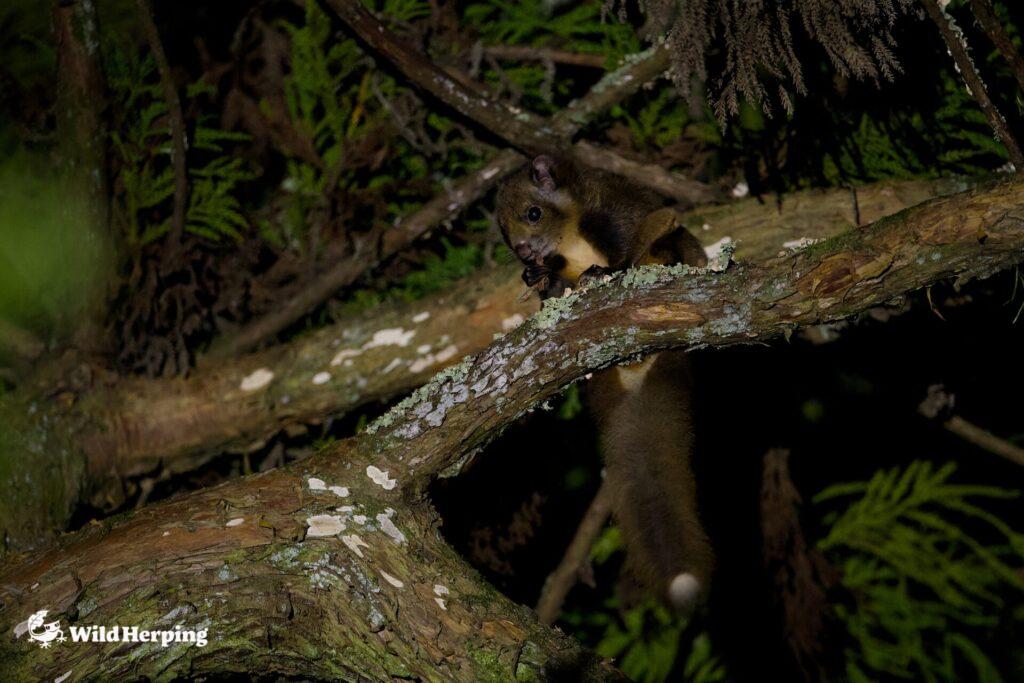
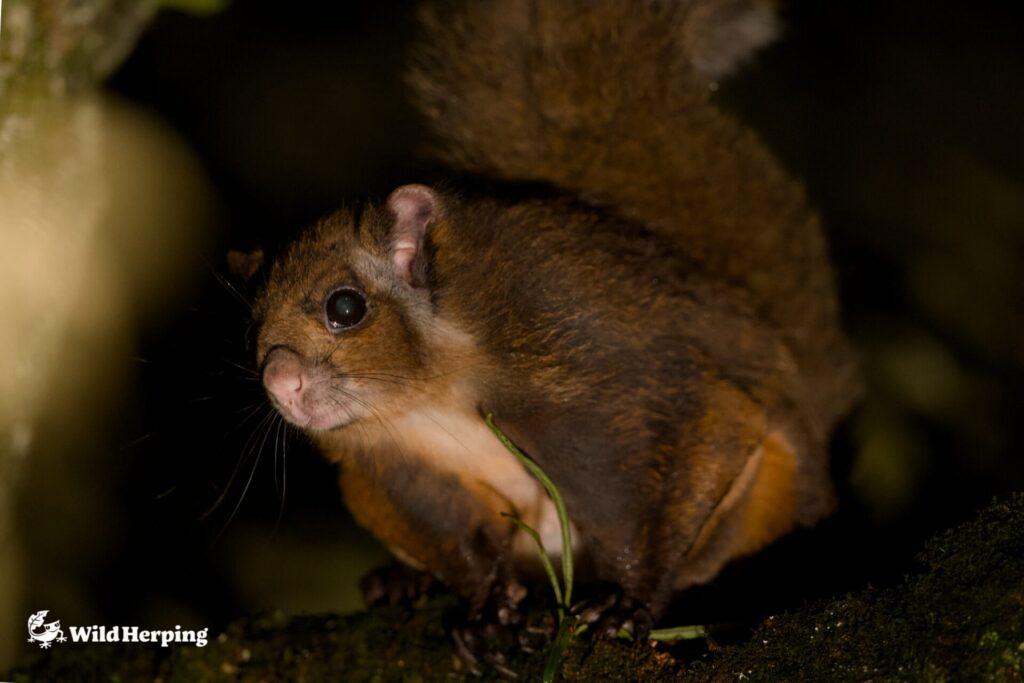
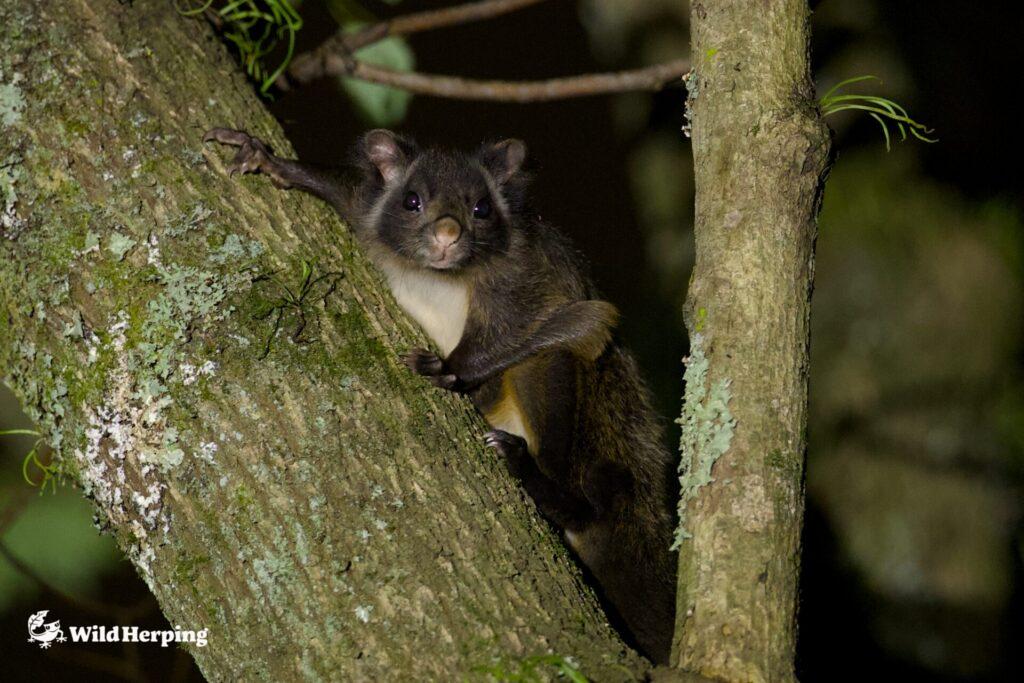
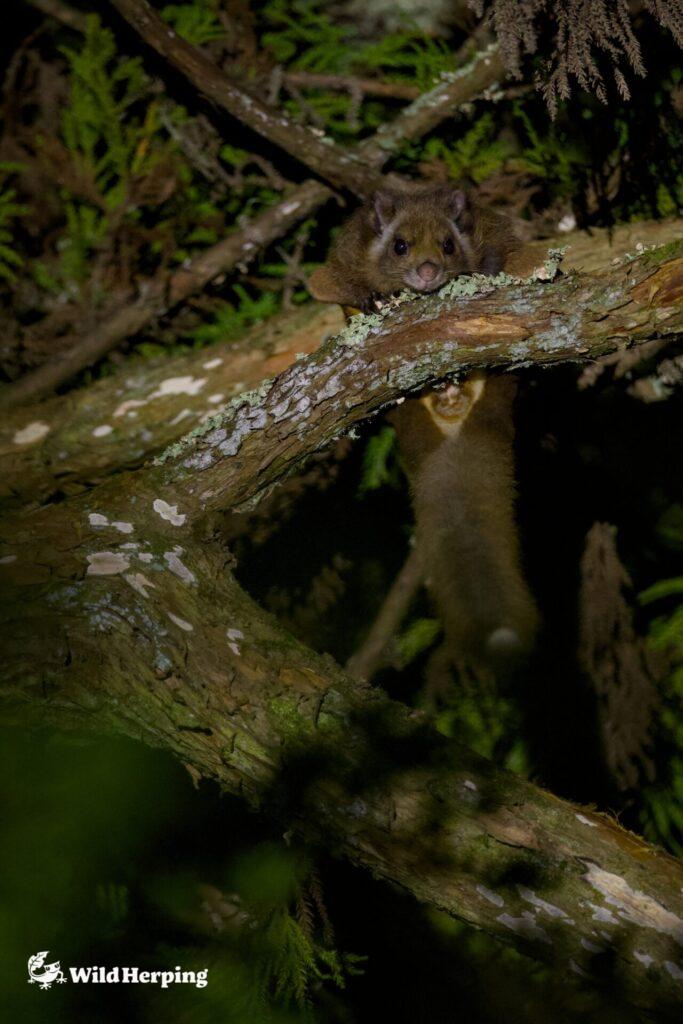
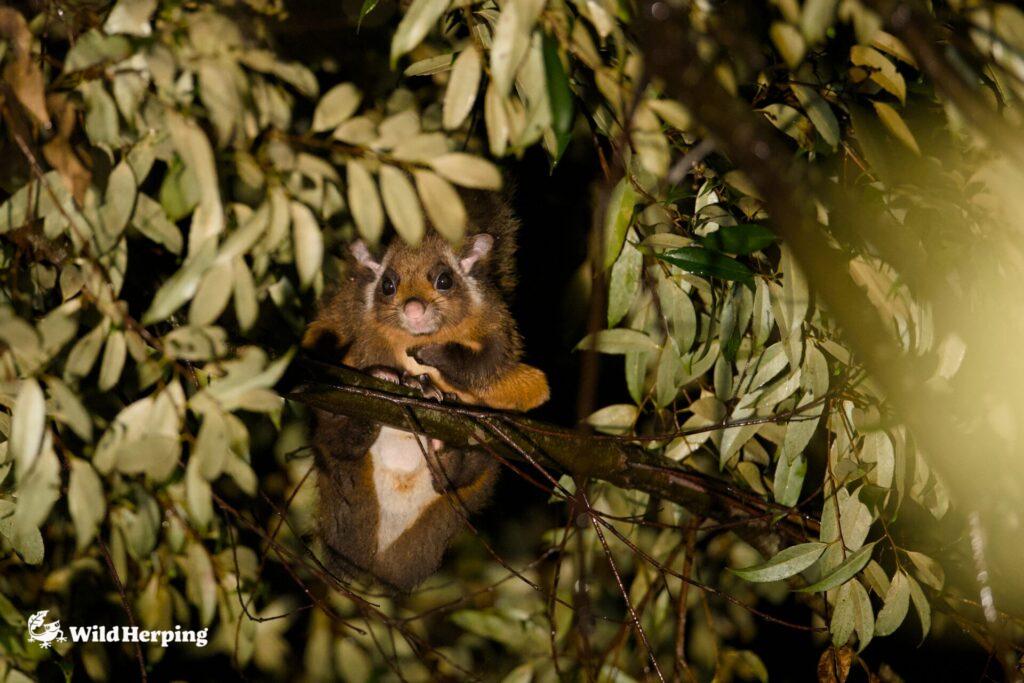
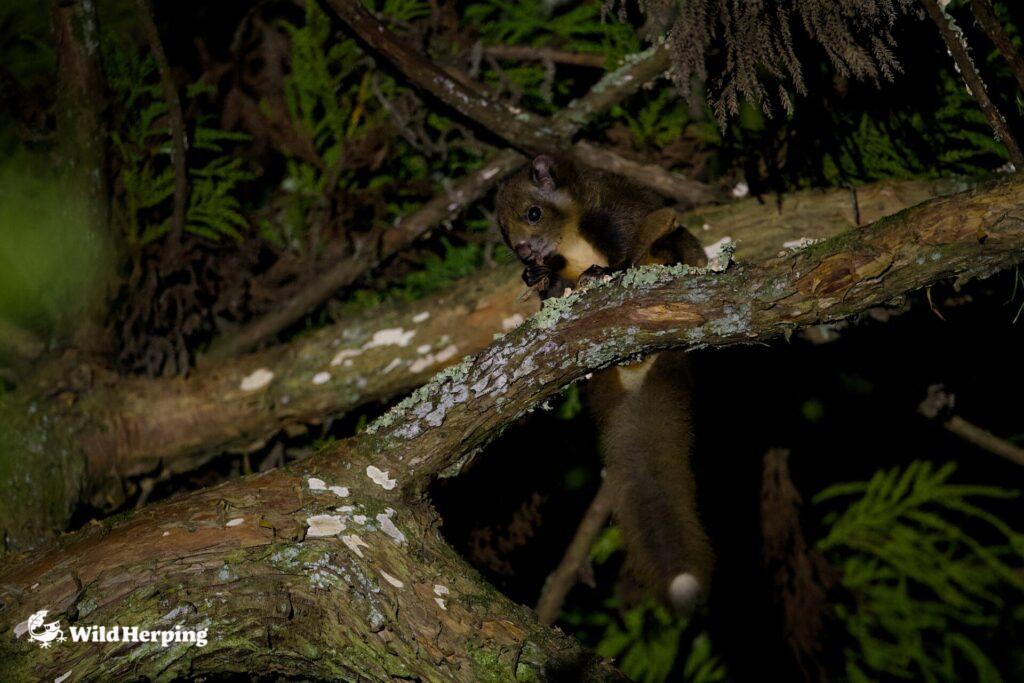
Just beyond the temples, streets, and city lights, the forests of Kyoto and Nara are home to one of Japan’s most remarkable nocturnal mammals — the Japanese giant flying squirrel (Petaurista leucogenys).
Join WildHerping & Co. on a winter evening wildlife tour in search of these incredible animals in the wild.
We leave central Kyoto before sunset and travel approximately one hour into the forest. As daylight fades, we quietly wait near known roosting areas for the flying squirrels to emerge and begin their night.
If conditions are right, you may even witness one spread its gliding membrane and soar silently between the trees.
This is not a zoo or wildlife park. Every encounter is with completely wild animals in their natural habitat.
WINTER ONLY | DECEMBER–MARCH
Around 90% Sighting Rate | Around 50% Gliding Observation Rate
From ¥18,000 per person
BOOK YOUR TOUR
Tour at a Glance
Season: December–March
Price: From ¥18,000 per person
Main Target: Japanese Giant Flying Squirrel (Petaurista leucogenys)
Sighting Rate: Around 90%
Gliding Observation Rate: Around 50%
Departure: Approximately 1.5 hours before sunset
Location: Kyoto or Nara, selected by your guide
Travel Time: Approximately 1 hour from central Kyoto
Difficulty: Easy / Beginner-friendly
Walking: Established forest trails and paths
Group Size: Maximum 7 guests
Transportation: Included from designated Kyoto meeting points
Tour Type: Shared or Private
Language: English / Japanese
Tour Schedule
December–January
15:30–20:00
February–March
16:00–20:30
The tour starts before sunset so that we can arrive at the observation area while there is still daylight and prepare for the flying squirrels to emerge as darkness falls.
Exact timing may vary slightly depending on the date, weather conditions, wildlife activity, and your pick-up or drop-off location.
Itinerary
15:30–16:00 | Pick-Up in Kyoto
Shared Tour: Please meet your guide at your designated pick-up point in central Kyoto.
Private Tour: Pick-up from your accommodation within our designated pick-up area is available.
From Kyoto, we drive approximately one hour to the wildlife observation area selected by your guide for that evening.
For tours in February and March, pick-up is approximately 30 minutes later.
16:30–17:00 | Arrive at the Flying Squirrel Habitat
Arrive at one of our Japanese giant flying squirrel observation areas in Kyoto or Nara.
We explore a forest with large, mature trees that provide important habitat and roosting sites for Japanese giant flying squirrels.
While there is still daylight, your guide will introduce you to the forest, explain the ecology and behavior of the flying squirrels, and show you what signs to look for.
Winter temperatures can drop quickly after sunset, so please bring warm clothing suitable for spending time outdoors at night.
Around Sunset | Wait for the Flying Squirrels to Emerge
As daylight begins to disappear, we quietly approach the observation area and wait near known roosting sites.
This is when the forest begins to change.
Japanese giant flying squirrels spend the day resting in sheltered roosts and typically become active around sunset.
We watch carefully for the first signs of movement — sometimes a face appearing from a tree cavity, followed by the animal climbing out into the canopy.
After Sunset | Observe Japanese Giant Flying Squirrels
Once the flying squirrels emerge, we observe their natural nighttime behavior while minimizing disturbance.
Depending on the individual animal and conditions that evening, we may see them climbing through the canopy, feeding, or moving between trees.
And if we’re lucky, we may witness the highlight of the evening:
a Japanese giant flying squirrel launching from a tree and gliding silently through the forest.
Wildlife sightings and behavior can never be guaranteed.
20:00–21:00 | Return to Kyoto & Drop-Off
After the wildlife observation, we return to Kyoto.
Shared Tour: Drop-off is provided according to our standard Kyoto tour arrangements.
Private Tour: Drop-off at your accommodation within our designated drop-off area is available.
Expected return time:20:00-21:00
Exact timing may vary depending on the season, weather conditions, wildlife activity, traffic, and your accommodation location.
Tour Highlights
See Japanese Giant Flying Squirrels in the Wild
Search for completely wild Japanese giant flying squirrels in their natural forest habitat.
Experience Japan After Dark
Leave the temples and busy streets behind and discover a side of Kyoto that most visitors never experience.
Winter Only
This seasonal wildlife experience is available only from December through March. Around 90% Sighting Rate
Based on our field experience, Japanese giant flying squirrels are currently observed on approximately 90% of our tours.
Transportation Included
Our observation areas are approximately one hour from central Kyoto. Transportation from our designated Kyoto meeting points and back to Kyoto is included.
Beginner Friendly
No technical hiking or wildlife-watching experience is required. We mainly walk along established trails and paths.
Small Groups
Shared tours are limited to a maximum of 7 guests.
Meet the Japanese Giant Flying Squirrel
The Japanese giant flying squirrel (Petaurista leucogenys) is one of Japan’s most impressive nocturnal mammals.
Much larger than the small flying squirrels many people imagine, these arboreal mammals spend most of their lives high above the forest floor.
During the day, they rest inside tree cavities and other sheltered roosts.
Then, around sunset, the forest changes.
The flying squirrels begin to emerge.
Using a membrane of skin extending between their limbs, they can glide from tree to tree rather than returning to the forest floor.
Watching such a large mammal silently cross the forest canopy is one of Japan’s most memorable wildlife encounters.
And it happens surprisingly close to Kyoto.
Wait for the Forest to Wake Up
Our Japanese Giant Flying Squirrel Tour begins approximately 1.5 hours before sunset.
After meeting at one of our designated meeting points in central Kyoto, we travel for approximately one hour to an observation area in Kyoto or Nara.
From there, we follow established trails through the forest.
Before darkness falls, your guide will introduce you to the ecology, habitat, and behavior of the Japanese giant flying squirrel.
Then we wait.
As daylight disappears, we quietly watch known roosting areas for the first signs of movement.
A face may suddenly appear from a tree cavity.
A flying squirrel may climb out and begin moving through the canopy.
And sometimes, moments later, it launches itself into the darkness and glides silently between the trees.
This transition from daylight to night is one of the most exciting parts of the experience.
Kyoto or Nara — We Follow the Wildlife
The tour may take place in either Kyoto or Nara Prefecture.
You do not need to choose the location when booking.
Wildlife activity changes throughout the winter. Our guides monitor the flying squirrels and current field conditions and select the observation area we believe offers the best opportunity for your tour.
Both areas are approximately one hour from central Kyoto, and the meeting and drop-off arrangements remain the same.
Rather than asking wildlife to fit our schedule, we adapt our tour to the wildlife.
A Winter-Only Wildlife Experience
Available December–March
Winter is not the off-season for wildlife in Japan.
It is simply a different season.
This tour operates exclusively from December through March, making it a unique wildlife experience for travelers visiting Kyoto during winter.
Millions of visitors come to Kyoto for its temples, shrines, gardens, food, and traditional streets.
Far fewer discover what happens in the surrounding forests after sunset.
The Japanese Giant Flying Squirrel Tour offers the opportunity to experience a quieter, wilder side of Kyoto — just beyond the city.
Easy and Beginner Friendly
You do not need to be an experienced hiker, birder, or wildlife watcher to join this tour.
We primarily walk along established trails and paths.
There is no river walking and no technical hiking.
The tour is suitable for beginners and generally suitable for older guests who are comfortable with normal outdoor walking.
Our guides will explain what we are looking for, how to observe the animals, and what is happening in the forest throughout the evening.
Whether this is your first wildlife tour or one of many, you are welcome.
Wildlife Photography
Photography is welcome, but the welfare of the animals always comes first.
Flash photography is not permitted.
Flash can disturb Japanese giant flying squirrels and may cause them to freeze or alter their natural behavior.
During observations, your guide will carefully manage the lighting.
Please photograph the animals using the light provided by your guide rather than independently shining lights at them.
Because these are wild, nocturnal animals, photography conditions can be challenging.
We encourage guests to enjoy the encounter itself rather than expecting a particular photograph.
Wildlife Comes First
WildHerping & Co. specializes in observing wildlife in the wild.
Our goal is not simply to find an animal.
We want to create encounters that allow people to appreciate wildlife while minimizing our impact on the animals and their habitat.
During this tour:
- Animals are never captured or handled.
- Animals are not placed or released for guests.
- Flash photography is not permitted.
- Lighting around the animals is managed by the guide.
- Guests are asked to remain quiet around active roosting areas.
- Sensitive wildlife locations should not be publicly shared.
- Wildlife behavior always takes priority over photography.
We believe the best wildlife encounter is one where the animal is able to remain wild.
Other Wildlife
The Japanese giant flying squirrel is the main focus of this tour.
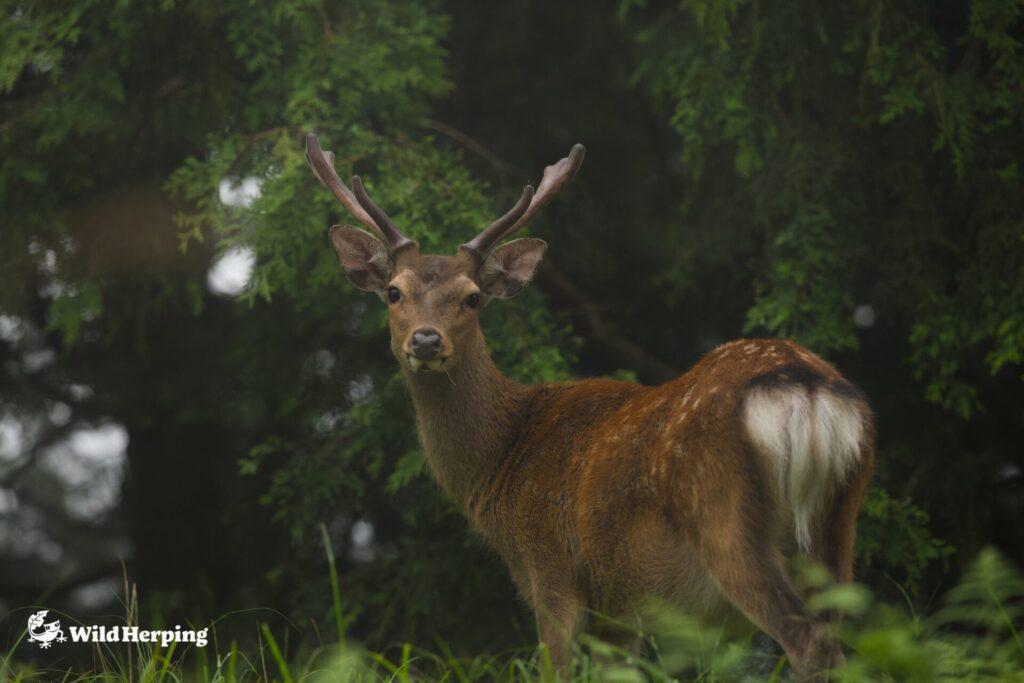
Depending on the location and conditions, we may occasionally encounter other wildlife such as sika deer or raccoons.
These sightings are incidental and cannot be expected.
Every night in the forest is different.
Tour Price
Shared Tour
¥18,000 per person
If there is only one participant on the tour that day:
¥25,000
Maximum group size: 7 guests
Private Tour
1–3 guests
¥70,000 per group
4–7 guests
¥120,000 per group
Private tours are ideal for families, photographers, couples, and groups who prefer to have the guide to themselves.
What’s Included
Your tour price includes:
- Professional wildlife guide
- Transportation from a designated meeting point in central Kyoto
- Transportation to the wildlife observation area
- Transportation back to Kyoto after the tour
- Guided Japanese giant flying squirrel observation
- Guide-managed lighting during wildlife observation
- Wildlife and natural history interpretation throughout the tour
Headlamp rental is available for ¥700 per person.
What’s Not Included
The following are not included:
- Meals and drinks
- Personal travel insurance
- Personal expenses
- Binoculars
- Camera equipment
- Headlamp rental
- Transportation to the designated meeting point before the tour
Meeting & Transportation
For shared tours, guests can choose from our designated meeting points in central Kyoto.
The meeting arrangements are the same as for our Kyoto Giant Salamander Tour.
Our current designated meeting areas include:
1. Kyoto Station Area
McDonald’s, Kyoto Station Hachijo Exit
https://maps.app.goo.gl/6tLyaCWiMimic6Xj7
2. Gojo Area
Honmachi-Gojo-kado Parking
https://maps.app.goo.gl/DYZNVF12japKxj1W9
3. Sanjo Area
Keihan Sanjo Station Plaza – Public Restroom
https://maps.app.goo.gl/sjvpQ3Cmou4gaTA79
4. Nijo Area
Designated Nijo Pick-up Point
https://maps.app.goo.gl/3uKr3swTrBvM9p8D7?g_st=il
Detailed meeting information will be provided when your reservation is confirmed.
From Kyoto, we travel approximately one hour by vehicle to the selected wildlife observation area.
After the tour, transportation back to Kyoto is included according to our standard tour arrangements.
The exact wildlife observation locations are kept private to help protect the animals and their habitat.
Please do not record, save, or publicly share GPS coordinates or specific details that could reveal sensitive wildlife sites.
What to Bring
Winter evenings in the forests of Kyoto and Nara can be cold, especially after sunset.
Please bring:
- Warm winter clothing
- Comfortable walking shoes
- Gloves
- A warm hat
- Binoculars, if you have them
- A headlamp
- Camera equipment, if desired
- Water
Headlamps are also available to rent.
We strongly recommend dressing warmer than you would for daytime sightseeing in central Kyoto.
Weather
The tour normally operates in typical winter weather, including light rain or snow.
However, wildlife activity and road or trail conditions can change depending on the weather.
In the event of severe weather, strong winds, unsafe road conditions, or other circumstances that may significantly affect the tour, we will contact you to discuss the available options.
Cancellation Policy
Cancellation is free until 7 days before the tour.
Our standard WildHerping & Co. booking and cancellation conditions apply.
Please review the full booking conditions before confirming your reservation.
Frequently Asked Questions
What is the chance of seeing a Japanese giant flying squirrel?
Our current sighting rate is approximately 90%, based on our field experience at the observation sites we use.
However, these are completely wild animals.
Sightings can never be guaranteed, and activity varies depending on weather, season, and individual animal behavior.
Will I see a flying squirrel glide?
Possibly!
Sometimes a flying squirrel emerges from its roost but remains in the tree or moves through the canopy without making a visible glide.
Seeing the animal does not necessarily mean that we will see it glide.
Are the flying squirrels really wild?
Yes. They are completely wild animals.
We do not keep, feed, capture, handle, or release flying squirrels for our tours.
We visit natural habitats where Japanese giant flying squirrels live and wait for them to emerge naturally.
Every encounter depends entirely on the animals.
Where does the tour take place — Kyoto or Nara?
The observation area will be in either Kyoto or Nara Prefecture.
Our guides select the location based on recent flying squirrel activity and current field conditions.
Both areas are approximately one hour from central Kyoto.
You do not need to choose the location when booking.
Why does the guide choose the location?
Wildlife conditions change throughout the winter.
Instead of visiting the same location regardless of recent activity, we monitor our observation areas and select the location we believe offers the best opportunity that evening.
We follow the wildlife.
What time does the tour start?
The tour normally departs approximately 1.5 hours before sunset.
Because sunset time changes between December and March, the exact meeting time depends on your tour date.
We will confirm the meeting time before your tour.
How difficult is the tour?
This is one of our easier wildlife tours.
We mainly use established walking trails and paths.
There is no river walking or technical hiking.
The tour is suitable for beginners and generally suitable for older guests who are comfortable walking outdoors.
Do I need wildlife-watching experience?
Not at all.
Many of our guests are experiencing wildlife watching for the first time.
Your guide will explain what to look for, the behavior of the flying squirrels, and how to observe them without disturbing them.
What should I wear?
Winter nights in the forests of Kyoto and Nara can be considerably colder than daytime sightseeing in the city.
We recommend warm winter clothing, comfortable walking shoes, gloves, and a warm hat.
Please dress for spending time outdoors after sunset rather than for daytime sightseeing in central Kyoto.
Should I bring binoculars?
If you have binoculars, we recommend bringing them.
They can be useful when flying squirrels are high in the trees, but binoculars are not required to participate.
Do I need a headlamp?
Yes.
Please bring a headlamp for walking safely after dark.
Headlamps are also available to rent.
During wildlife observations, please follow your guide’s instructions regarding lighting.
Can I take photographs?
Yes. Wildlife photography is welcome.
However, photographing nocturnal wildlife can be challenging. Your guide will illuminate the animal for you, so please take your photographs using the light provided by the guide.
What happens if it rains or snows?
The tour generally operates in normal winter weather, including light rain or snow.
If severe weather, strong winds, unsafe road conditions, or other circumstances make the tour unsafe or significantly affect the experience, we will contact you to discuss the available options.
Can children join?
Yes. Children aged 6 and above are welcome to join the tour.
Please let us know the age of your child when booking.
Is transportation included?
Yes.
Transportation between our designated meeting point in central Kyoto and the wildlife observation area is included.
Transportation back to Kyoto after the tour is also included.
How large are the groups?
Shared tours are limited to a maximum of 7 guests.
Private tours are also available for groups of up to 7 guests.
Can I book a private tour?
Yes.
Private Tour prices are:
1–3 guests: ¥70,000 per group
4–7 guests: ¥120,000 per group
Private tours are particularly suitable for families, photographers, couples, and groups who prefer to have the guide to themselves.
Can I join alone?
Yes.
Solo travelers are very welcome.
The Shared Tour price is ¥18,000 per person.
If you are the only participant on the tour that day, the price is ¥25,000.
Will we see other wildlife?
Possibly, but the Japanese giant flying squirrel is the focus of this tour.
Sika deer and raccoons are occasionally encountered, but these sightings are incidental and should be considered a bonus rather than an expected part of the tour.
Can I share the location after the tour?
We ask guests not to publicly share GPS coordinates or specific details that could reveal sensitive wildlife observation locations.
Protecting these sites helps reduce disturbance and allows us to continue observing the animals responsibly.
Thank you for helping us protect Japan’s wildlife.
Discover Kyoto and Nara’s Wild Side After Dark
Kyoto is famous for its temples.
Nara is famous for its deer.
But when the sun disappears behind the mountains, another Japan begins to emerge.
High above the forest floor, a Japanese giant flying squirrel leaves its roost and begins its night.
You wait quietly.
A shape appears against the tree.
And if you’re lucky, it suddenly launches into the darkness and glides silently through the forest.