

When travelers think of Kyoto and Nara in winter, they often imagine peaceful temples, traditional Japanese gardens, and historic streets.
However, beyond these famous attractions, the surrounding forests are home to fascinating wildlife that remains active even during the coldest months.
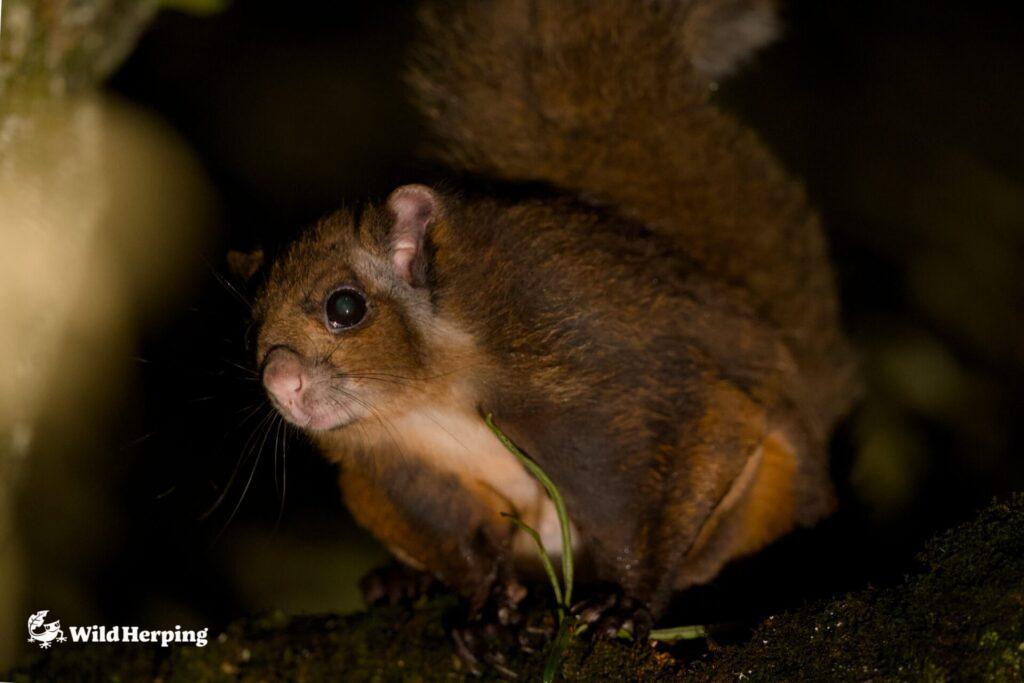
One of the most remarkable animals living in these forests is the Japanese Giant Flying Squirrel (Petaurista leucogenys), known locally as the Musasabi.
These large, nocturnal mammals spend their days resting inside tree cavities and emerge around sunset to explore the forest.
With their impressive gliding membranes, they can travel silently between trees, creating one of the most extraordinary wildlife spectacles in Japan.
Winter offers some interesting advantages for observing these elusive animals.
In this article, we explore the fascinating biology of Japanese giant flying squirrels, why winter can be a rewarding season for wildlife watching, and how you can experience Japan’s nocturnal forests around Kyoto and Nara.
1. What Is a Japanese Giant Flying Squirrel?
Common name: Japanese Giant Flying Squirrel
Japanese name: Musasabi (ムササビ)
Scientific name: Petaurista leucogenys
The Japanese giant flying squirrel is a large, nocturnal mammal belonging to the squirrel family, Sciuridae.
It inhabits forests across much of Japan, including Honshu, Shikoku, and Kyushu.
Unlike terrestrial squirrels, Japanese giant flying squirrels spend most of their lives in trees.
Their most distinctive feature is a large membrane of skin, called the patagium, which stretches between their front and hind limbs.
By spreading this membrane, they can glide from one tree to another.
Although they cannot fly like birds, they are remarkably skilled gliders, capable of controlling their direction and adjusting their body position while moving through the air.
Under suitable conditions, their glides can exceed 100 meters.
What Do Japanese Giant Flying Squirrels Eat?
Japanese giant flying squirrels feed primarily on plant material.
Their diet varies depending on the season and the vegetation available in their habitat.
Common food sources include:
- Leaves
- Buds
- Flowers
- Fruits
- Seeds
- Tree bark
As the seasons change, flying squirrels adjust their feeding behavior to take advantage of available food sources.
During winter, changes in vegetation can influence where they forage and how they move through the forest.
Where Do They Sleep?
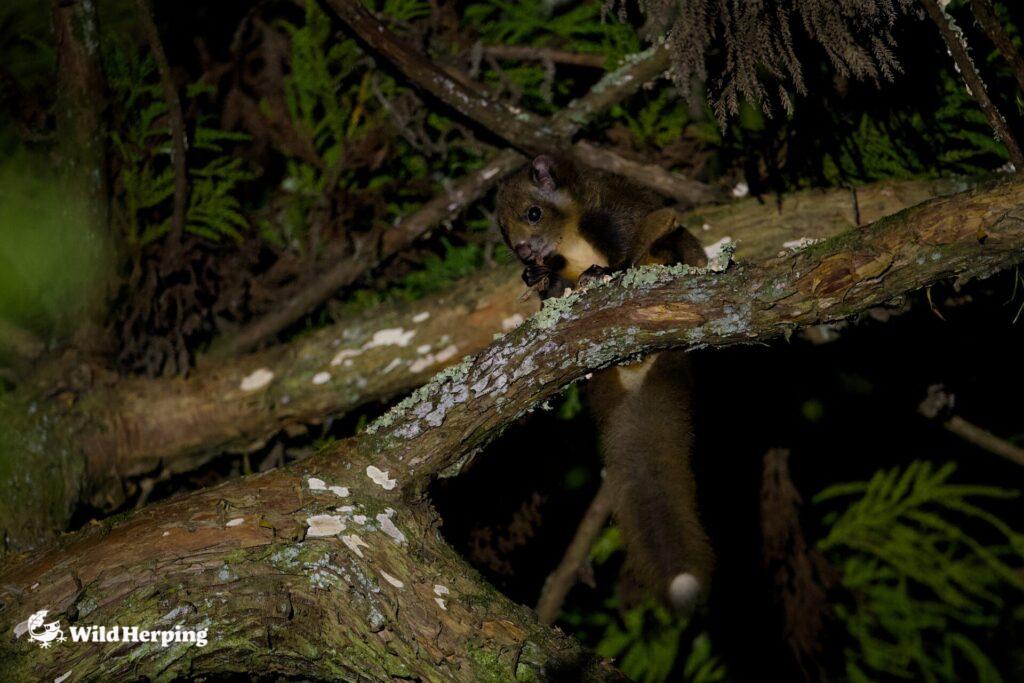
Japanese giant flying squirrels typically spend the daytime resting inside tree cavities or other sheltered spaces.
These resting sites provide protection from weather and potential predators.
Large, mature trees with suitable cavities are therefore important components of their habitat.
The availability of suitable trees can influence where flying squirrels live within a forest.
2. Why Is Winter a Good Season to Observe Japanese Giant Flying Squirrels?
Unlike some mammals, Japanese giant flying squirrels do not hibernate.
They remain active throughout winter, making it possible to observe them even during the colder months.
Winter offers several advantages for wildlife watching in Kyoto and Nara.
Fewer Leaves, Better Visibility
Japanese giant flying squirrels spend most of their time in the forest canopy.
During summer, dense foliage can make it difficult to spot animals moving through the branches.
In winter, however, many deciduous trees lose their leaves.
This can provide clearer views of the canopy, making it easier to notice flying squirrels climbing, feeding, or gliding between trees.
Of course, visibility depends on the forest.
In areas dominated by evergreen trees, the canopy may remain dense throughout the year.
Earlier Sunsets
Japanese giant flying squirrels are primarily nocturnal and often begin their activities around sunset.
During summer, sunset in Kyoto can occur around 7:00 PM.
In winter, the sun sets much earlier, generally around 5:00 PM or before.
This means visitors can begin searching for nocturnal wildlife earlier in the evening.
For travelers who want to experience Japan’s wildlife without spending the entire night outdoors, winter can be a convenient season.
The Atmosphere of a Winter Forest
Winter forests have a very different atmosphere from summer forests.
Many insects become less active, the trees lose their leaves, and the surroundings often feel quieter.
In these conditions, subtle sounds such as an animal moving through branches may become easier to notice.
Exploring a Japanese forest after sunset is an experience in itself, even before encountering any wildlife.
3. What Is It Like to Watch Wild Flying Squirrels?
One of the greatest attractions of wildlife watching is experiencing animals behaving naturally in their own environment.
Observing Japanese giant flying squirrels is about much more than simply finding an animal.
It is also an opportunity to explore the forest, understand its ecology, and witness the transition from day to night.
When the Forest Comes Alive
Imagine standing quietly beneath tall trees as daylight begins to fade.
The forest gradually becomes darker.
Suddenly, movement appears high above the ground.
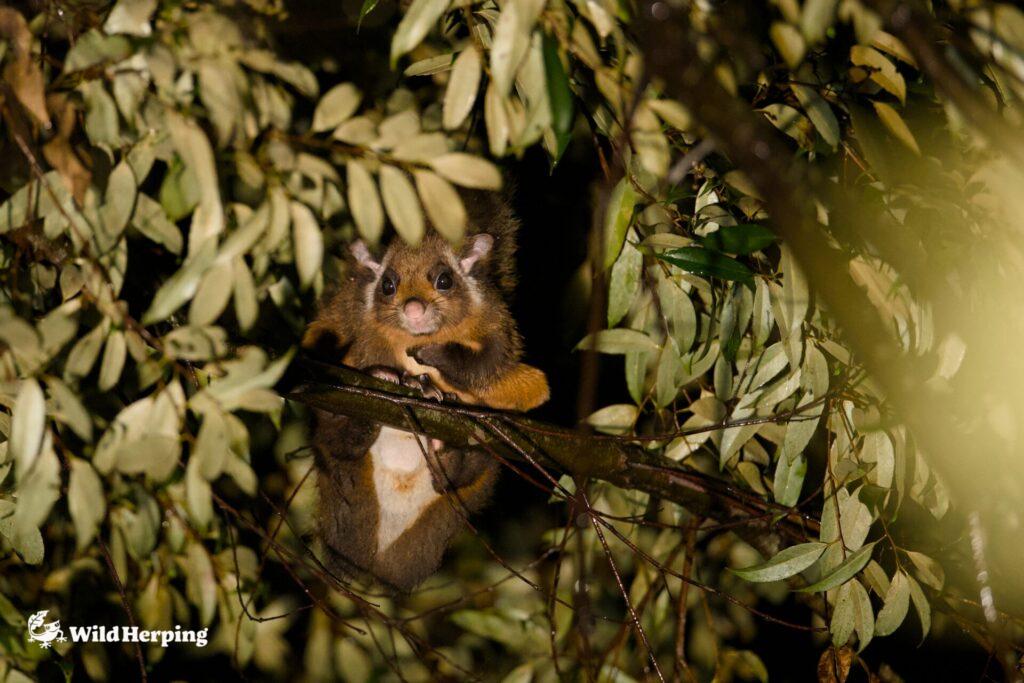
A flying squirrel may emerge from a tree cavity, pause to observe its surroundings, and begin climbing along the trunk.
After moving through the branches, it may search for food or travel to another tree.
Watching these behaviors in the wild offers a fascinating glimpse into the lives of Japan’s nocturnal mammals.
Watching a Flying Squirrel Glide
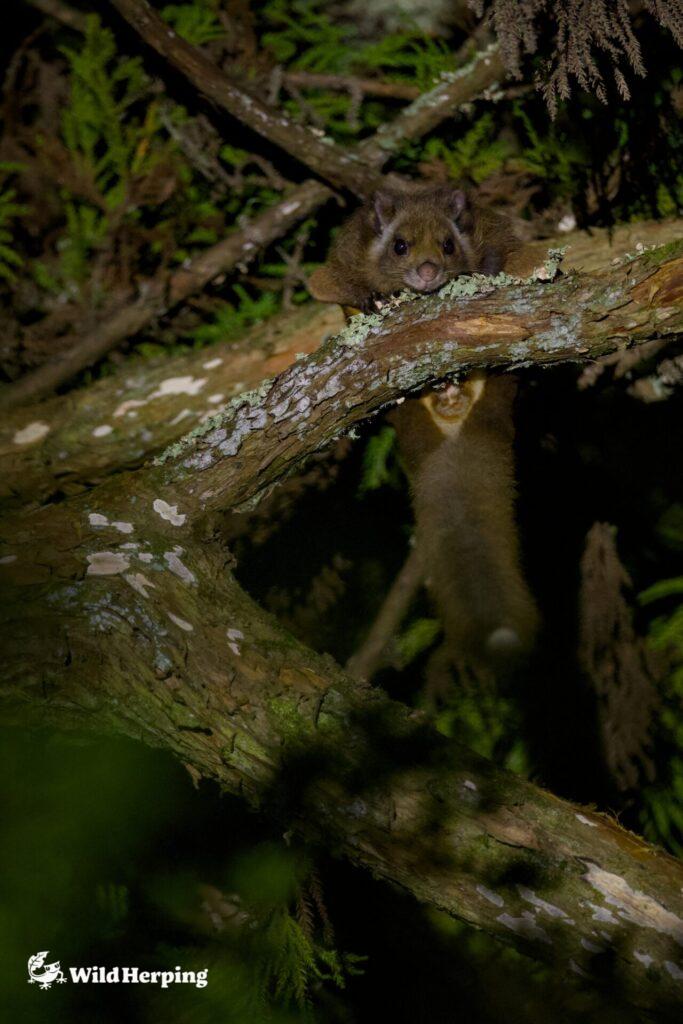
Gliding is undoubtedly one of the most impressive behaviors of Japanese giant flying squirrels.
Before gliding, an individual may climb to a suitable position high in a tree.
It then launches itself into the air, spreading its limbs and extending the membrane between them.
The membrane creates a broad surface that allows the squirrel to glide through the forest.
During the glide, it can adjust its body position to control its direction.
As it approaches another tree, it changes its posture and lands against the trunk.
Seeing such a large mammal move silently through the air is an unforgettable experience.
However, even when a flying squirrel is observed, gliding behavior is not guaranteed.
Wild animals behave according to their own needs, and their activities can vary with weather, environmental conditions, and individual behavior.
This unpredictability is part of what makes observing wildlife in its natural habitat so rewarding.
4. Where Can You See Japanese Giant Flying Squirrels in Kyoto and Nara?
Kyoto and Nara are famous for their cultural heritage, but both regions also contain extensive forest habitats.
These forests support a wide variety of mammals, birds, reptiles, and amphibians.
Japanese giant flying squirrels inhabit suitable wooded environments where they can find food, shelter, and trees that allow them to move through the canopy.
Protecting Wildlife Locations
At WildHerping & Co., we believe that protecting wildlife habitats is an essential part of responsible nature tourism.
Publishing the exact locations of tree cavities, resting sites, or frequently used observation spots can attract excessive attention and potentially disturb the animals.
For this reason, we do not publicly disclose sensitive wildlife locations.
Our goal is to help visitors appreciate Japan’s wildlife while minimizing our impact on the animals and their environment.
5. What to Wear for Winter Wildlife Watching in Kyoto
Winter evenings in Kyoto and Nara can be cold, especially in forested and mountainous areas.
Temperatures often drop significantly after sunset, and standing still while watching wildlife can make the cold feel more intense.
Proper clothing is essential for a comfortable experience.
Warm, Layered Clothing
We recommend wearing thermal base layers, an insulating mid-layer, and a warm outer jacket.
A down jacket or other insulated winter coat is particularly useful during evening wildlife watching.
Comfortable Walking Shoes
Forest trails may contain uneven ground, exposed roots, and slippery fallen leaves.
Wear comfortable shoes with good traction.
Gloves and a Warm Hat
Wildlife observation sometimes involves waiting quietly in one location.
Gloves and a warm hat can make a significant difference to your comfort.
Headlamp
A headlamp or flashlight is important for navigating forest trails safely after dark.
However, artificial light should be used carefully around nocturnal wildlife.
Avoid shining powerful lights directly at animals for extended periods.
Camera and Binoculars
Binoculars can be helpful when observing flying squirrels high in the canopy.
For wildlife photography, a camera capable of performing well in low-light conditions may be useful.
However, photography should never take priority over the welfare of the animals.
6. Responsible Wildlife Watching: Respecting Japan’s Nocturnal Animals
Wildlife watching should always prioritize the well-being of the animals and the protection of their habitats.
Japanese giant flying squirrels rely on forest environments for feeding, shelter, and reproduction.
Disturbing their resting sites or repeatedly approaching them too closely can negatively affect their natural behavior.
When observing flying squirrels, we recommend following these principles:
- Never touch, chase, or attempt to capture wild animals.
- Avoid approaching tree cavities and resting sites too closely.
- Do not shine powerful lights directly at animals for extended periods.
- Keep noise to a minimum.
- Never shake or strike trees to force animals to emerge.
- Respect local access restrictions and private property.
- Avoid publicly sharing sensitive wildlife locations.
The most rewarding wildlife encounters happen when animals are allowed to behave naturally.
At WildHerping & Co., responsible wildlife observation is central to our approach.
We aim to provide meaningful wildlife experiences while minimizing disturbance to the animals and their habitats.
7. Join a Japanese Giant Flying Squirrel Tour in Kyoto and Nara
Most visitors to Kyoto and Nara spend their days exploring temples, shrines, gardens, and historic neighborhoods.
However, just beyond these famous attractions lies a completely different side of Japan.
As the sun sets, the forests come alive with nocturnal wildlife.
WildHerping & Co. offers guided Japanese Giant Flying Squirrel Tours in the Kyoto and Nara area from December through March.
Japanese Giant Flying Squirrel Tour
Our evening wildlife tour focuses on searching for wild Japanese giant flying squirrels in their natural forest habitat.
During the experience, participants have the opportunity to learn about the ecology, behavior, and environment of these remarkable mammals.
What Makes This Experience Special?
Observe Wildlife in Its Natural Habitat
Rather than viewing animals in captivity, we explore forests where Japanese giant flying squirrels live naturally.
Guided by Wildlife Specialists
Our guides share their knowledge of Japanese wildlife, animal behavior, and forest ecosystems throughout the experience.
A Seasonal Winter Experience
Our flying squirrel tours operate from December to March, offering visitors a unique way to experience Japan’s forests during winter.
Explore the Kyoto and Nara Region
The tour takes place in suitable forest habitats within the Kyoto and Nara area.
Are Flying Squirrel Sightings Guaranteed?
Japanese giant flying squirrels are wild animals, and sightings cannot be guaranteed.
Even when an individual is found, it may not glide during the observation.
Weather conditions and natural animal behavior can influence each experience.
We believe that wildlife should always be observed respectfully, without forcing animals to behave in a particular way.
Discover the Hidden Wildlife of Kyoto This Winter
Kyoto and Nara offer much more than their famous temples and traditional architecture.
Beyond the city streets, forests provide a home for some of Japan’s most fascinating wildlife.
Among these animals, the Japanese giant flying squirrel stands out as a remarkable example of adaptation to life in the forest canopy.
Its nocturnal lifestyle, impressive gliding ability, and dependence on mature forests make it a fascinating species to observe and learn about.
Winter provides an opportunity to explore these forests under different conditions, with earlier sunsets and potentially clearer views through the trees.
Whether you are a wildlife enthusiast, nature photographer, or traveler looking for a unique experience in Japan, searching for wild flying squirrels can reveal an entirely different side of Kyoto and Nara.
Experience Japan’s Nocturnal Forests with WildHerping & Co.
Japanese Giant Flying Squirrel Tour
Season: December–March
Location: Kyoto and Nara area, Japan
Target species: Japanese Giant Flying Squirrel (Petaurista leucogenys)
Join our guided evening wildlife tour and discover one of Japan’s most fascinating nocturnal mammals in its natural habitat.
Explore Our Japanese Giant Flying Squirrel Tour & Book Your Experience


