
The Ryukyu Archipelago is one of the most fascinating destinations in Japan for herping. Because its islands have been geographically isolated from one another, many reptiles and amphibians have developed unique regional forms and distributions.
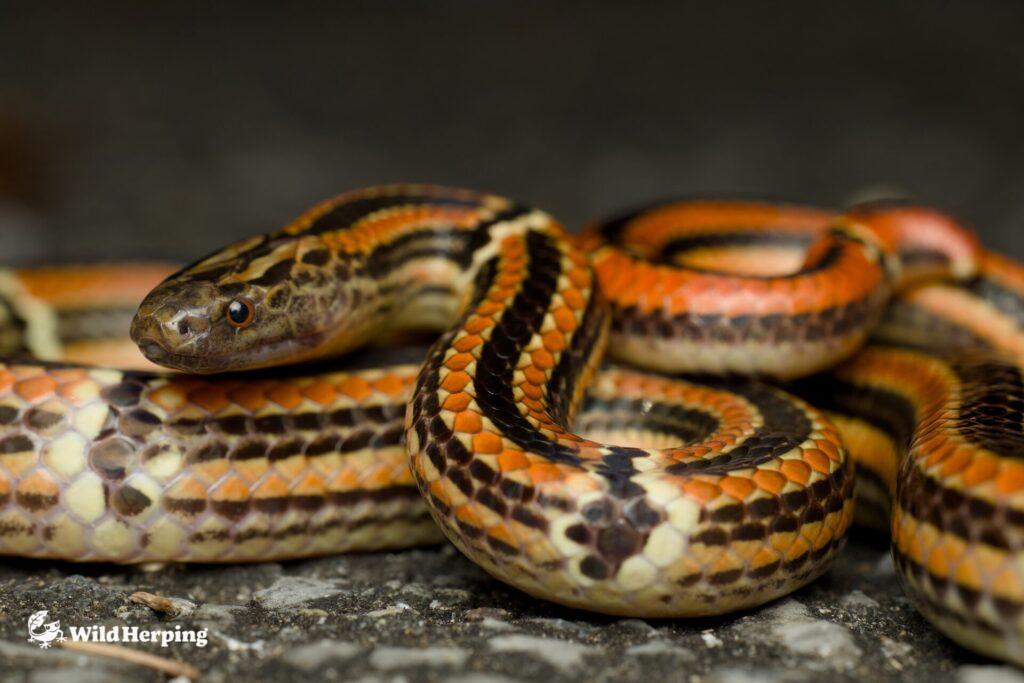
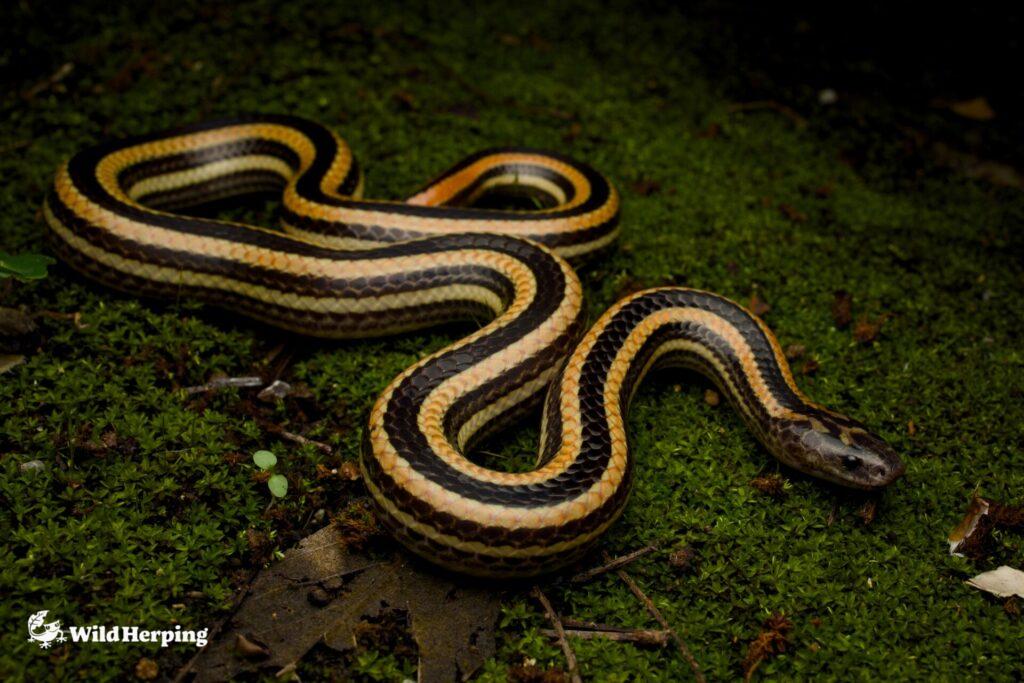
One excellent example is the Japanese Coral Snake (Sinomicrurus japonicus).
Okinawa is home to two subspecies of this beautiful venomous snake. However, they are not found together on the same islands. Each subspecies has its own distribution, which means that visiting only Okinawa Island will show you just one part of the species’ diversity.
Two Different Island Forms
The two forms can be roughly divided by their island distribution:
・Okinawa Island and Iheya Island group
・Kume Island and Sesoko Island group
Because their habitats are separated by the sea, the two subspecies have developed noticeably different appearances and patterns.
For herpers and wildlife photographers, this makes the Japanese Coral Snake particularly interesting. To observe both forms, you need to travel between islands rather than remaining on Okinawa Island alone.
Why Island-Hopping Is Important for Herping in Okinawa
Many visitors think of Okinawa as a single destination, but from a wildlife perspective, each island can be very different.
Even nearby islands may have different species, subspecies, color patterns, or population characteristics. Traveling between islands allows you to experience the biological diversity created through long periods of isolation.
This is especially true for animals with limited distributions, including:
・Japanese Coral Snakes
・Cave geckos
・Habu species
・Island-endemic frogs and newts
・Ryukyu Black-breasted Leaf Turtles
For serious herpers, Okinawa’s smaller islands can be just as rewarding as the main island—and sometimes even more exciting.
Herping Beyond Okinawa Island
Okinawa Island has some outstanding wildlife areas, particularly the forests of Yanbaru. However, staying only on the main island means missing many of the Ryukyu Archipelago’s most interesting regional forms.
Kume Island, Iheya Island, Sesoko Island, and other smaller islands each offer their own wildlife communities and evolutionary histories.
That is why island-hopping is one of the best ways to experience herping in southern Japan.
Final Thoughts
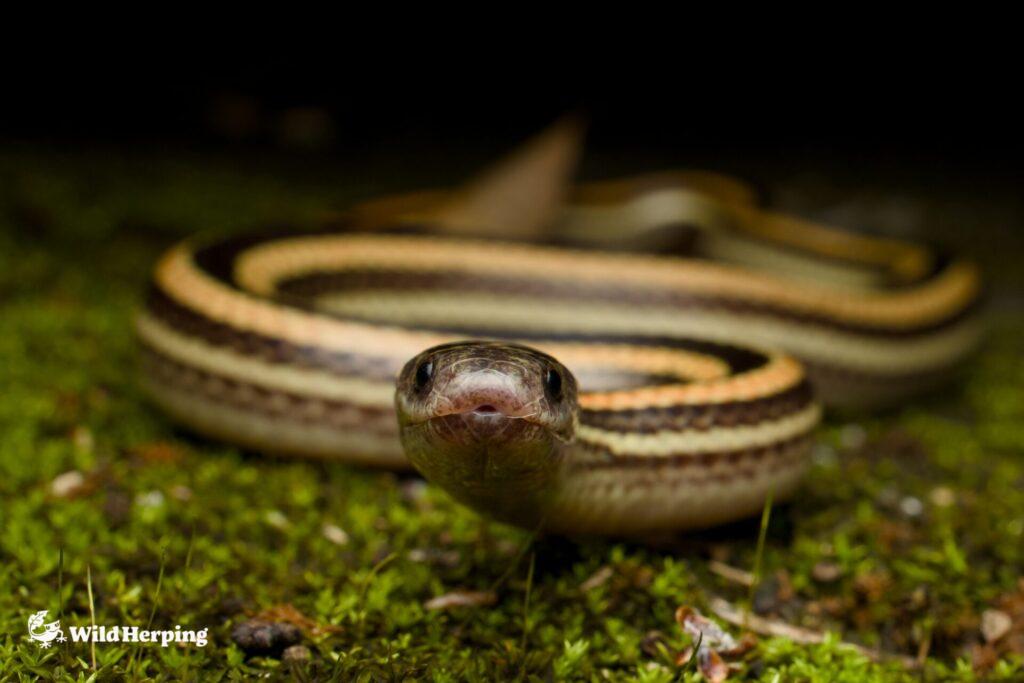
The two subspecies of the Japanese Coral Snake show how dramatically island isolation can shape wildlife.
Although they belong to the same species, their different distributions and appearances make each one worth searching for independently.
When planning a herping trip to Okinawa, do not overlook the smaller islands. Exploring several islands will give you a much deeper understanding of the Ryukyu Archipelago’s extraordinary reptile and amphibian diversity.
Join Our Okinawa Herping Day Tour
Would you like to experience Okinawa’s unique reptiles and amphibians in the wild?
Our Okinawa Herping Day Tour is designed for wildlife enthusiasts, herpers, and photographers who want to explore the island’s rich biodiversity with a local guide.
Depending on the season and weather conditions, possible target species may include:
・Habu species
・Japanese Coral Snakes
・Cave geckos
・Ryukyu Black-breasted Leaf Turtles
・Endemic frogs and newts
・Other reptiles and amphibians of the Ryukyu Islands
Private tours can be arranged according to your schedule, target species, and photography interests.
If you are planning a herping trip to Okinawa, feel free to contact us for availability and tour details.
Book your Okinawa Herping Day Tour and discover the hidden wildlife of the Ryukyu Islands.


