
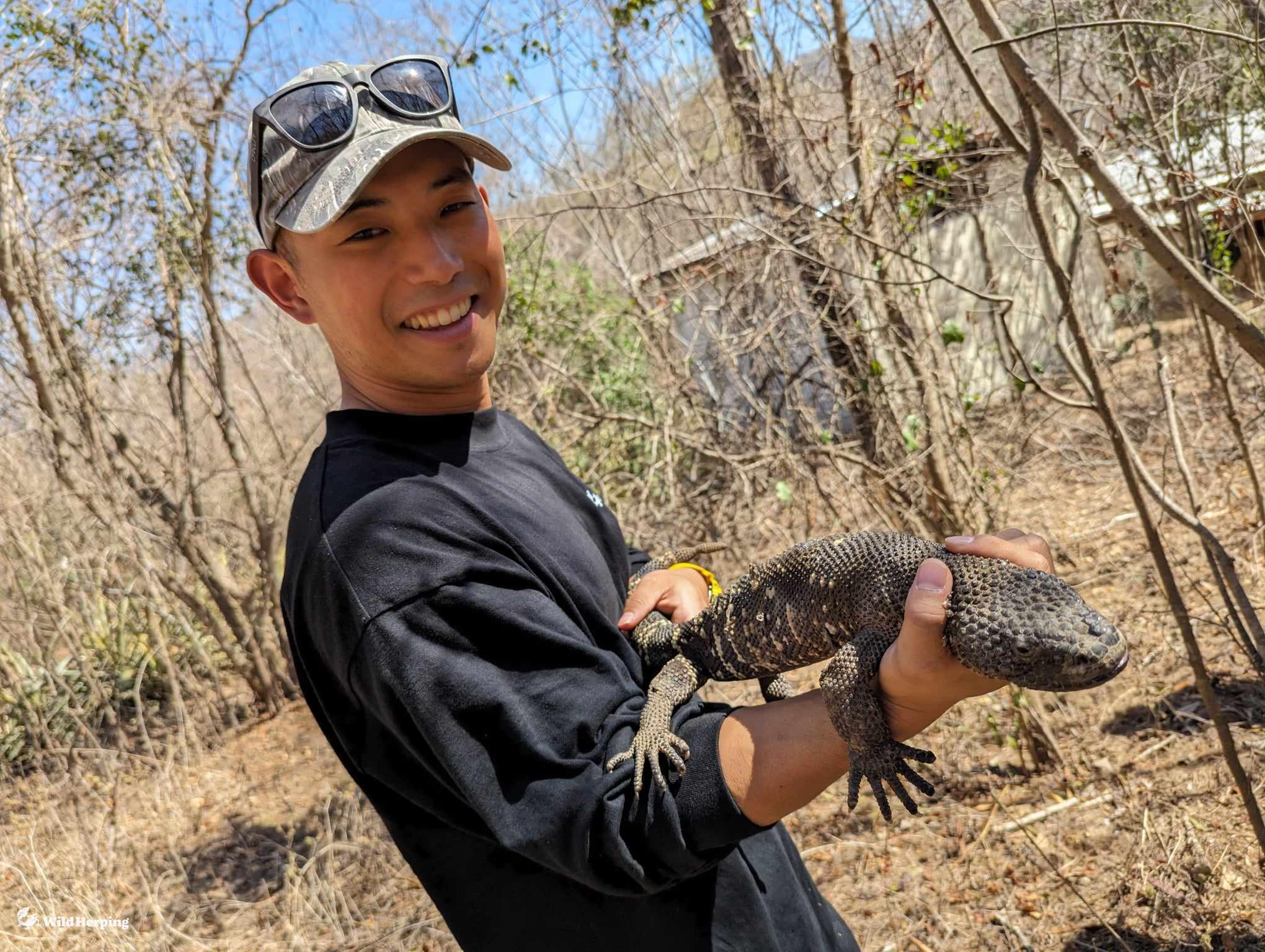
This is a report on the wildlife we observed in the Ambre Mountain (Montagne d’Ambre) region of Northern Madagascar.
Ambre Mountain is located at a slightly high altitude, with the park entrance being around 1,000m. Because of this, the dry season is not as severe as in other locations, and the temperatures are noticeably cool in the mornings and evenings. This national park is highly recommended as it is home to six species of my favorite leaf-tailed geckos, and we had a very high chance of spotting the extremely small Brookesia tuberculata chameleon.
Let’s dive right into the sightings!
Leaf-tailed Geckos (Uroplatus)
Amber Mountain Leaf-tailed Gecko (Uroplatus fiviavana)
- This species is endemic to the national park and is the smallest of all Uroplatus. It’s a very strange species, as over 80% of observed individuals lack a tail. Indeed, the two individuals we saw during our stay were both tailless. It seems more common in areas slightly below the national park’s highest elevation.
Garamaso Leaf-tailed Gecko (Uroplatus garamaso)
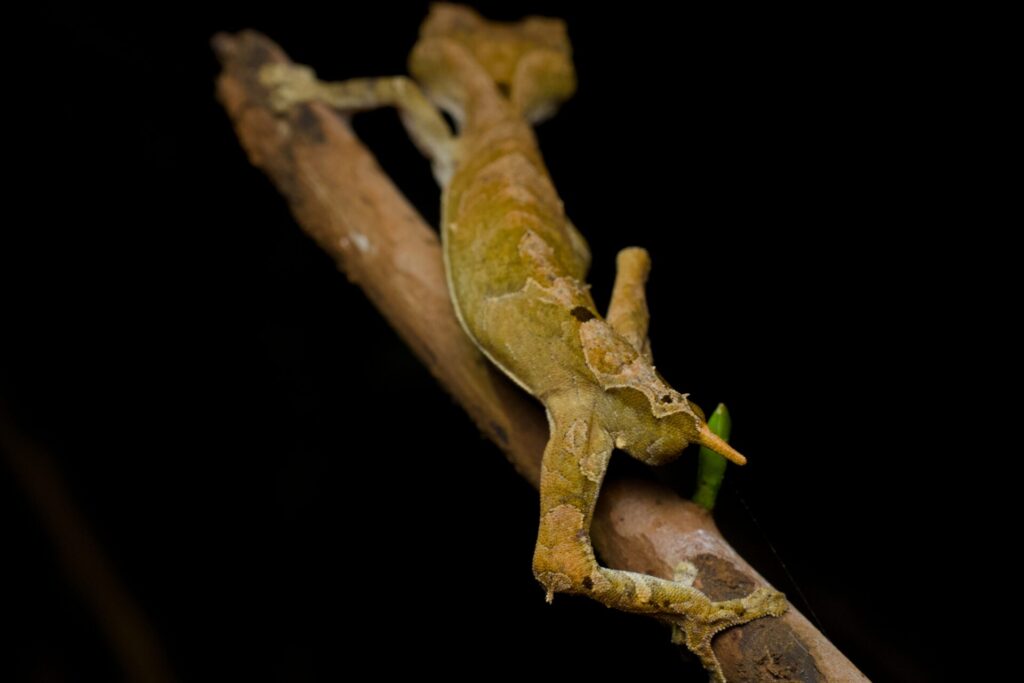
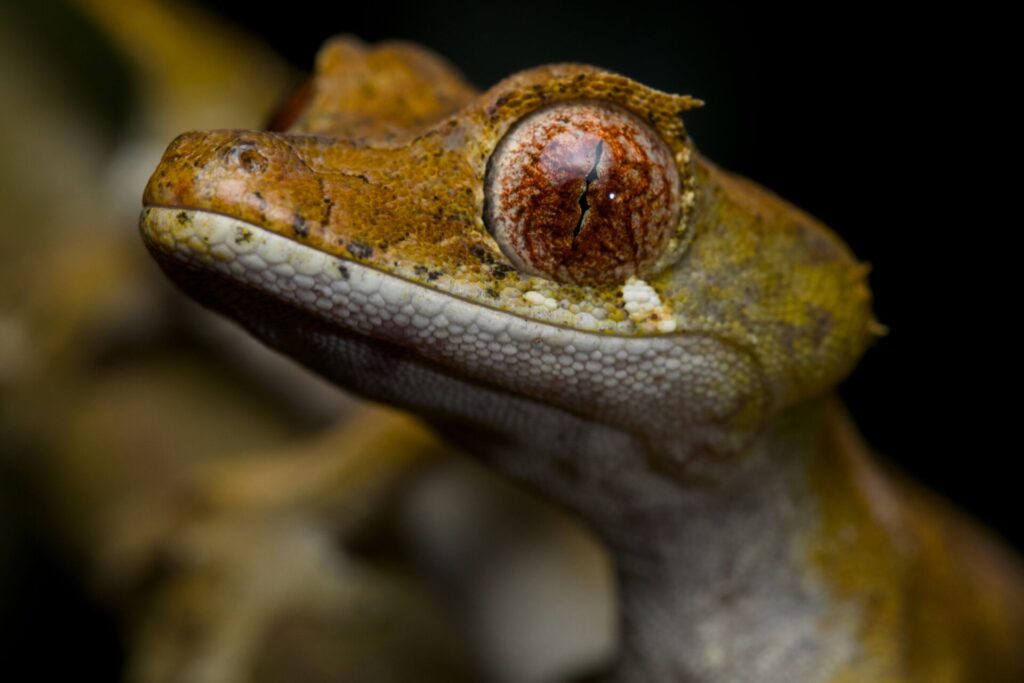
- Similar to the Mossy Leaf-tailed Gecko, but Garamaso means “yellow eye,” which is the defining characteristic that helps distinguish it. We only managed to find one individual after searching for five days, so numbers appear to be low.
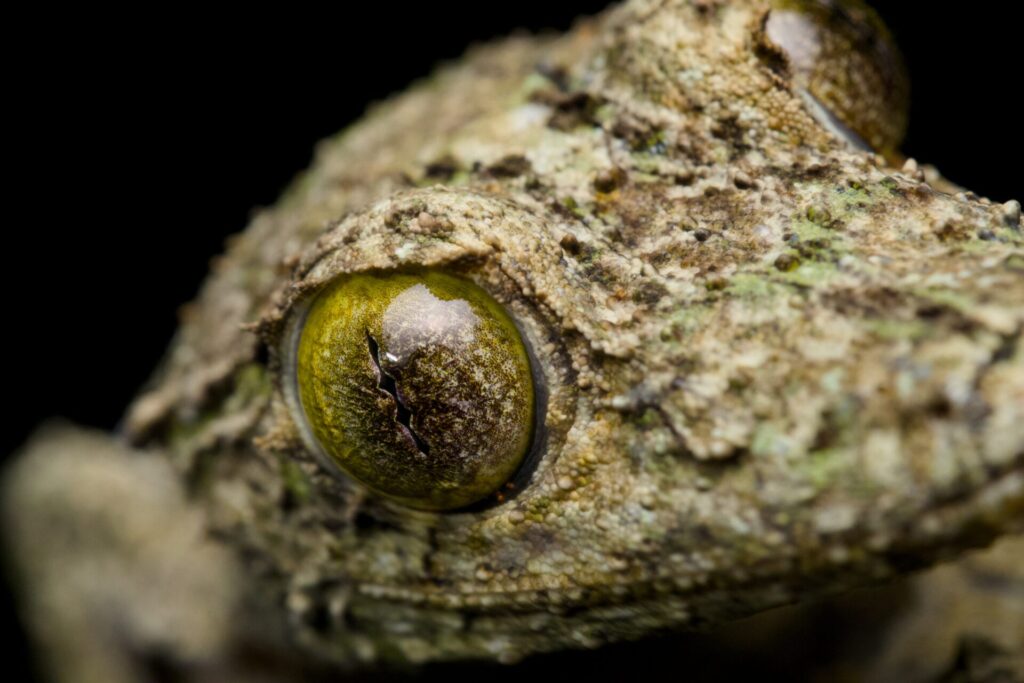
Northen Leaf-tailed Gecko (Uroplatus alluaudi)
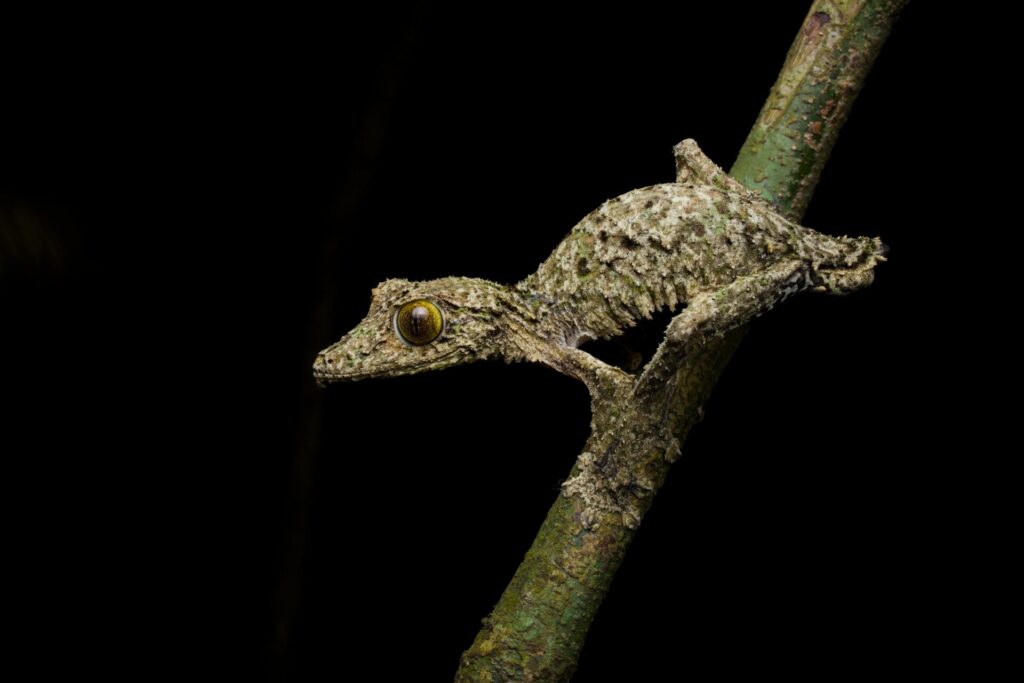
- This was the second most common species in the park. We often saw them higher up in the trees compared to the Mossy Leaf-tailed Gecko. The stripe running from head to tail gives this species a chic and cool appearance.
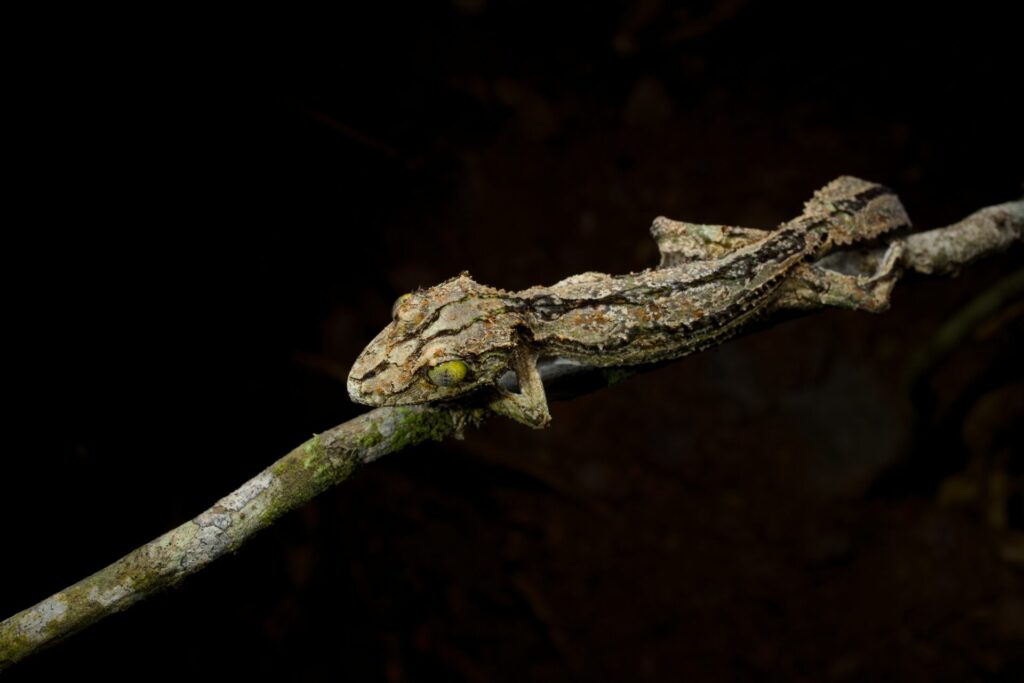
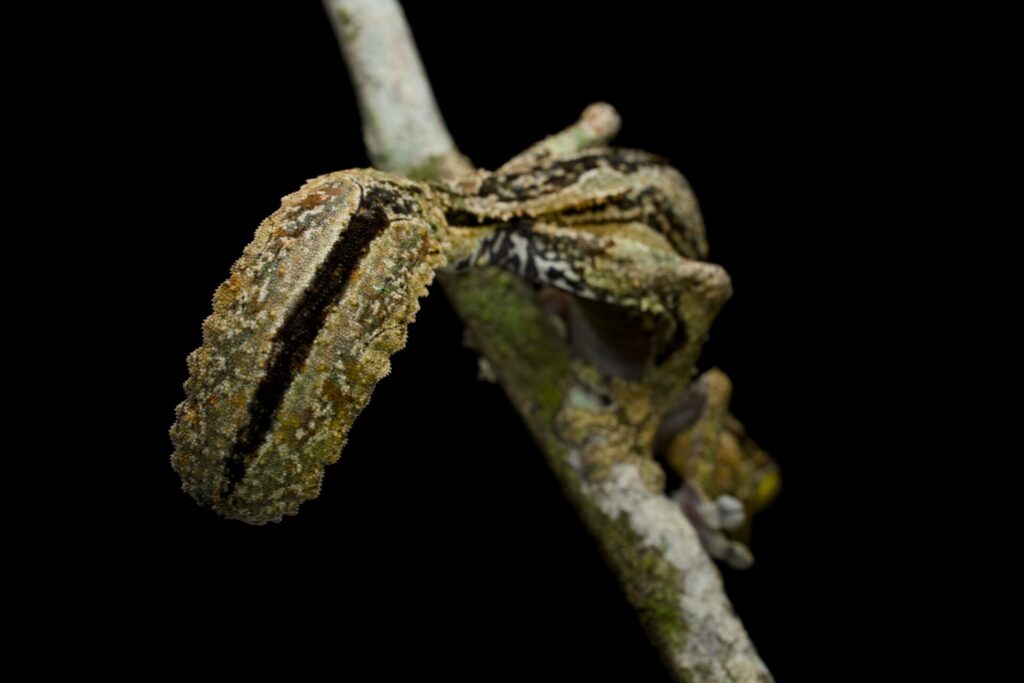
Mossy Leaf-tailed Gecko (Uroplatus sikorae)
- This is the easiest species to observe in Madagascar. It’s interesting to see them in different locations, as some individuals in the rainforest display a greenish coloration.
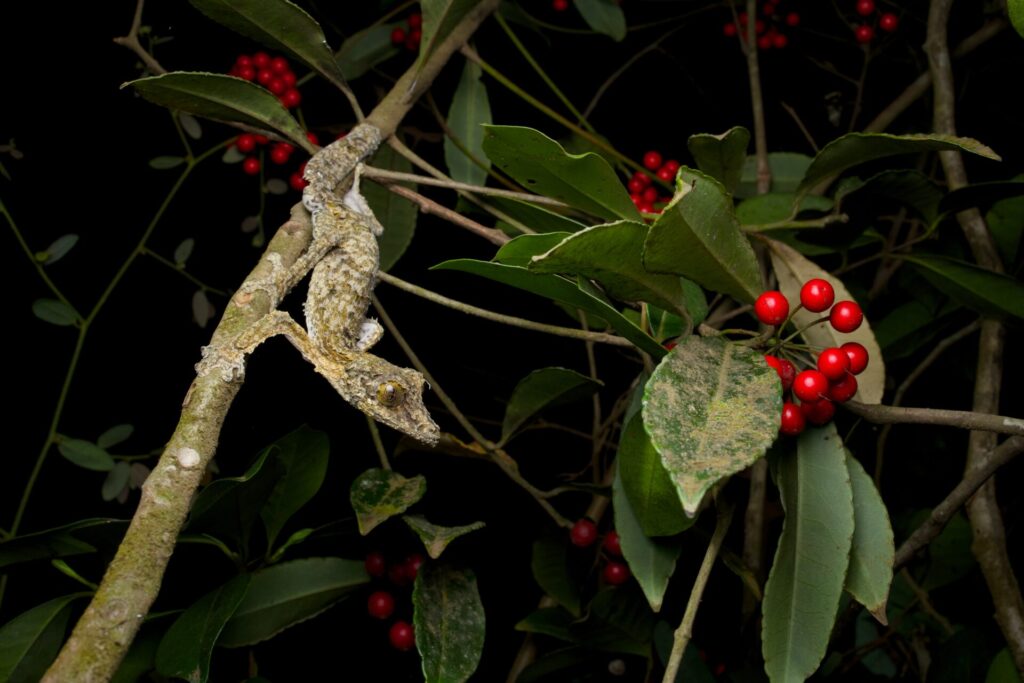
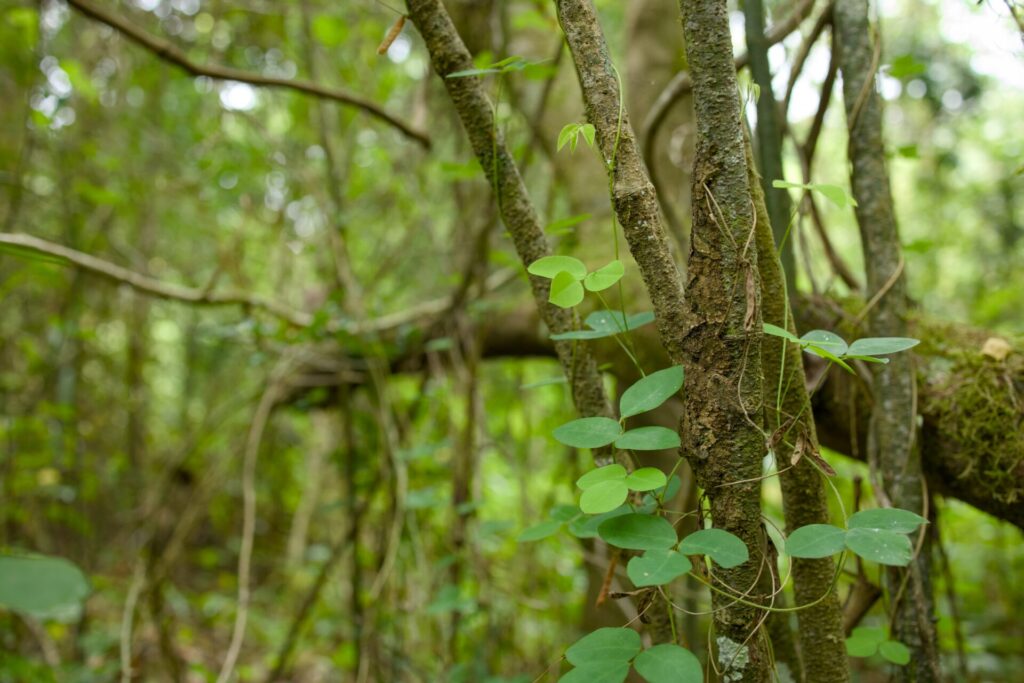
Giant Leaf-tailed Gecko (Uroplatus giganteus)
- Its imposing bulk, befitting the name “Giant”, is truly impressive. This species is also common in lower elevation areas; we observed one a short drive away from the park entrance. They inhabit bamboo forests and are generally found higher up in the trees than the Common Leaf-tailed Gecko (U. fimbriatus).
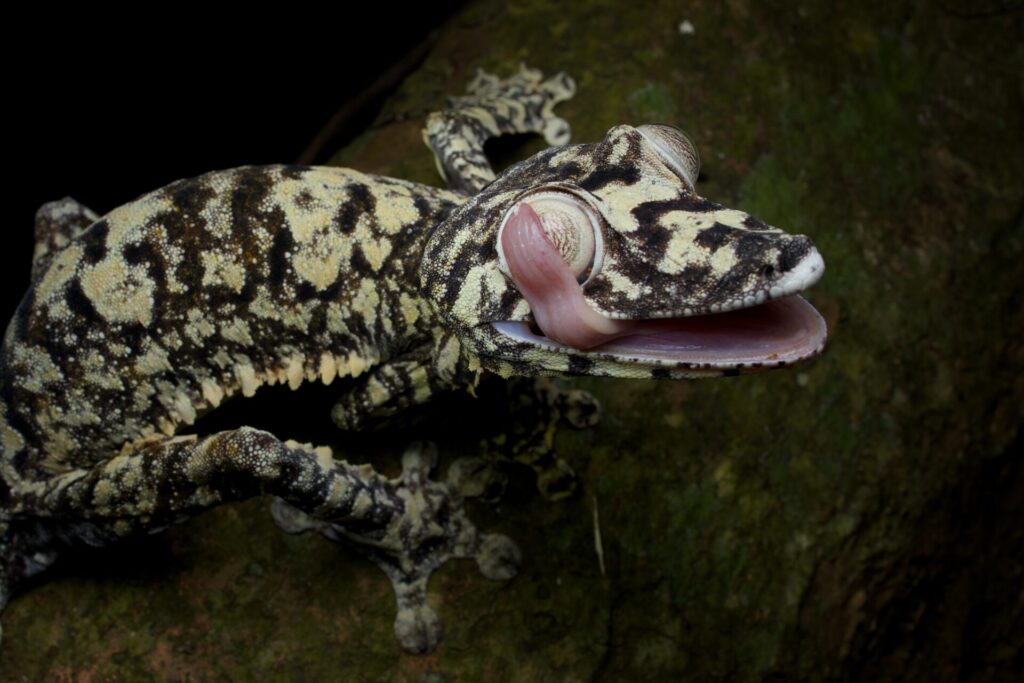
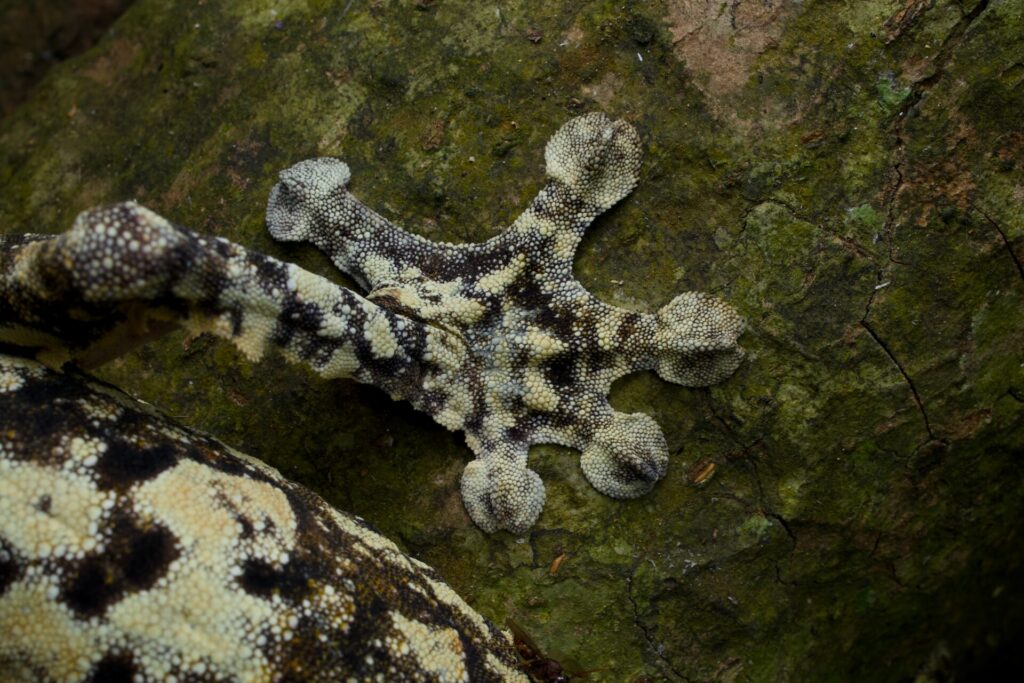
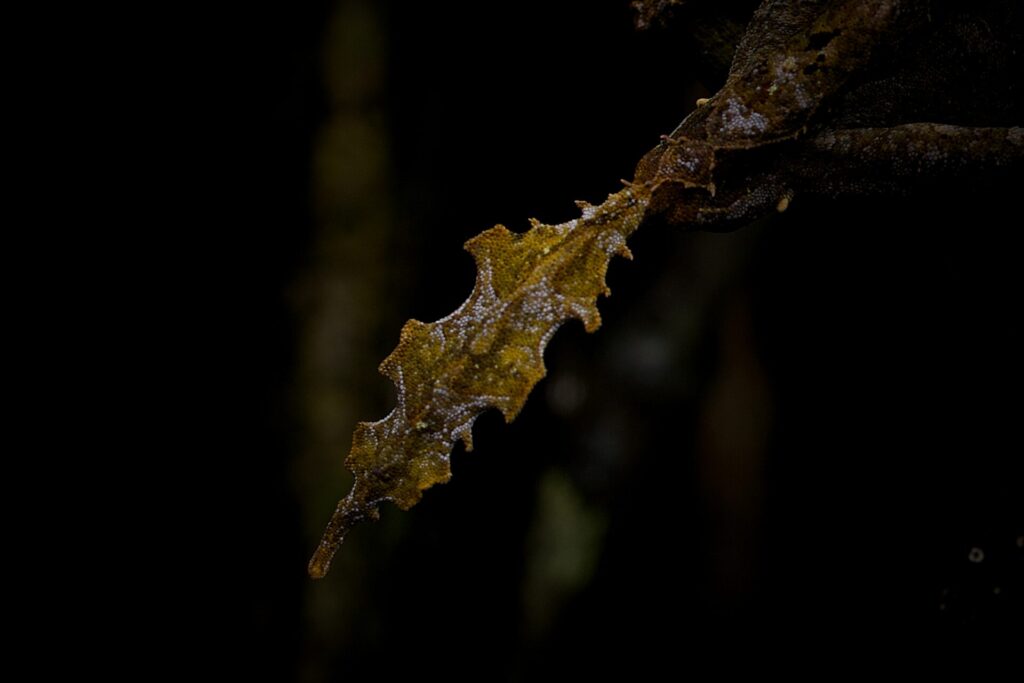
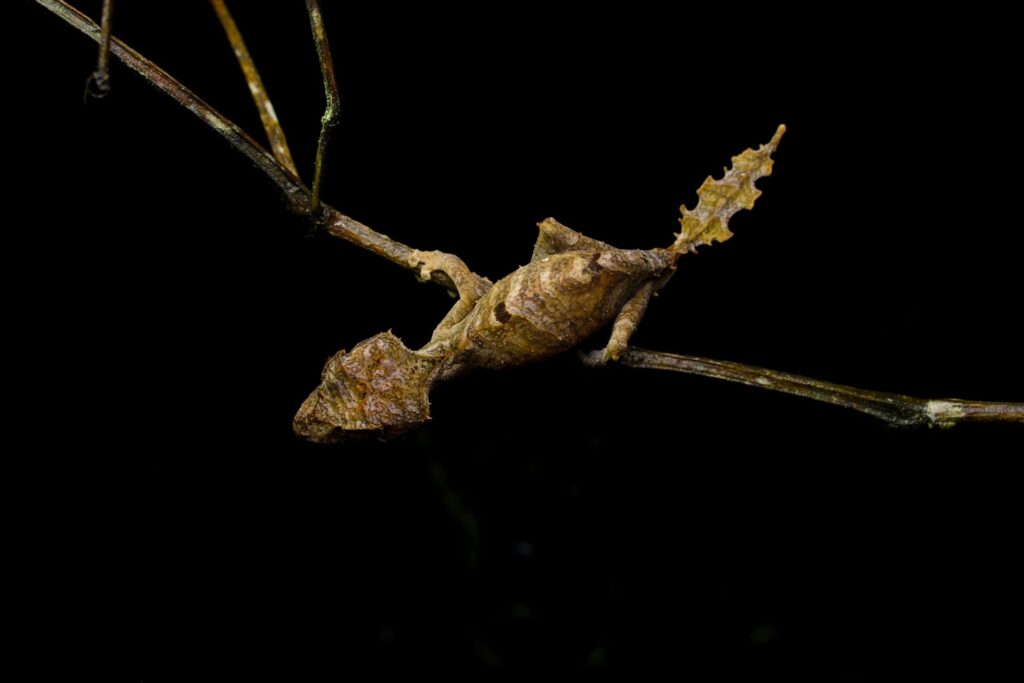
Ebenau’s Leaf-tailed Gecko (Uroplatus ebenaui)
- Said to be very difficult to spot in Ambre Mountain. It is slightly larger than U. fiviavana and lacks the distinctive “eyelid fold,” making identification relatively easy. (The photos used here were taken elsewhere.)
Chameleons
Amber Mountain Chameleon (Calumma ambreense)
- Endemic to the national park. Males are easily identifiable due to their horns.
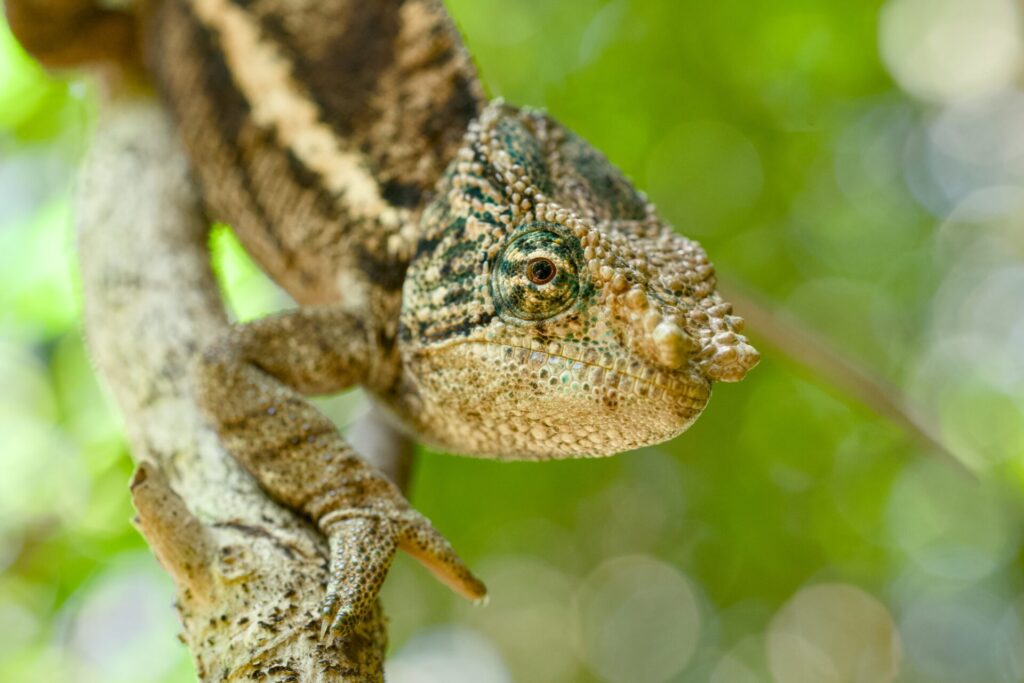
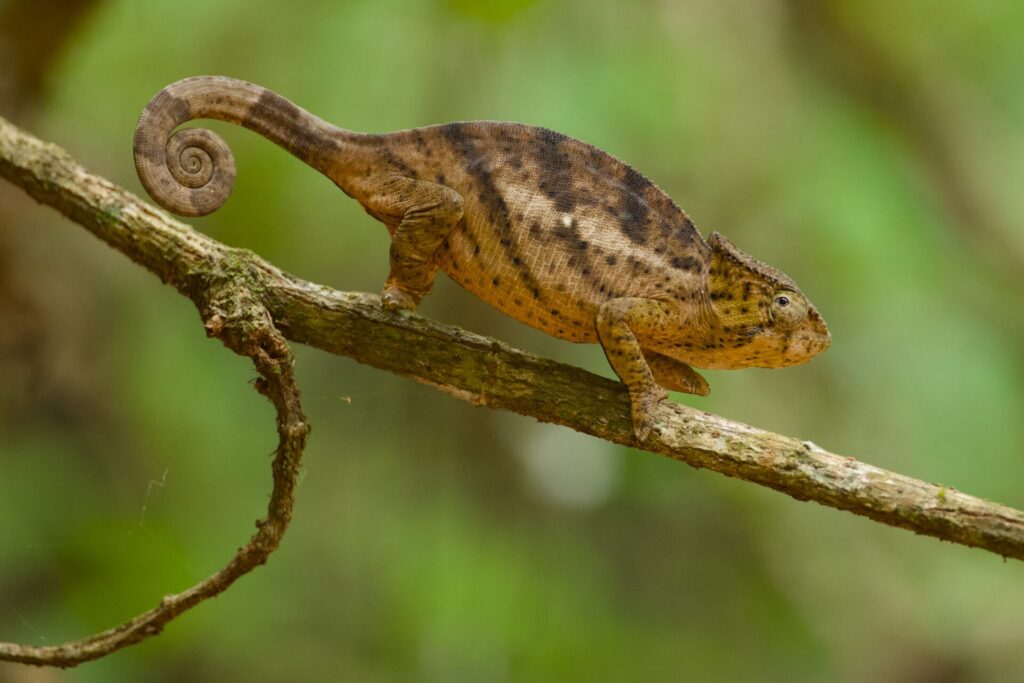
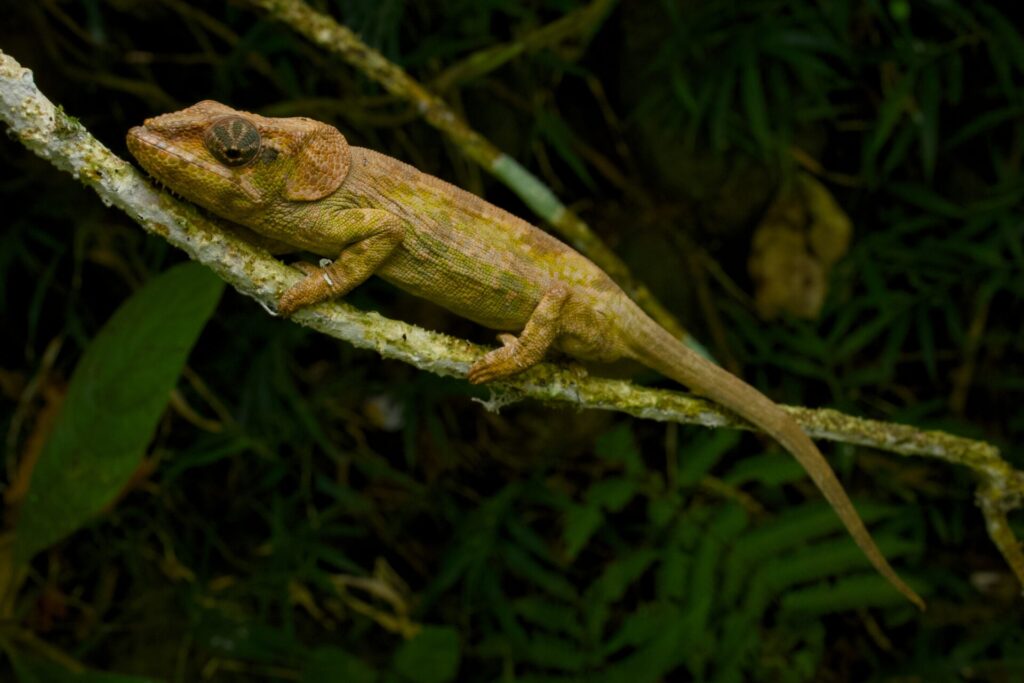
Elephant-eared Chameleon (Calumma amber)
- Named for the flaps that look like elephant ears. I personally love the colors of the males. They get angry and try to intimidate you when you approach. That’s cute, too…
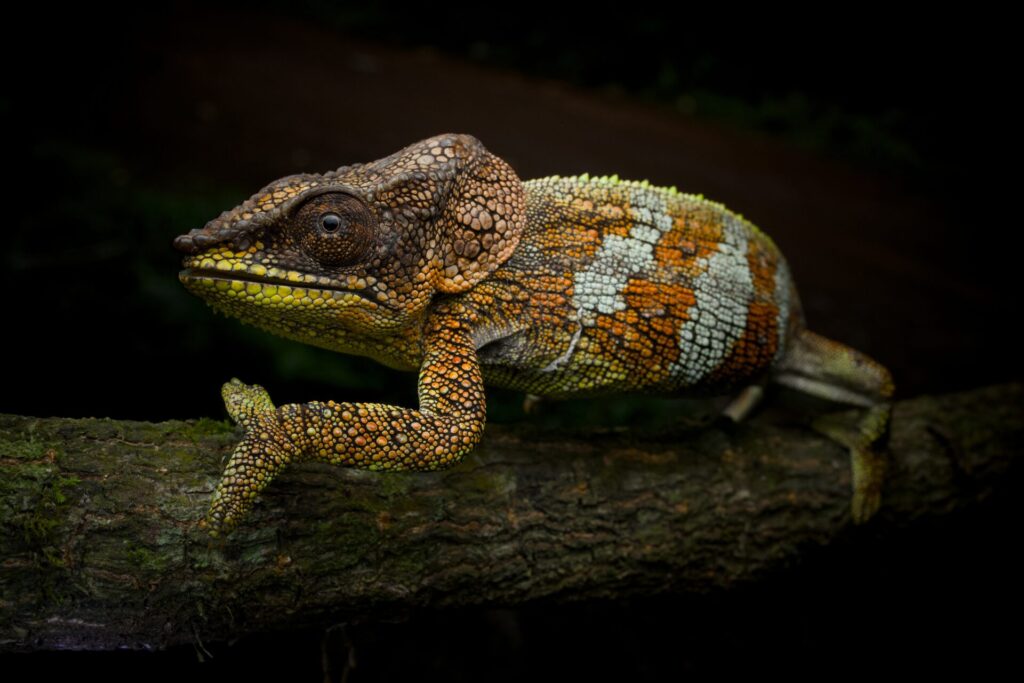
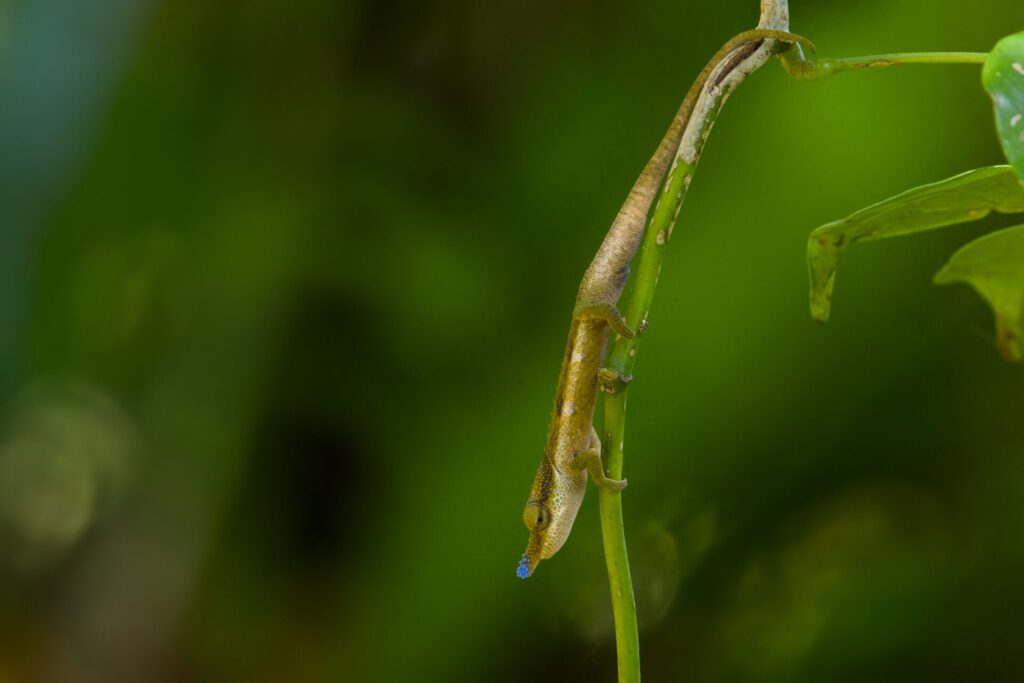
Blue-nosed Chameleon (Calumma boettgeri)
- My personal favorite chameleon. They are not uncommon, but they hide behind branches or stems when people pass by, so you must walk slowly and search carefully. Also, once spotted, they quickly change their nose color to whitish. I spent about an hour wearing a camouflage poncho to finally photograph its blue nose state.
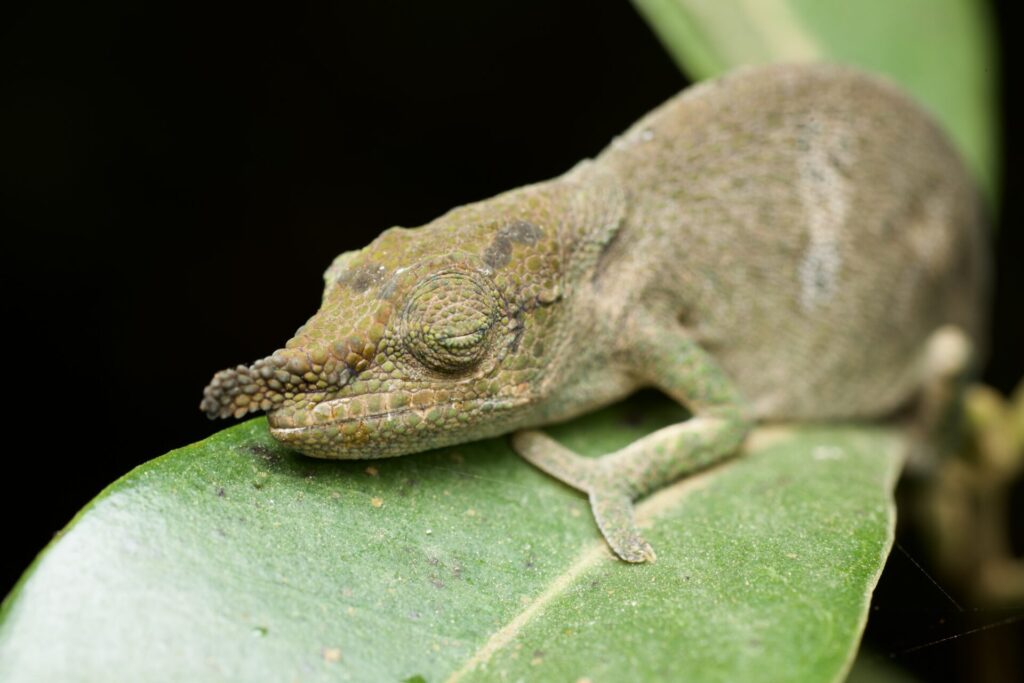
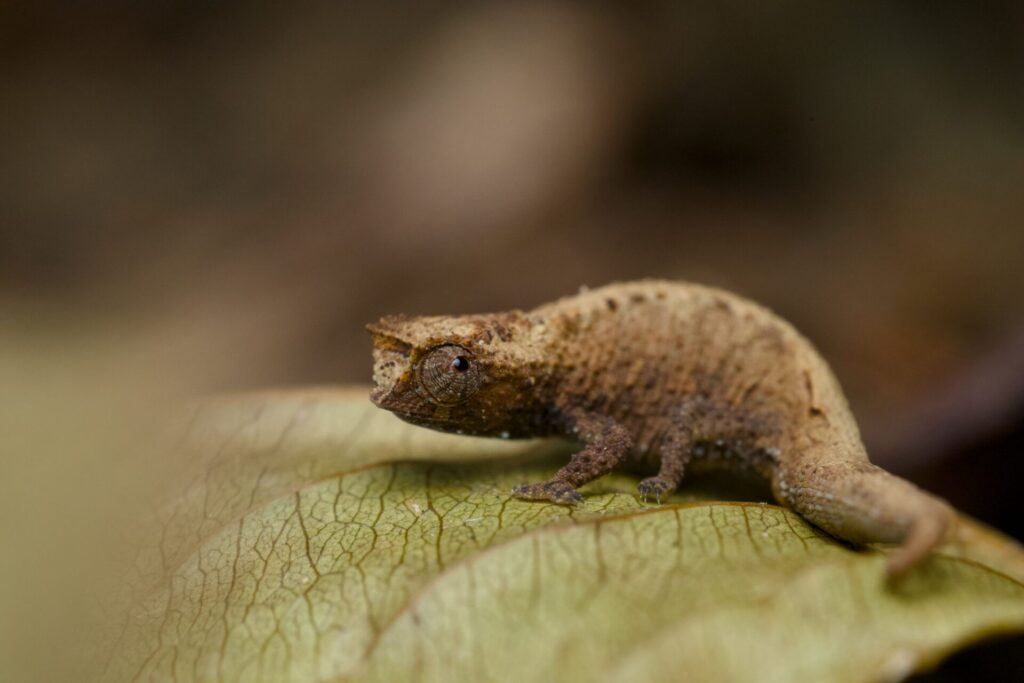
Brookesia tuberculata
- An extremely small chameleon. They are usually found when turning over leaf litter in areas with large trees, but they are very hard to spot. Males and females look quite different.
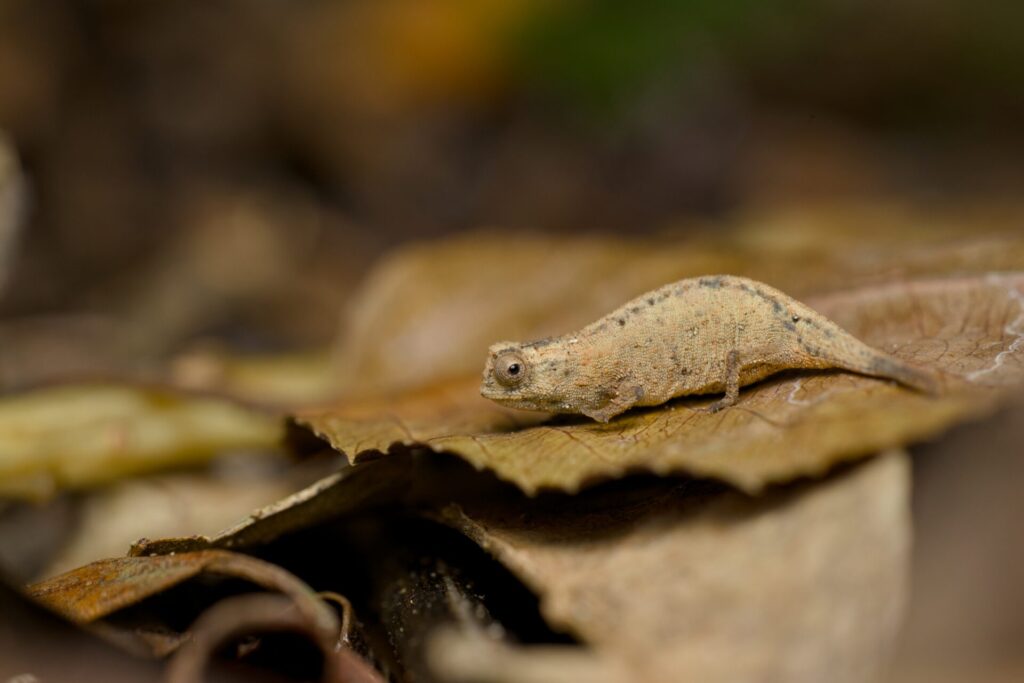
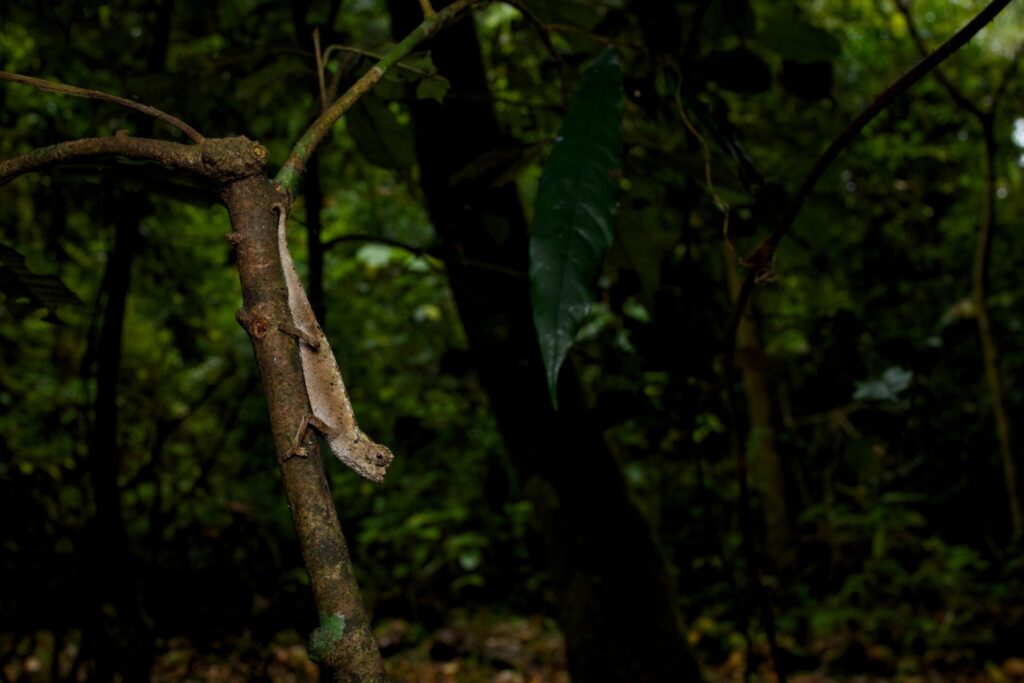
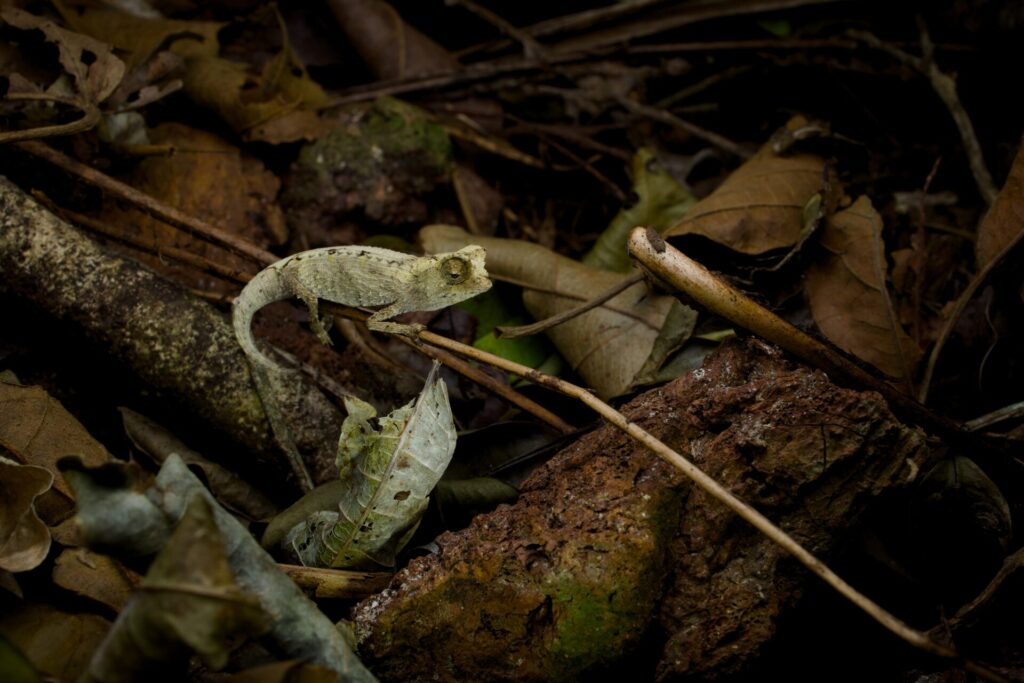
Brookesia antakarana
- This is a larger species among the Brookesia (Small Chameleons). We observed one climbing about one meter up a tree trunk during midday, so they might be quite arboreal.
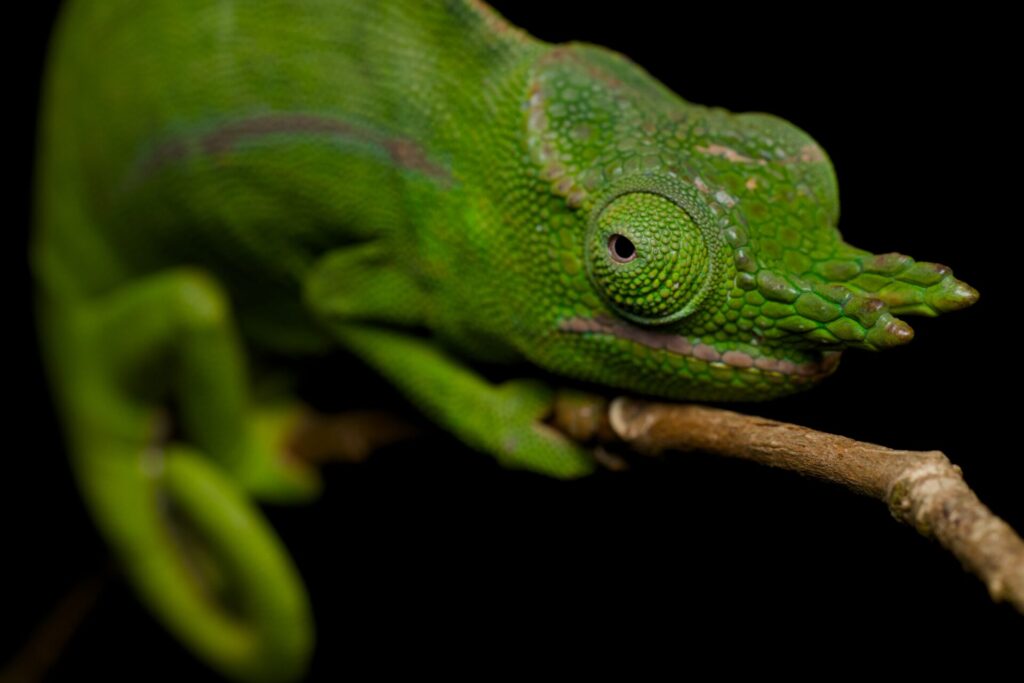
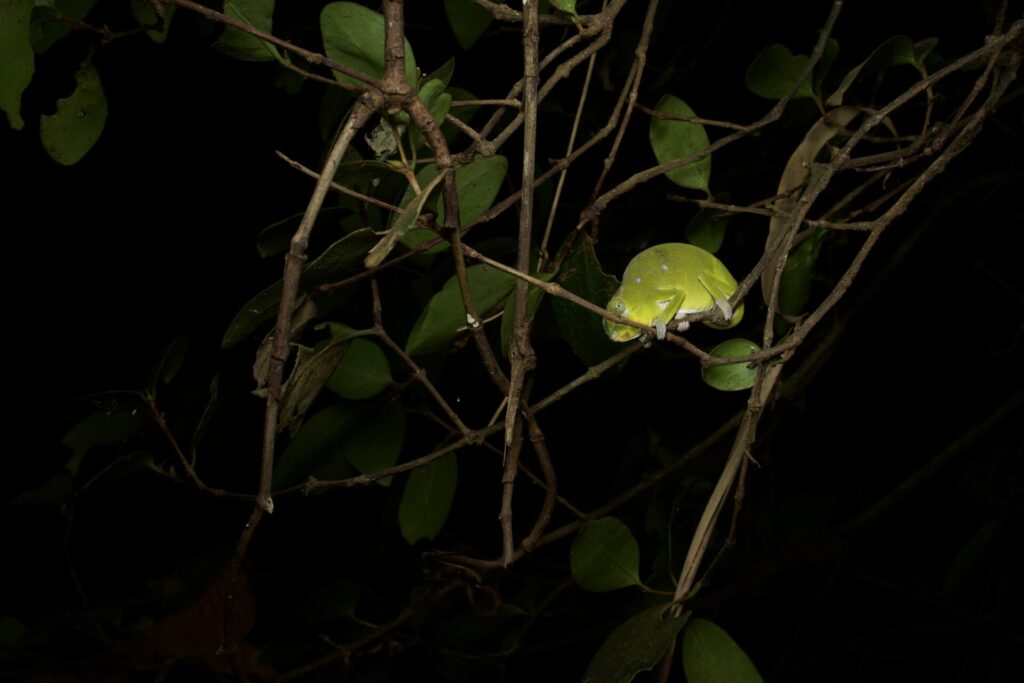
Furcifer petteri
- The male’s horn is charming. It’s rewarding to observe them, as the length of the male’s horn varies by region. The population in Ambre Mountain has long, cool horns.
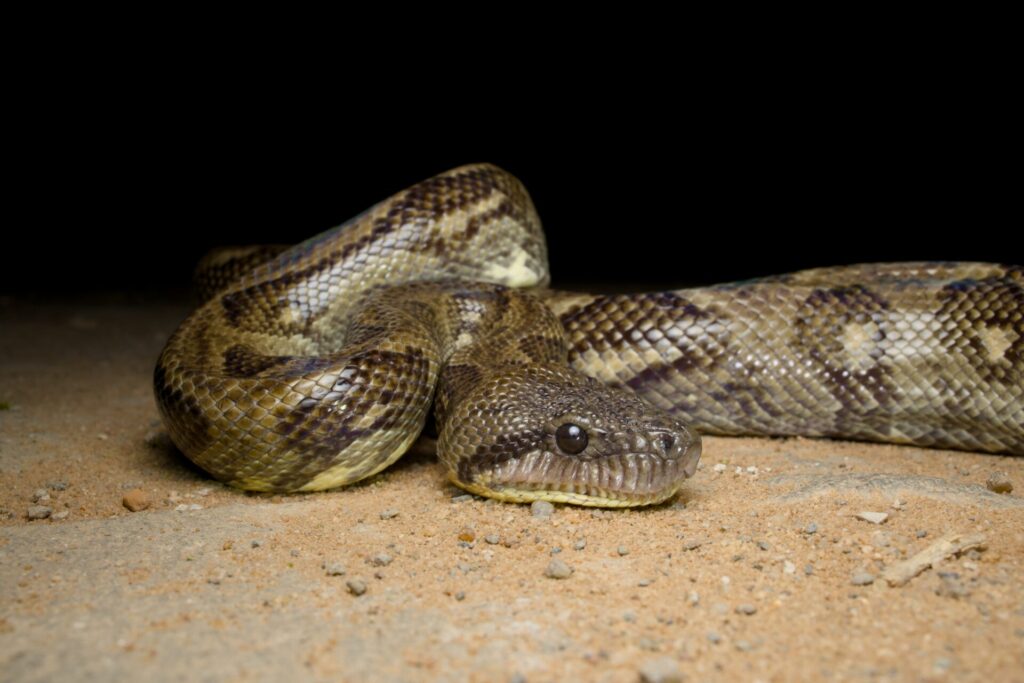
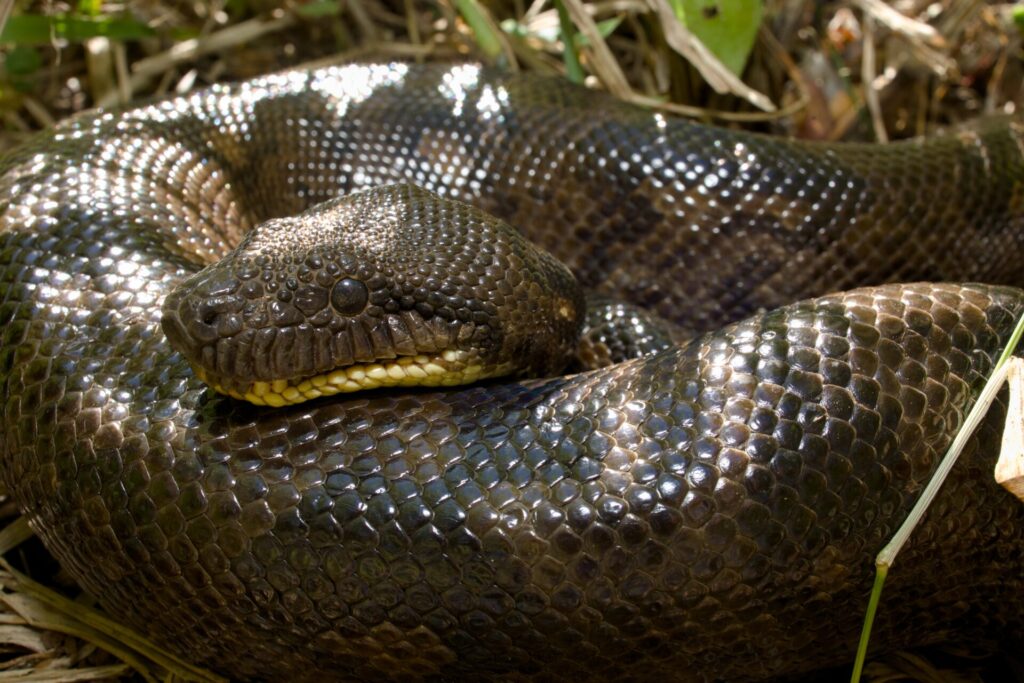
Madagascar Tree Boa (Sanzinia madagascariensis)
We observed large individuals basking in the sun during both night and day searches.
Mammals
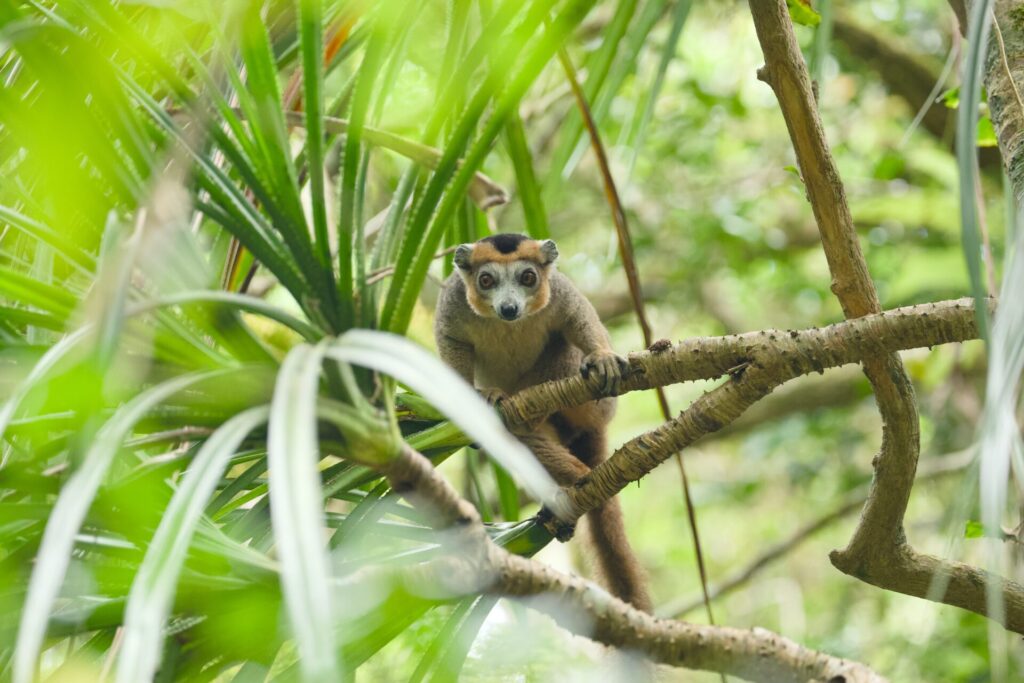
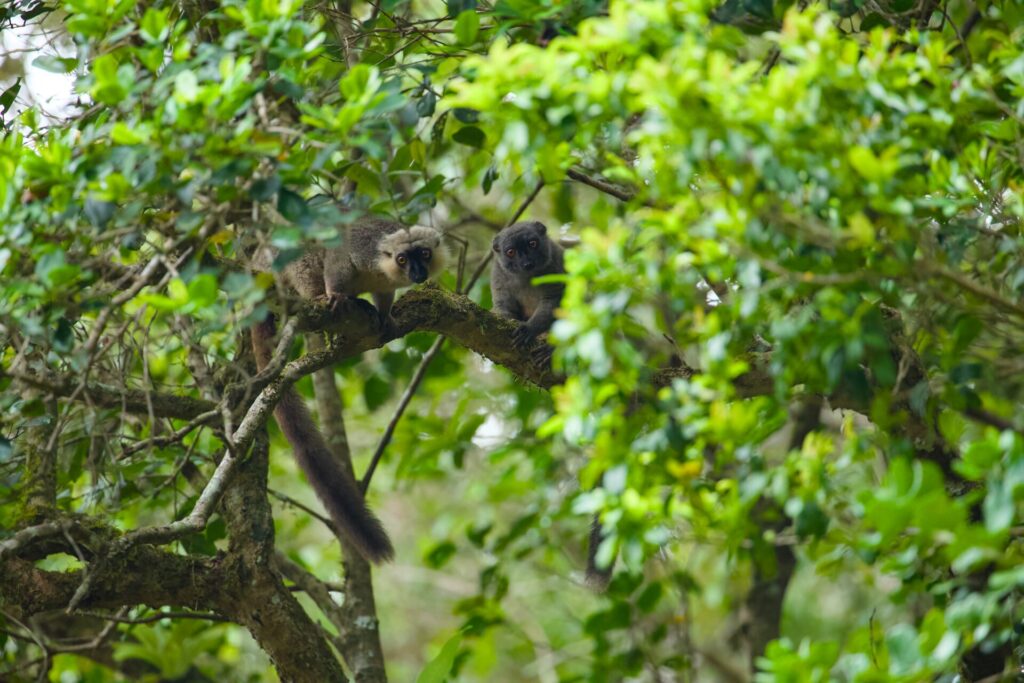
- Crowned Lemur (Eulemur coronatus)
- A small lemur characterized by a pattern resembling a crown. They are not easily bothered by humans and sometimes descend to the lower parts of trees.
- Sanford’s Brown Lemur (Eulemur sanfordi)
- Slightly larger than the Crowned Lemur, living in large groups. When they spot humans, they stare at you while wagging their tails sideways.
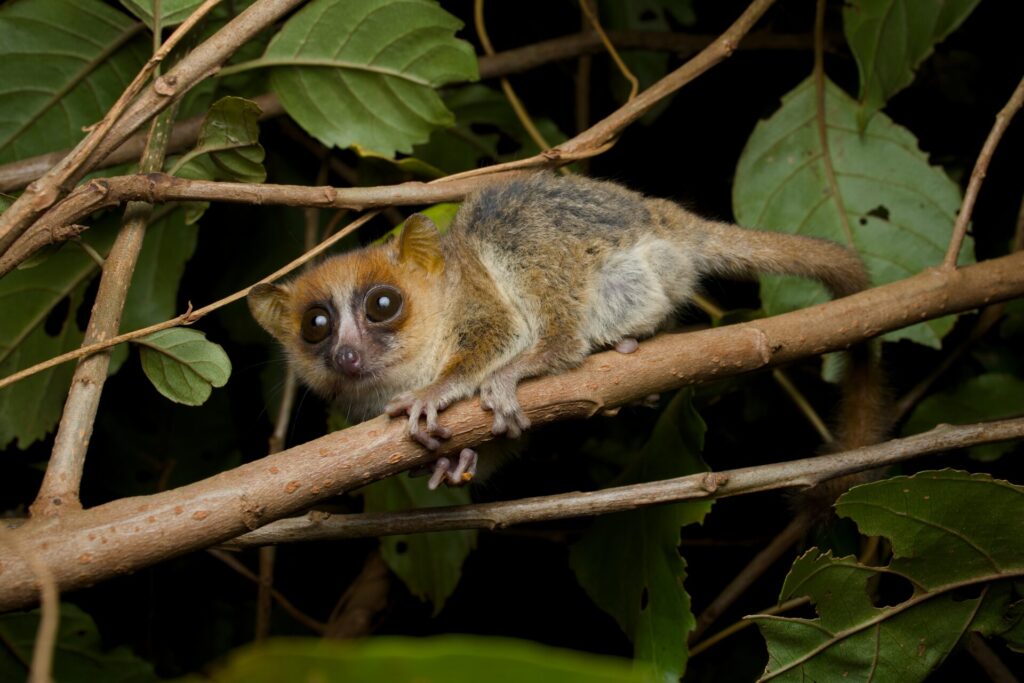
- Arnhold’s Mouse Lemur(Microcebus arnholdi)
- When you spot eyes reflecting your headlight in the night forest, about 80% of the time it is this species. We saw many, even behind houses in the nearest village.
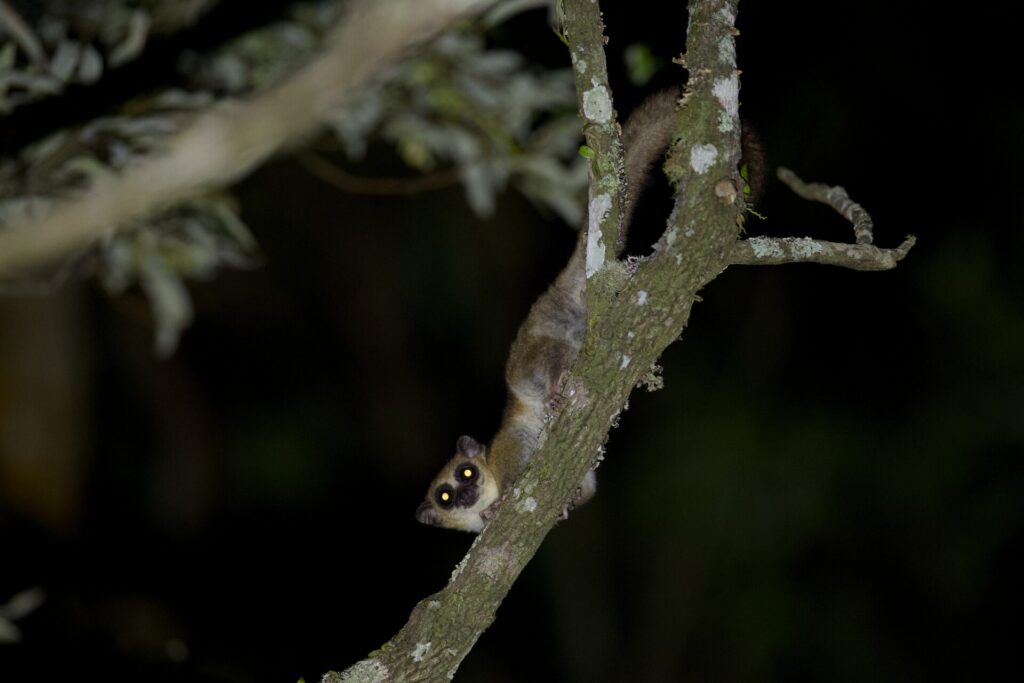
- Montagne d’Ambre Dwarf Lemur (Unidentified Cheirogaleus species)
- The remaining 20% are this species. They are distinctly different in size, making them easy to tell apart. When illuminated by a light, they stare back intently with their large eyes.
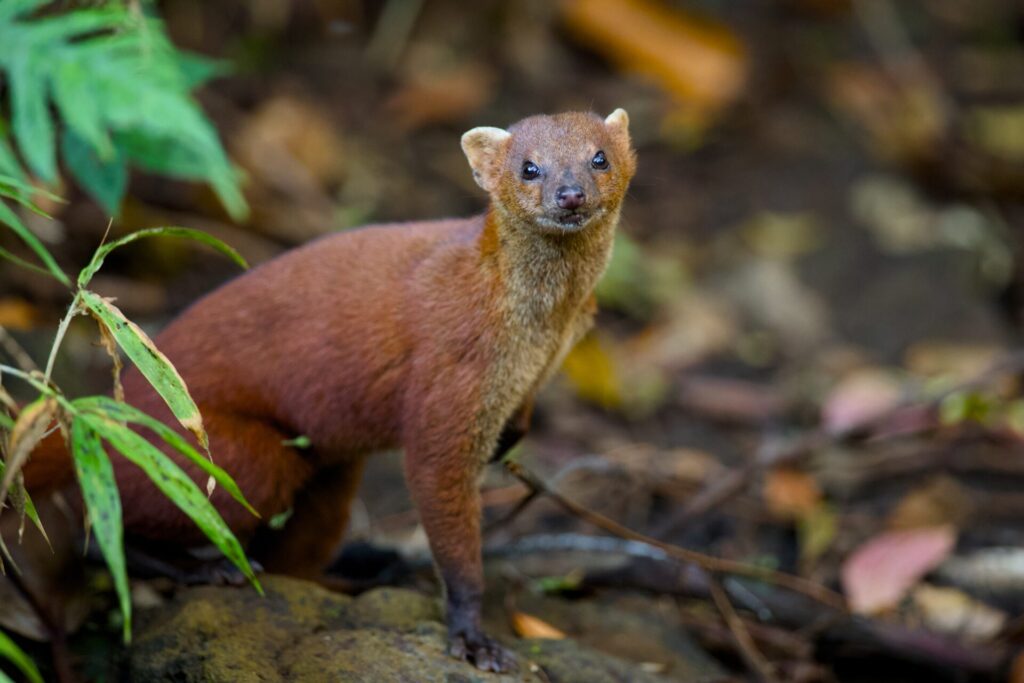
- Ring-tailed Mangoose (Galidia elegans)
- This mongoose, which loves Brookesia chameleons, was observed in areas where Brookesia are abundant.
Birds
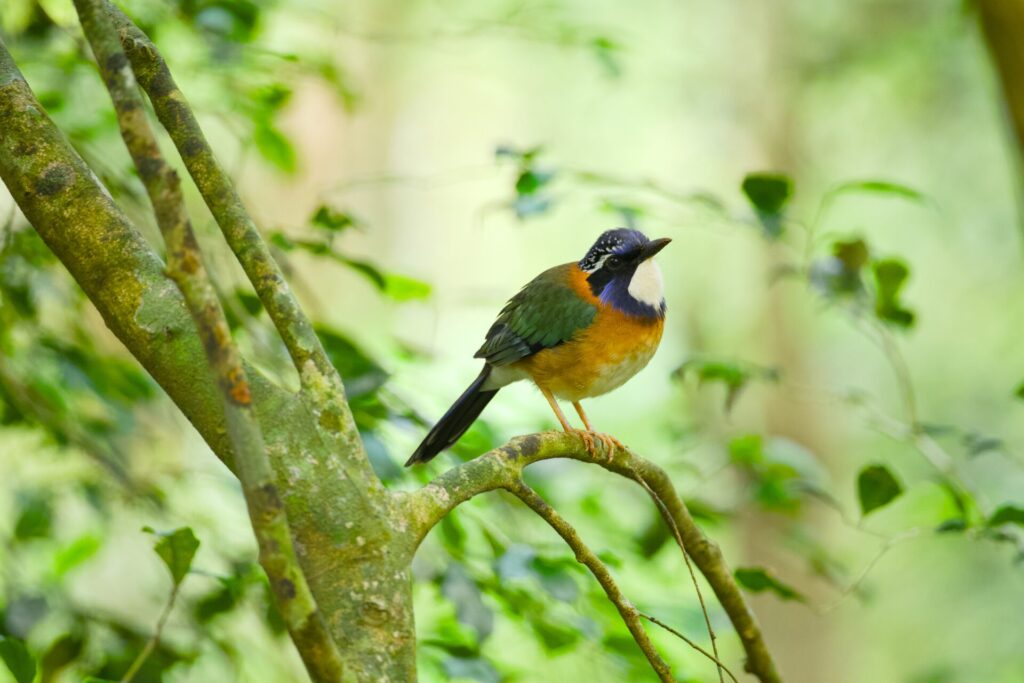
- Pitta-like Ground-roller (Atelornis pittoides)
- Beautifully colored, its characteristic call from within the forest is lovely.
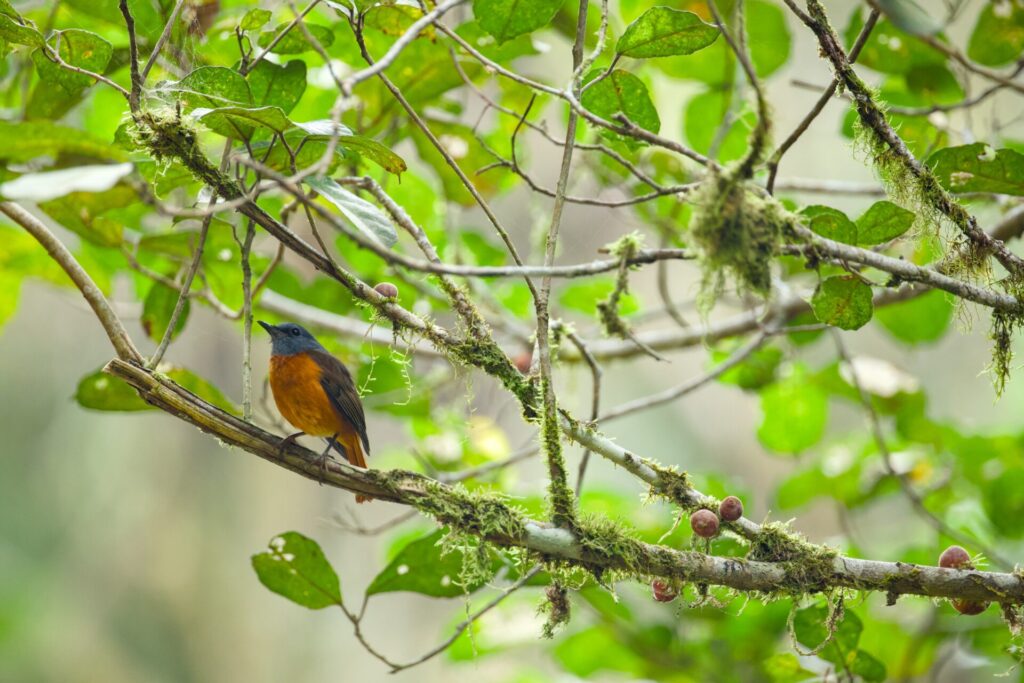
- Amber Mountain Rock Thrush (Monticola sharpei erythronotus)
- Endemic to the national park. It seems numerous, as we observed both males and females in the same location.
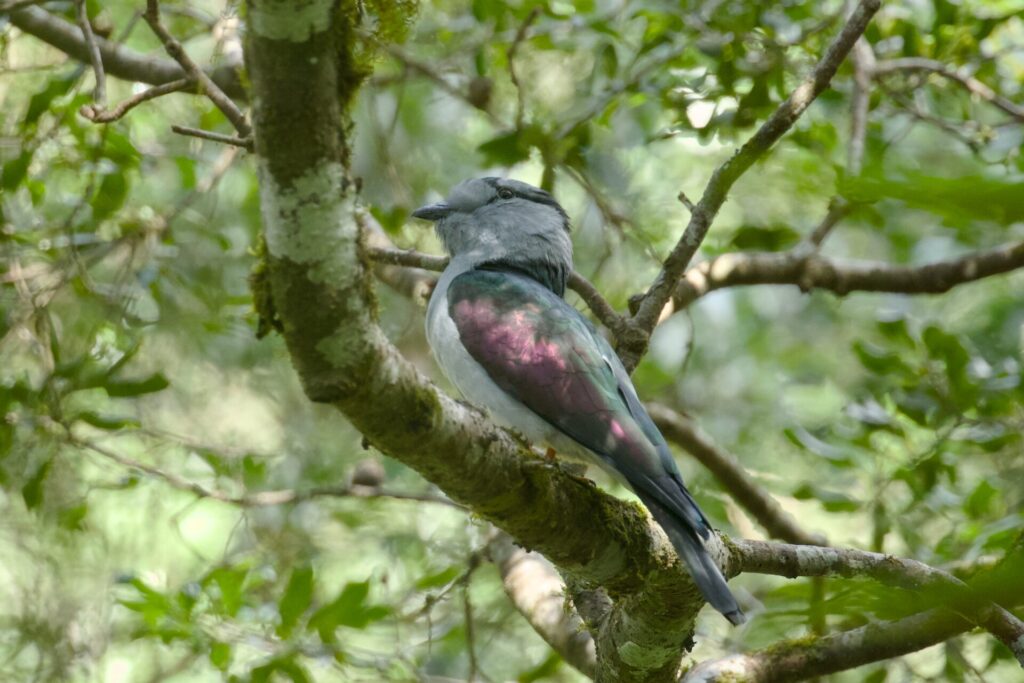
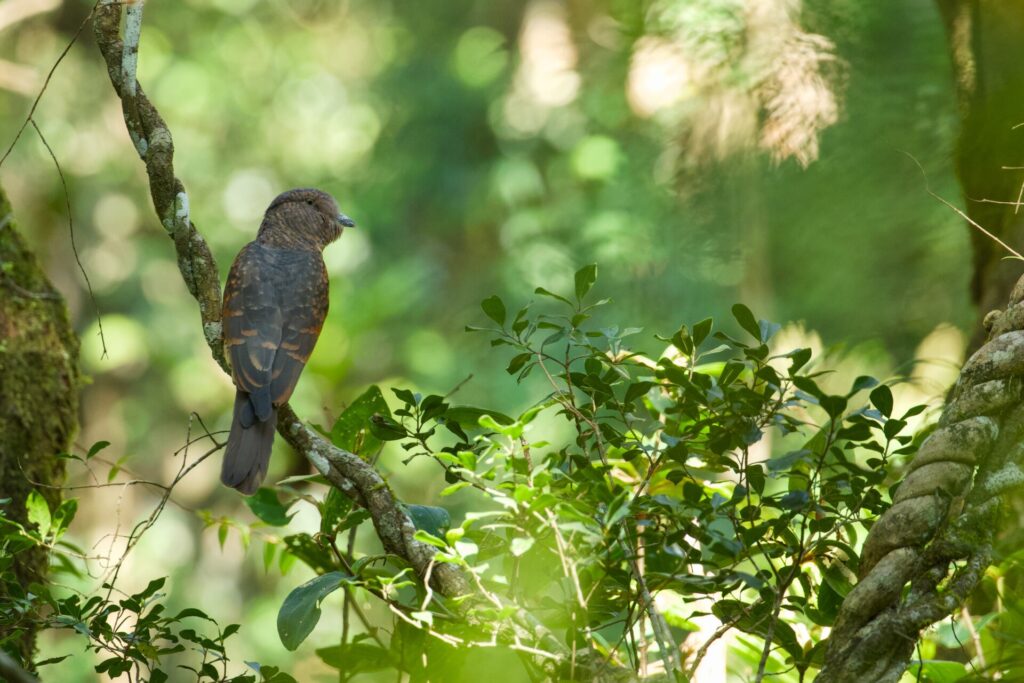
- Cuckoo Roller (Leptosomus discolor)
- In the morning, when the sun comes out, it circles the sky while calling loudly. In the afternoon, it sometimes rests in the shade of trees, offering a photo opportunity.
- Madagascar Blue Pigeon (Alectroenas madagascariensis)
- A blue pigeon. If you look closely, the area around its eyes and its tail are red and stylish.
- Malagasy green sunbird (Cinnyris notatus)
- Busy flitting around, making a nest. The male was absent, so maybe nest-building is the female’s job.
- Mascarene Martin (Phedina borbonica)
- Nesting behind a waterfall. They must feel safe here as humans cannot reach it.
- Madagascar White-eye (Zosterops maderaspatanus)
- Photographed while sleeping side-by-side. Cute.
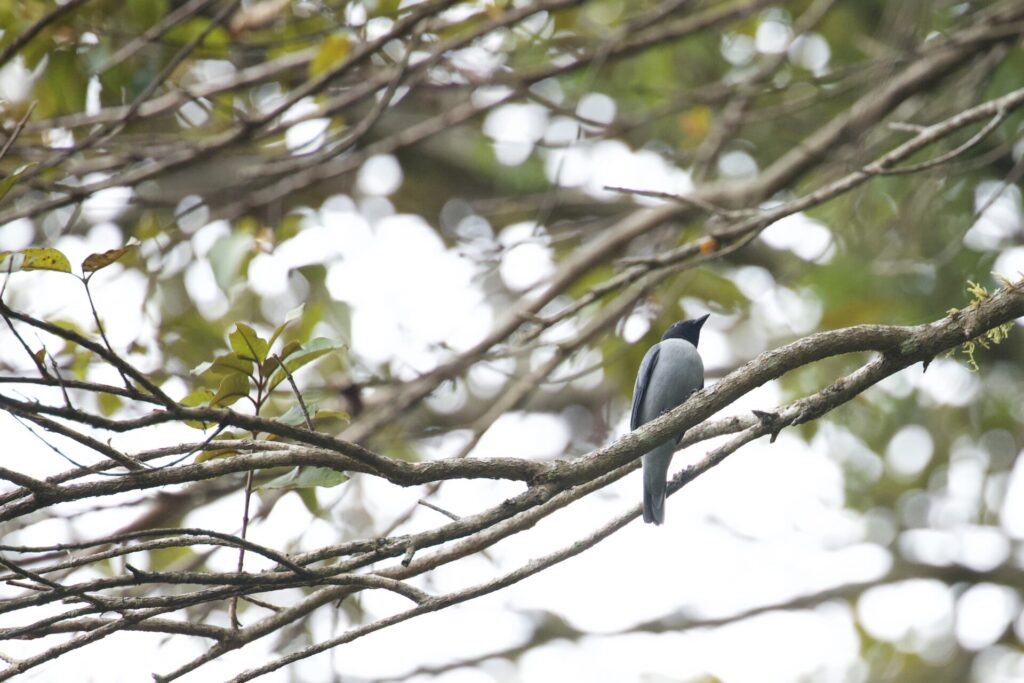
- Madagascar Cuckooshrike (Coracina cinerea)
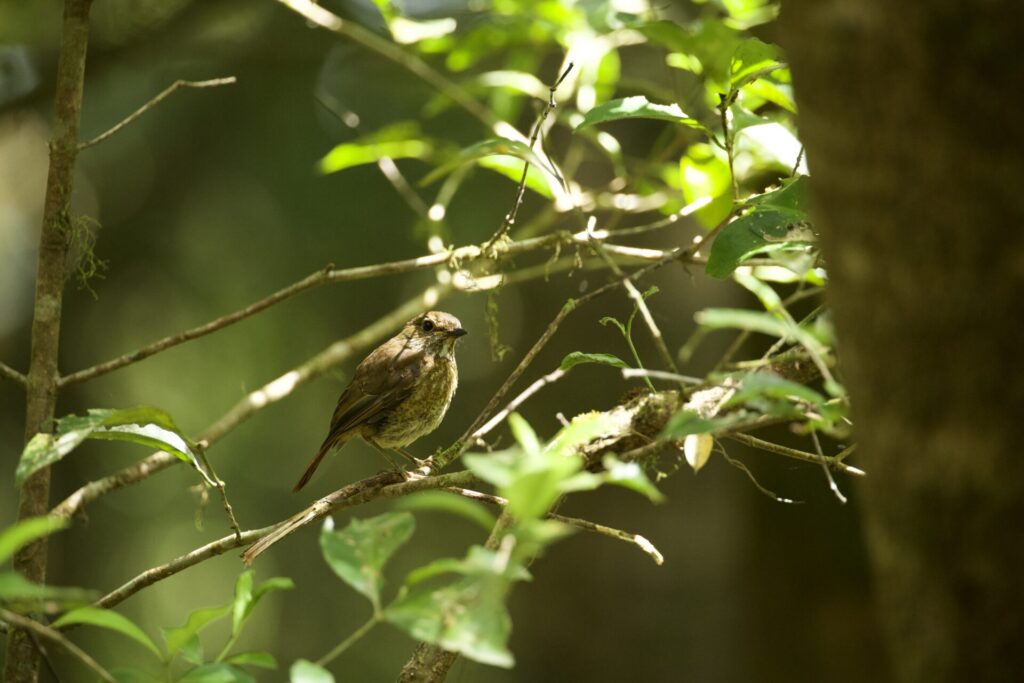
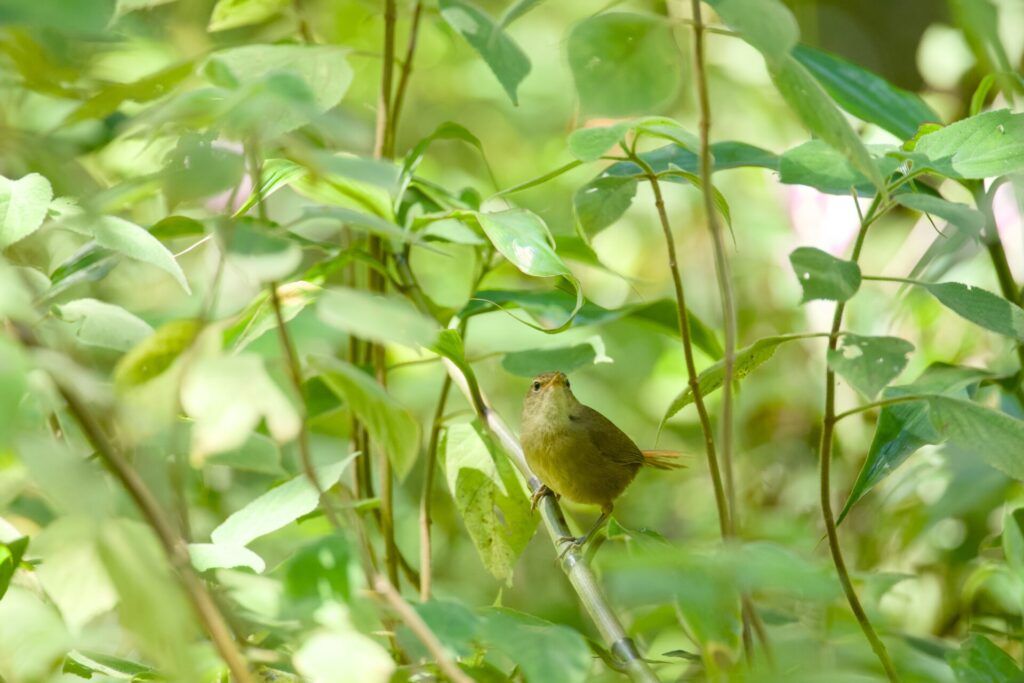
- Common jery (Neomixis tenella)
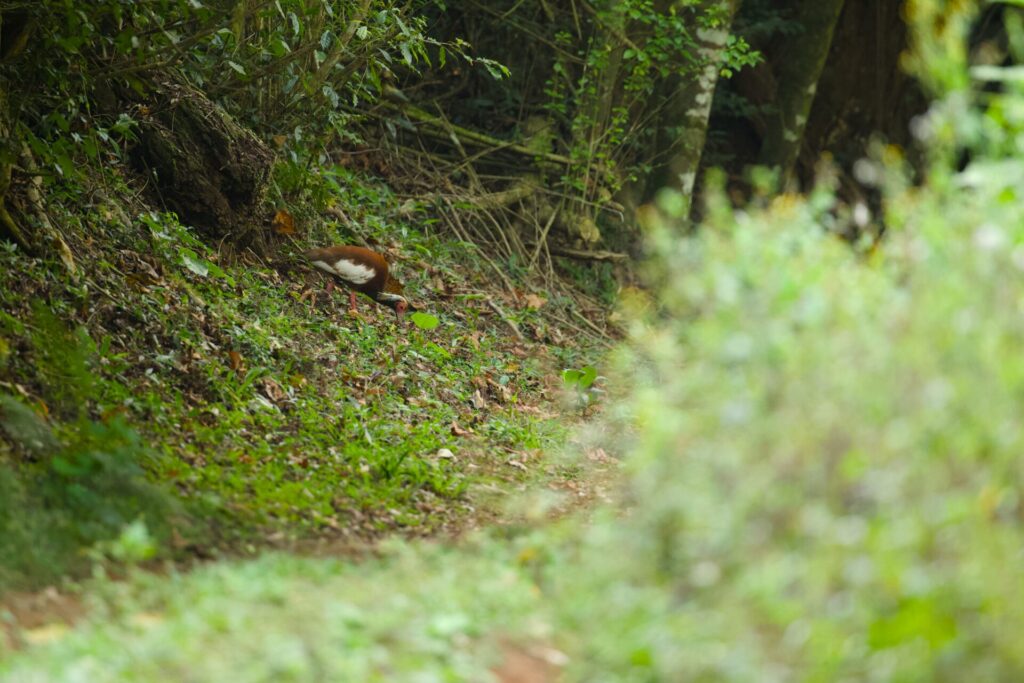
- Madagascar Crested Ibis (Lophotibis cristata)
- Extremely rare!
- Malachite Kingfisher (Corythornis vintsioides)
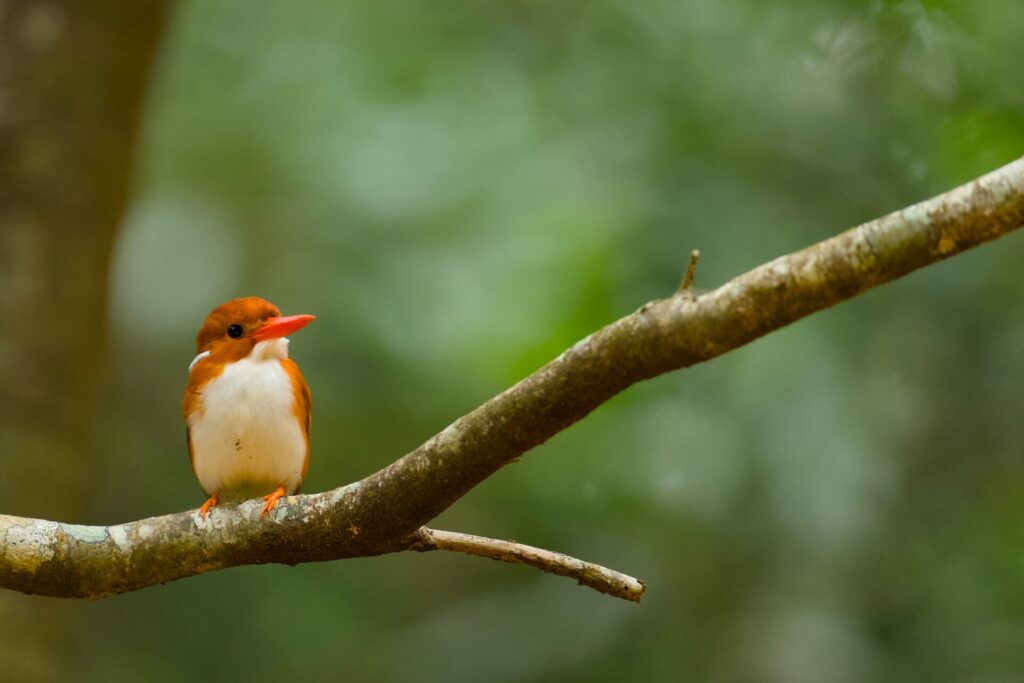
- Malagasy Pygmy Kingfisher (Corythornis madagascariensis)
Others
That concludes the list. There are other creatures we observed but did not introduce here. Please feel free to ask if you have any questions, such as, “Can this creature be observed?”


