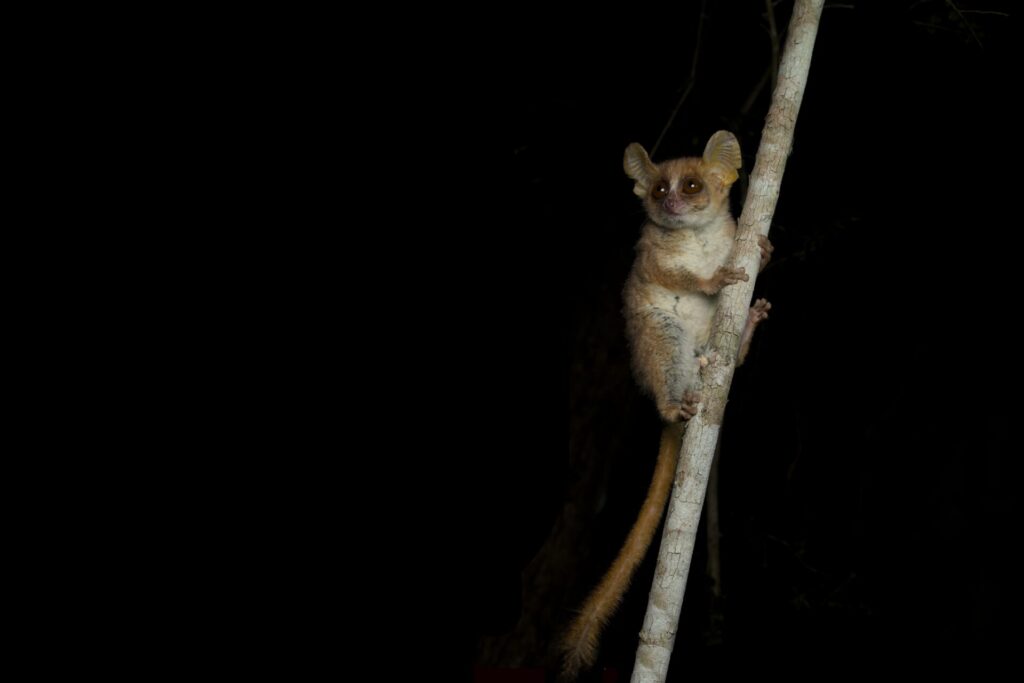

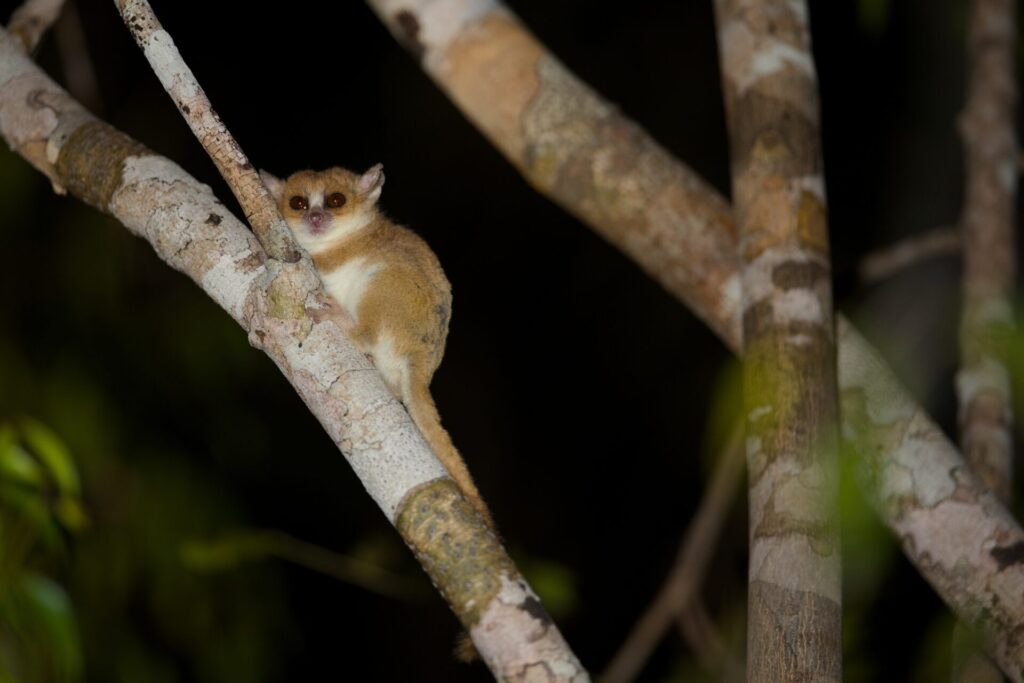
Madagascar is home to a fascinating variety of lemurs, and among them, the smallest is the Mouse lemur (Microcebusspp.). These tiny primates emerge at night from tree hollows and other hiding spots, hopping agilely from branch to branch—a behavior that can be observed throughout the island.
One of the most remarkable is Berthe’s mouse lemur (Microcebus berthae), the world’s smallest primate. With an average body length of just 9.2 cm and a weight of only 31 g, it’s hard to imagine a primate smaller than the size of a human palm.
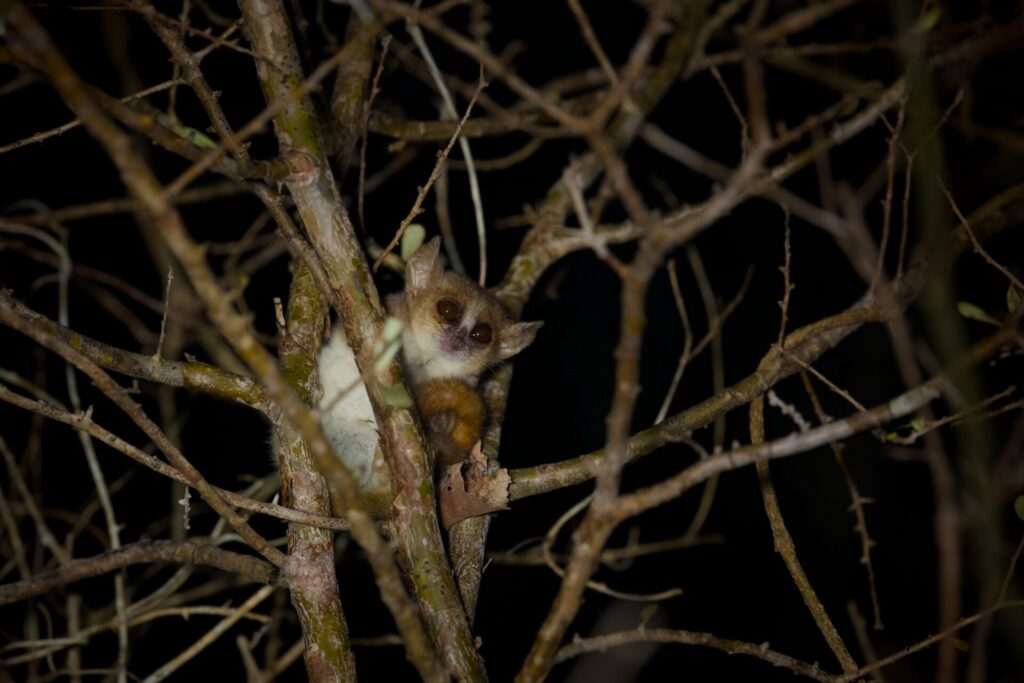
Not all Mouse lemurs (Microcebus spp.) are this tiny. The Giant mouse lemur, Coquerel’s giant mouse lemur (Mirza coquereli), is much larger, reaching a body length of 25 cm and a weight of 300 g—about ten times heavier than Berthe’s mouse lemur.
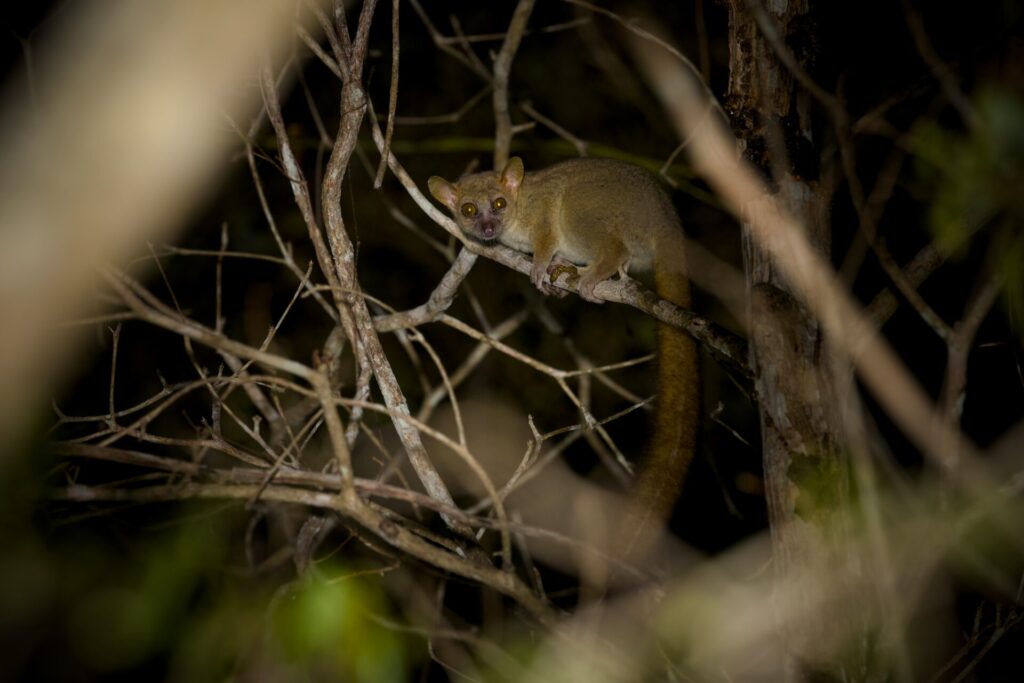
Interestingly, these smallest and largest mouse lemurs share the same region in western Madagascar, around the Kirindy Forest. However, they are never seen together because their active hours are completely different.
The tiny Berthe’s mouse lemur (Microcebus berthae) becomes active shortly after sunset, while Coquerel’s giant mouse lemur (Mirza coquereli) doesn’t start moving until after 11 p.m. By separating their activity times as well as their sizes, both species manage to coexist in the same habitat—an excellent example of ecological adaptation.
These palm-sized primates are truly adorable. While Berthe’s and Coquerel’s giant mouse lemurs are the most extreme in size, other mouse lemurs (Microcebus spp.) can also be observed throughout Madagascar’s forests. If you ever have the chance to visit, be sure to keep an eye out for these tiny, fascinating creatures!