
Reptiles and Amphibians of Northeastern Madagascar
This article documents a Madagascar herping expedition conducted in November 2025, focusing on the tropical rainforests of northeastern Madagascar.
During the expedition, we conducted intensive night and daytime surveys and recorded a wide diversity of Madagascar reptiles and amphibians, including leaf-tailed geckos (Uroplatus), panther chameleons, pygmy chameleons (Brookesia), day geckos (Phelsuma), and mantella frogs.
Madagascar is renowned for its extraordinary endemism, and many species encountered during herping expeditions remain undescribed or lack formal scientific names. Some taxa mentioned here may therefore be referred to at the genus level only.

Chameleons Observed During the Madagascar Herping Expedition
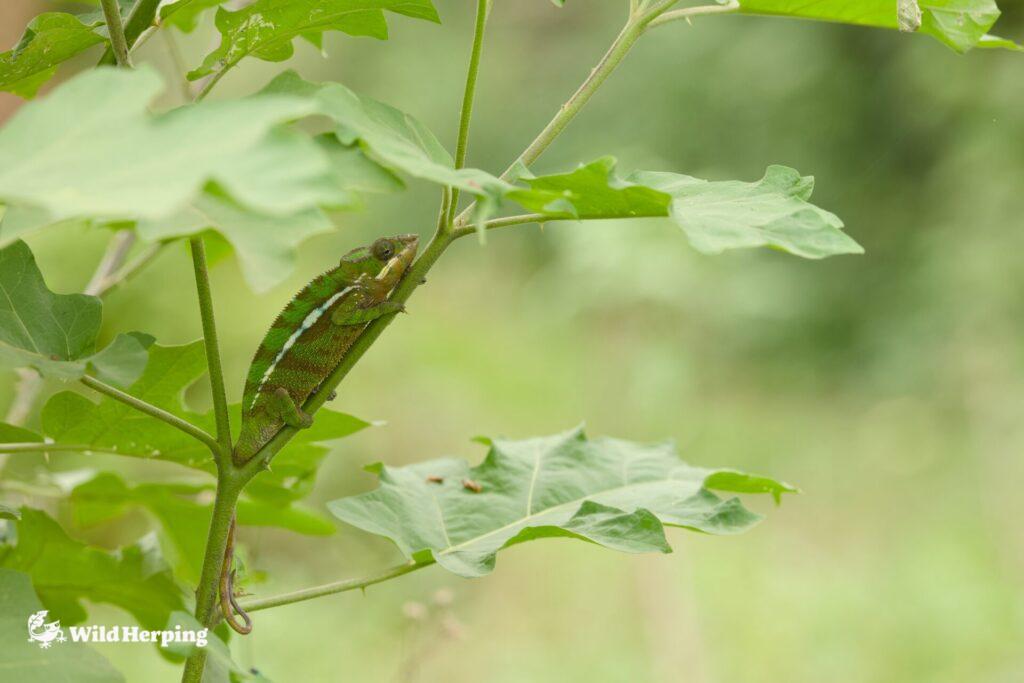
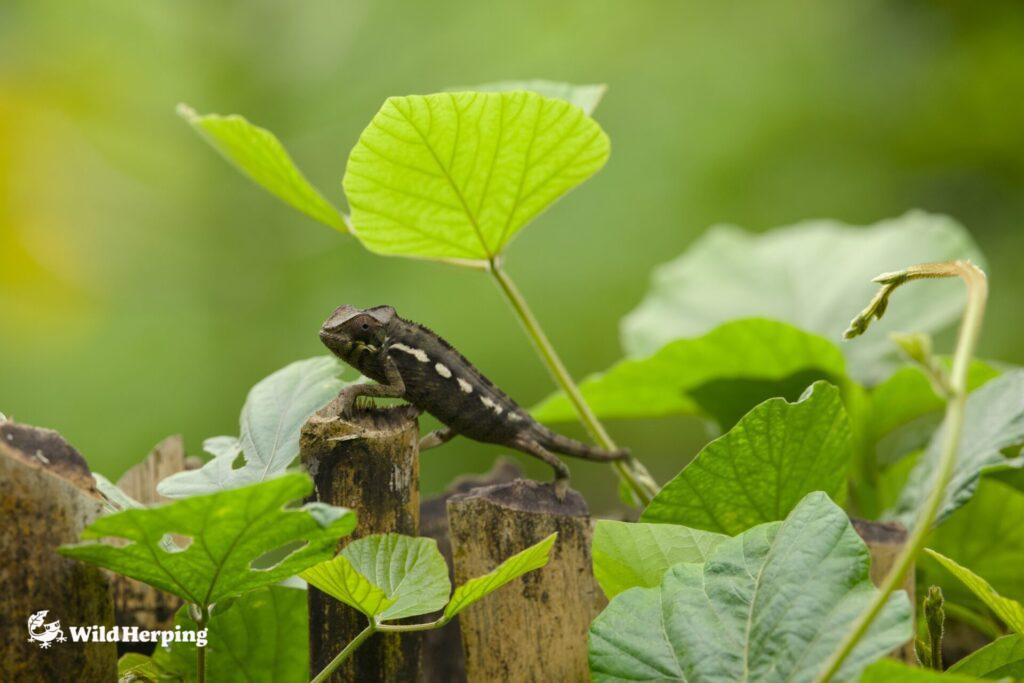
Panther Chameleon (Furcifer pardalis)
One of the most frequently encountered reptiles in northern Madagascar. This species is widely distributed around human settlements, urban areas, and secondary forests, yet is surprisingly uncommon within national parks. Across its broad range, local populations exhibit striking color variation approximately every 50 km, making the panther chameleon one of the most visually fascinating species encountered during Madagascar herping.
Blue-nosed Chameleon (Calumma nasutum)
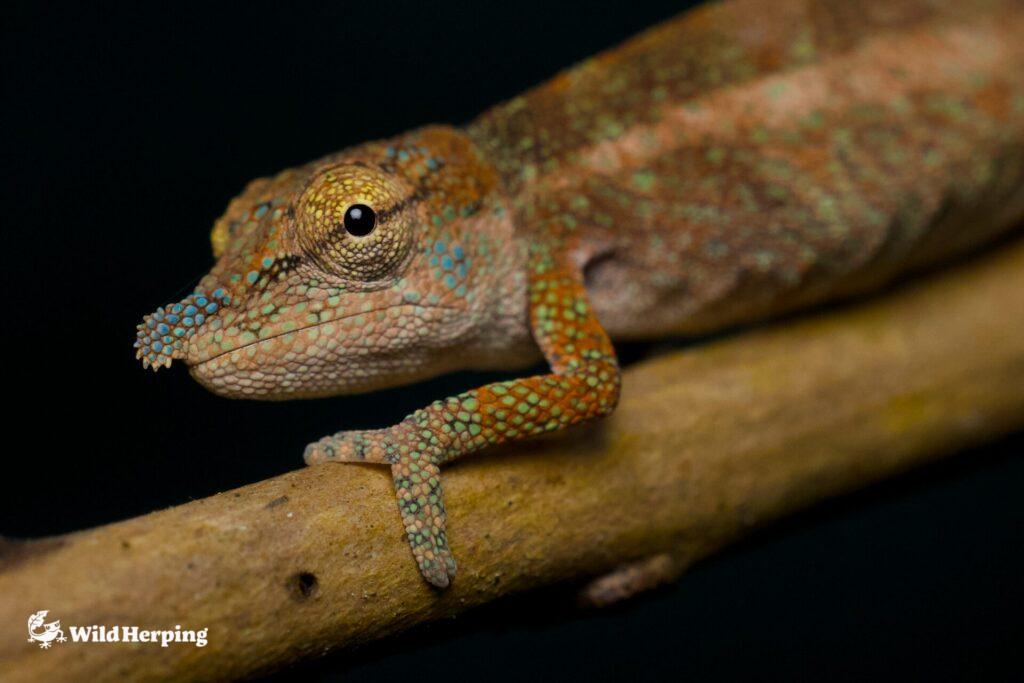
Although not rare, this species is difficult to detect as individuals often move quietly to the opposite side of branches when approached. Interestingly, it is often spotted by the last person in a walking group. While distinct from the population found in Amber Mountain, both share the same common name.
Marojejy Side-striped Chameleon (Calumma marojezense)

Perinet chameleon(Calumma gastrotaenia)

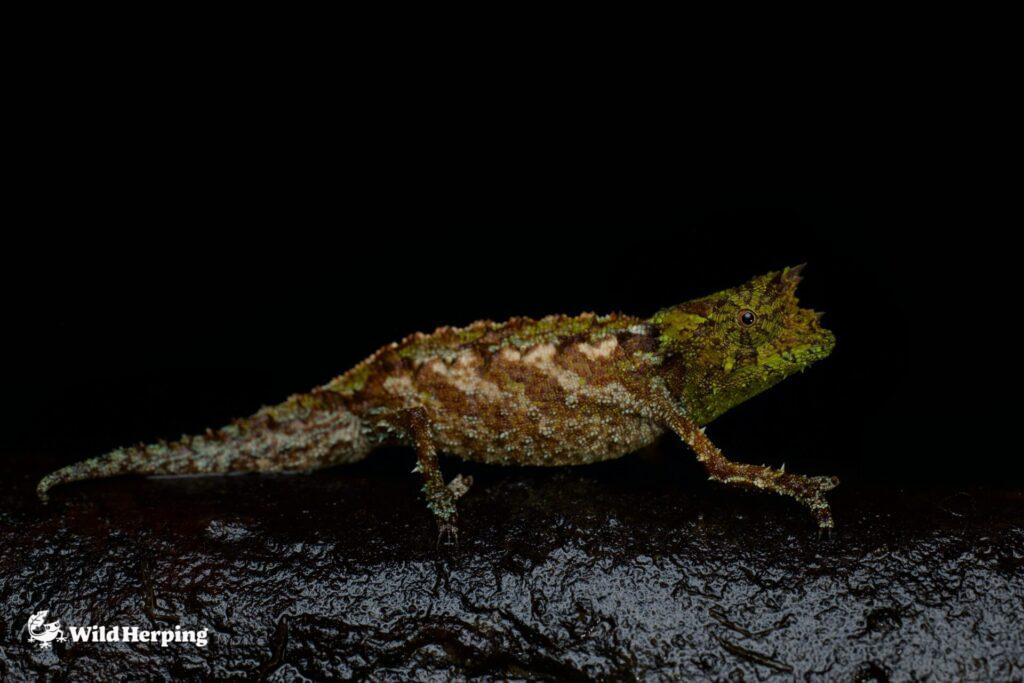
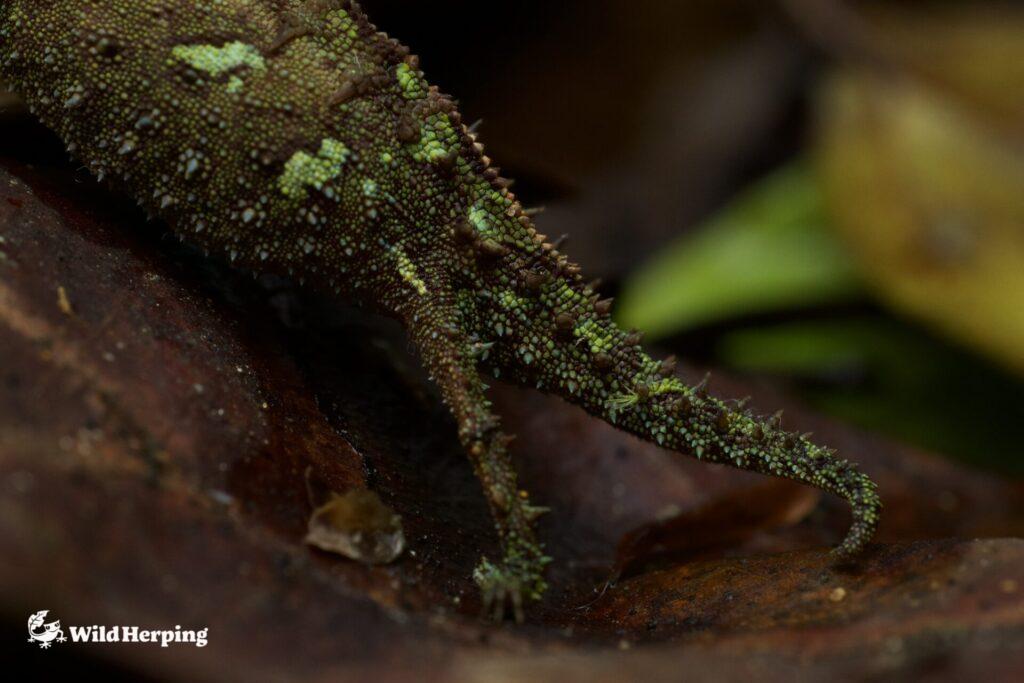
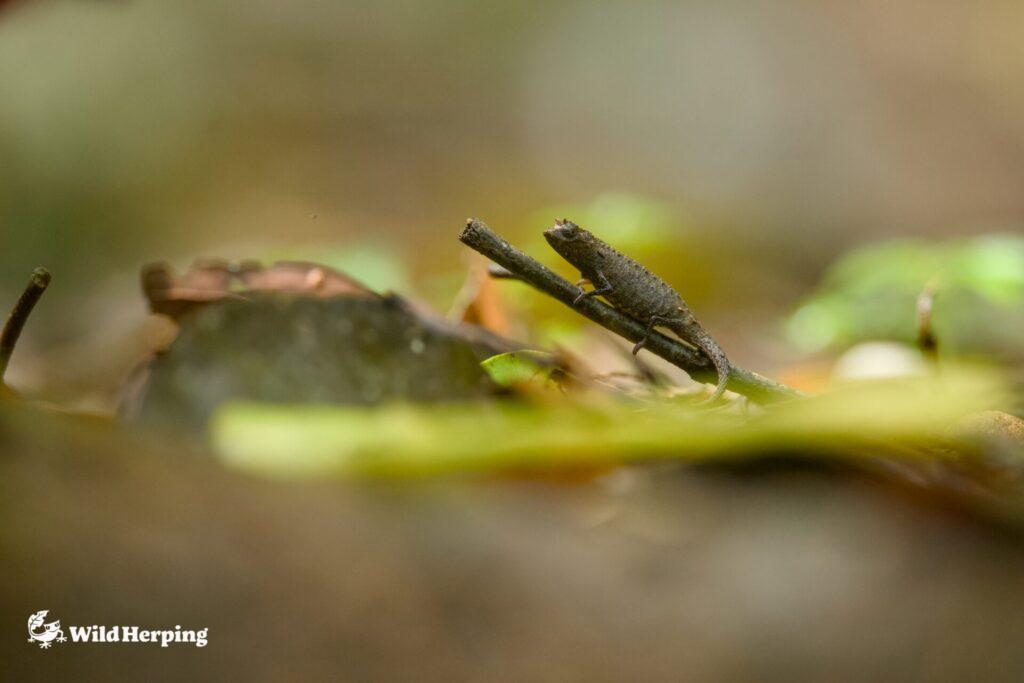
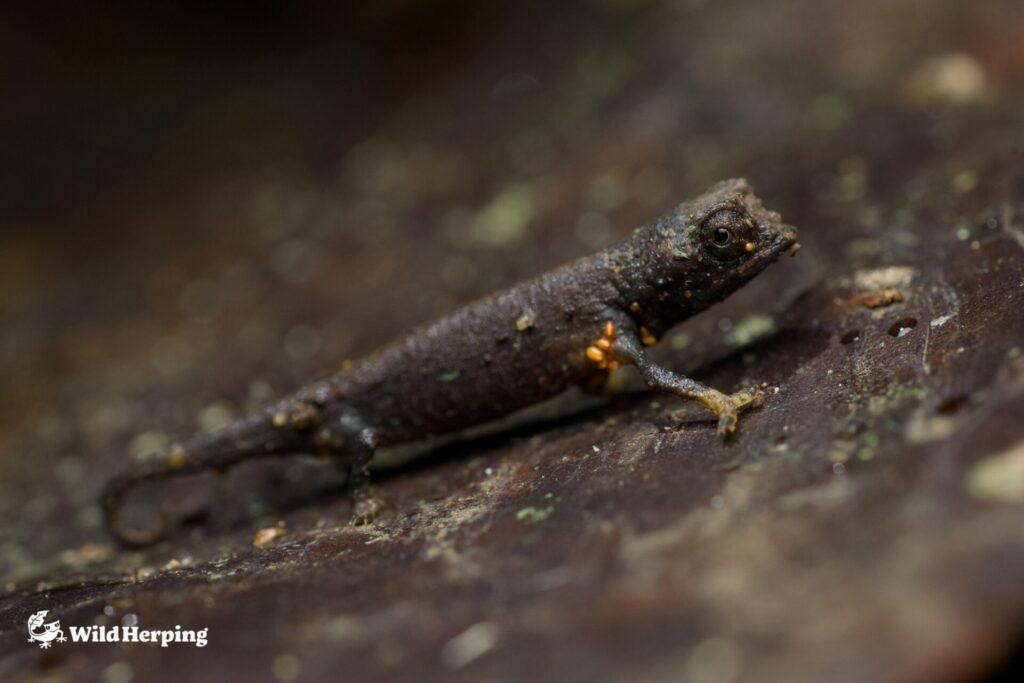
Mossy Pygmy Leaf Chameleon (Brookesia vadoni)
Among the most visually striking members of the genus Brookesia. Unlike most pygmy chameleons, which exhibit brown leaf-litter coloration, this species displays moss-like tones and a spiky body form. Abundant rainfall in high-elevation rainforest habitats promotes lichen growth, driving this remarkable camouflage. Males are especially notable for their bright yellow heads. This species is restricted to higher elevations.
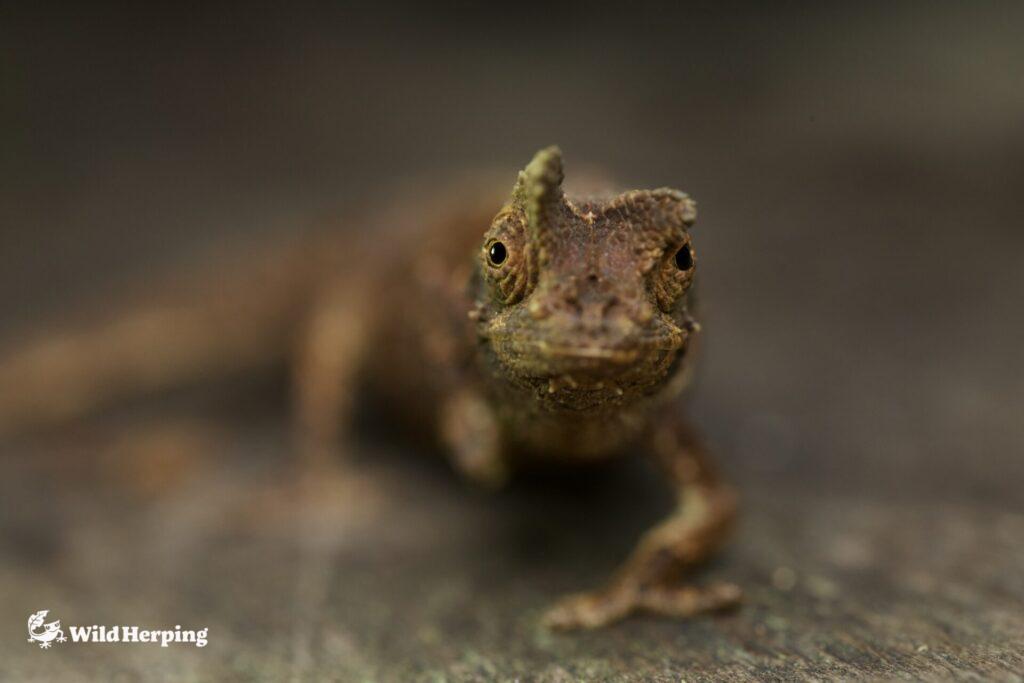
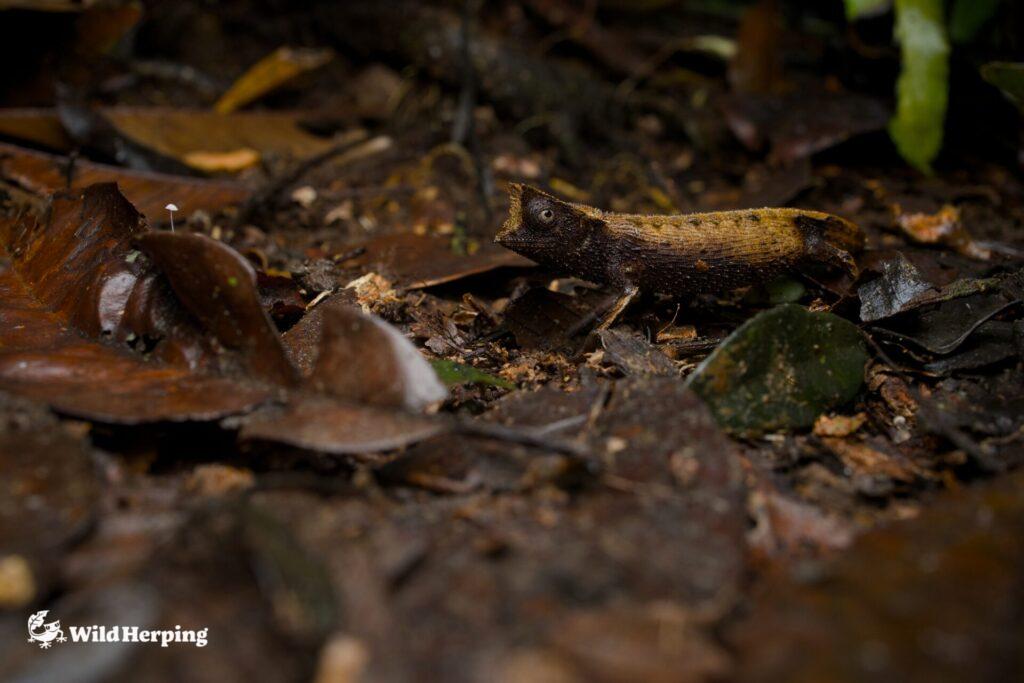
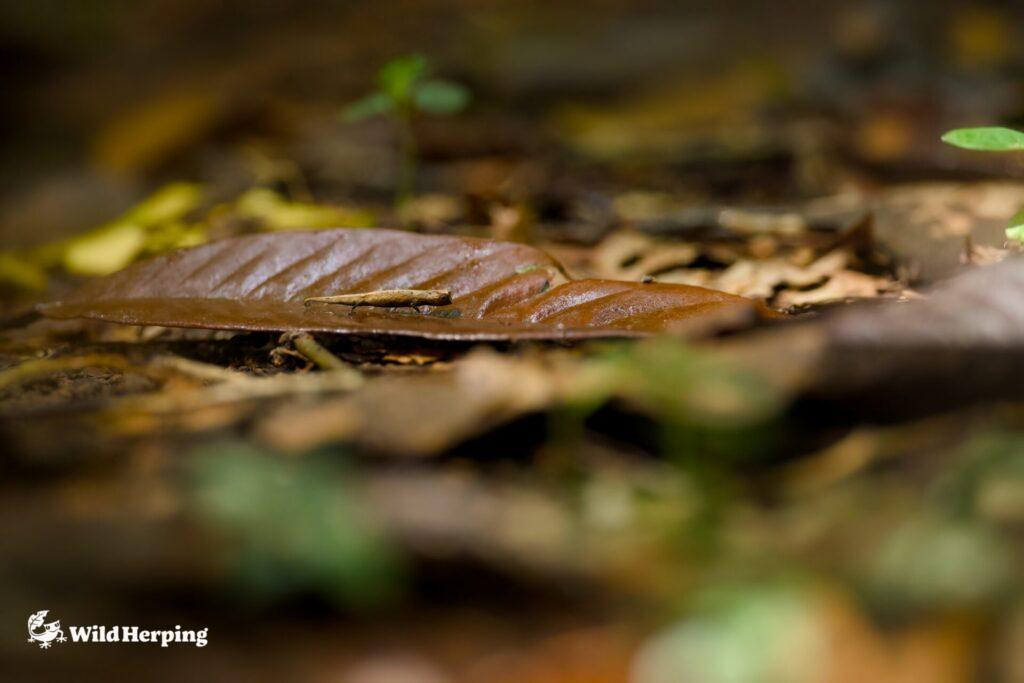
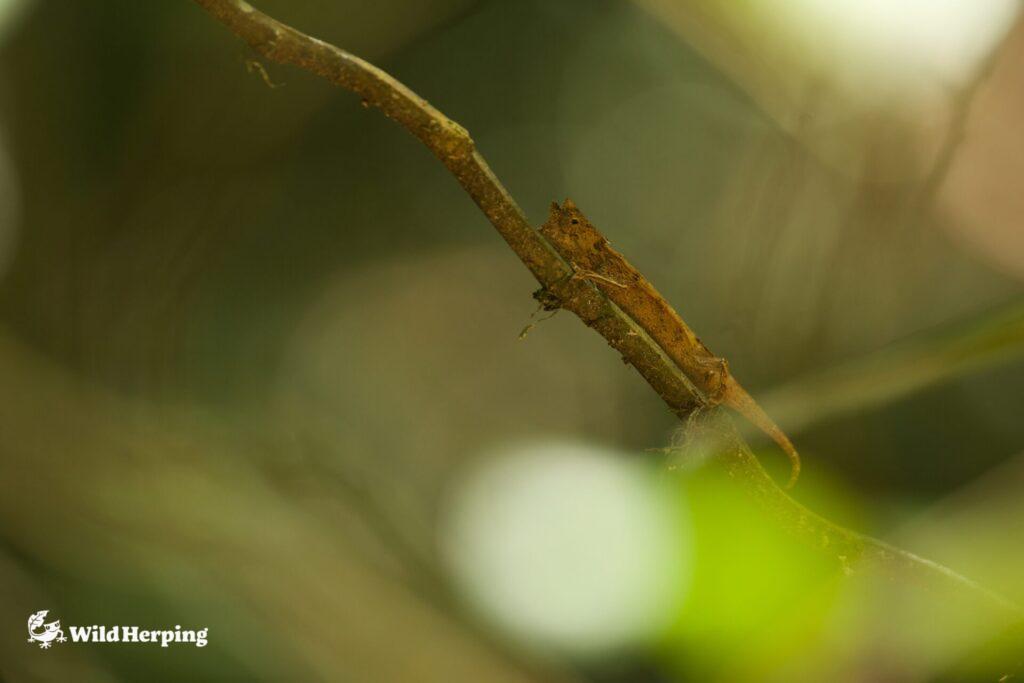
Other Brookesia spp.
Leaf-tailed Geckos of Madagascar (Uroplatus Species)
Giant Leaf-tailed Gecko (Uroplatus giganteus)
Observed at approximately 200 m elevation. Compared to the similarly sized Uroplatus fimbriatus, this species is more frequently found on thick tree trunks. Heavy rainfall during surveys necessitated photography using waterproof iPhone.

Mossy Leaf-tailed Gecko (Uroplatus sikorae)
One of the most widespread and easily observed leaf-tailed geckos in Madagascar. The individual was found clinging to a tree within a bamboo forest, a typical microhabitat for this species.
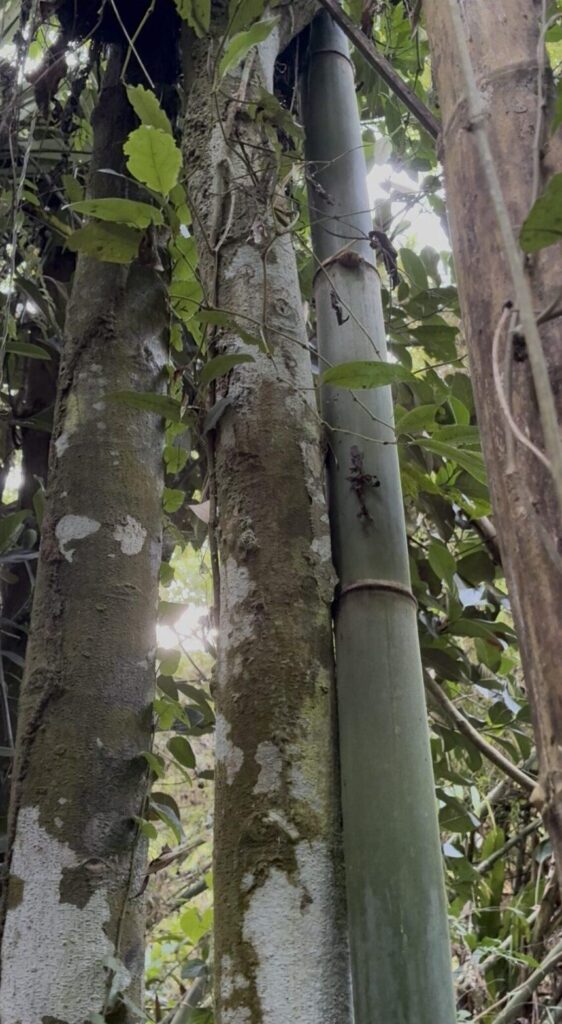
Common Leaf-tailed Gecko (Uroplatus fimbriatus)
Observed at multiple sites between 400–650 m in elevation. Also known as the Fringed Leaf-tailed Gecko, this is the largest species in the genus Uroplatus. Individuals were encountered in both rainforest and bamboo-dominated habitats.
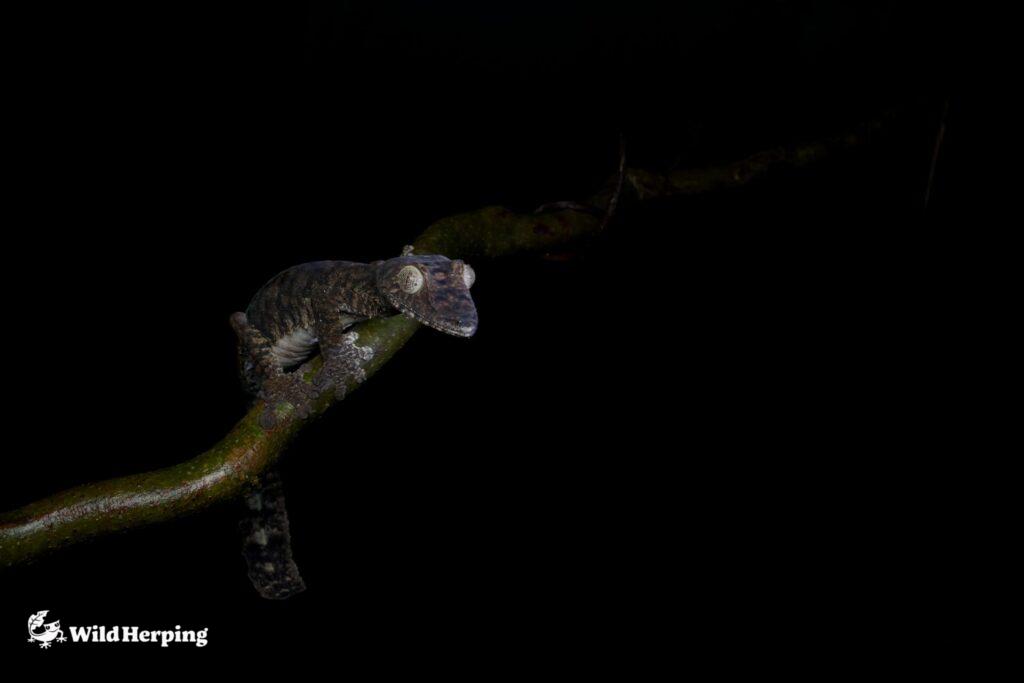
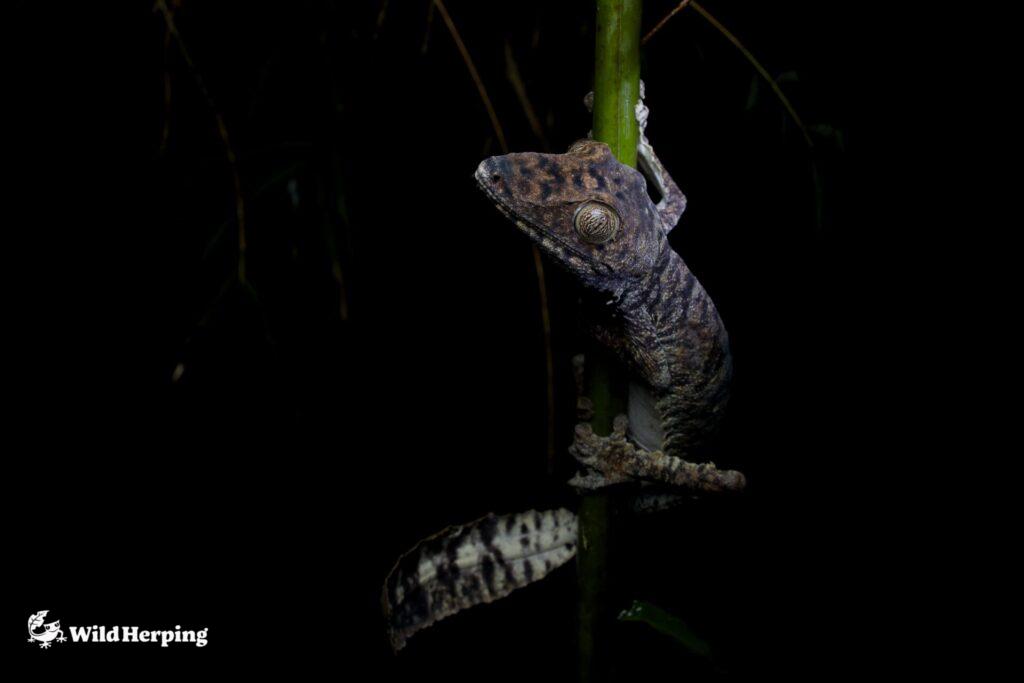
Lined Leaf-tailed Gecko (Uroplatus lineatus)
The primary target species of this Madagascar herping expedition. Although expected to be difficult to locate, an individual was found on the first night in a bamboo grove adjacent to the campsite. Over four nights, two individuals were observed. Its elongated limbs, striped pattern, and distinctive body shape make this species unmistakable.
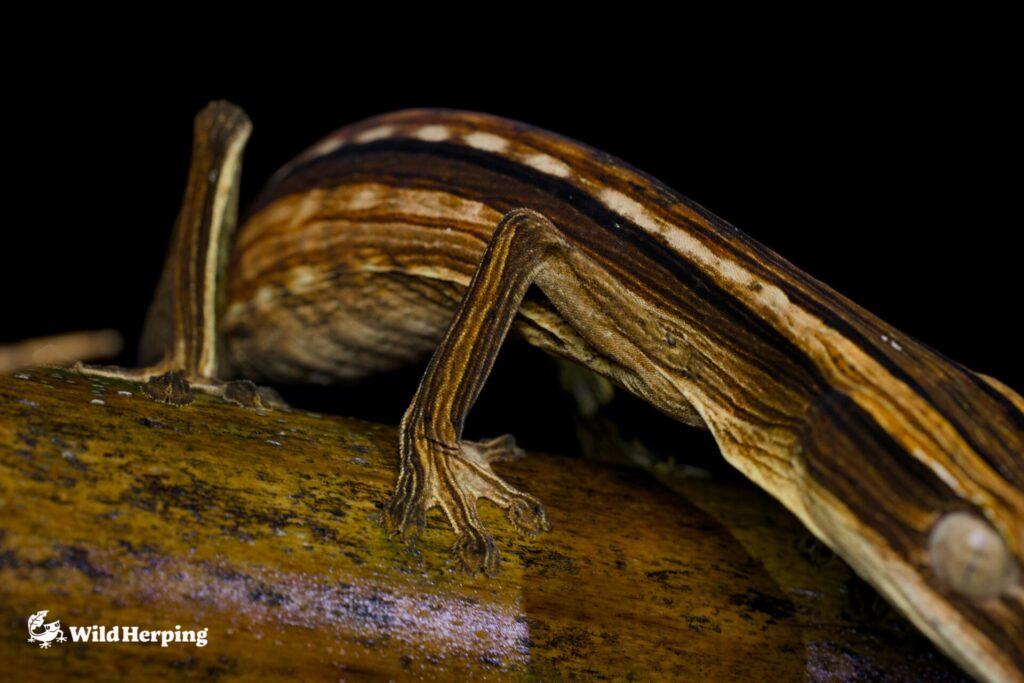
Ebenau’s Leaf-tailed Gecko (Uroplatus ebenaui)
Observed at approximately 1,250 m elevation. Despite heavy rainfall and evening temperatures near 12°C, an active individual was encountered. Compared to Uroplatus phantasticus, this species has a smaller tail but larger leaf notches, giving it a darker and more refined appearance.
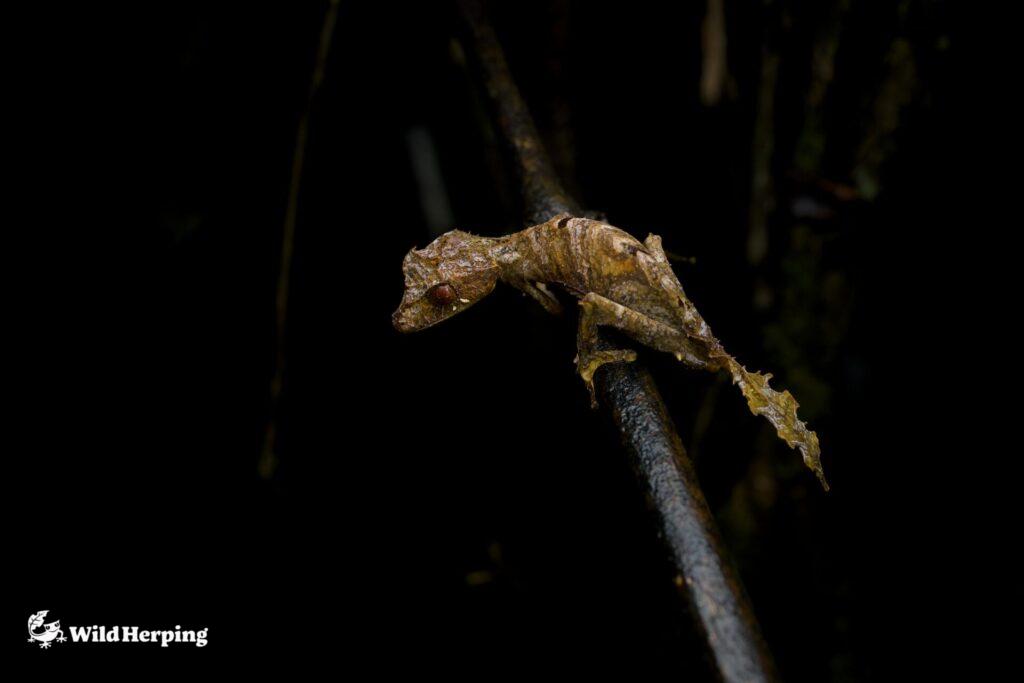
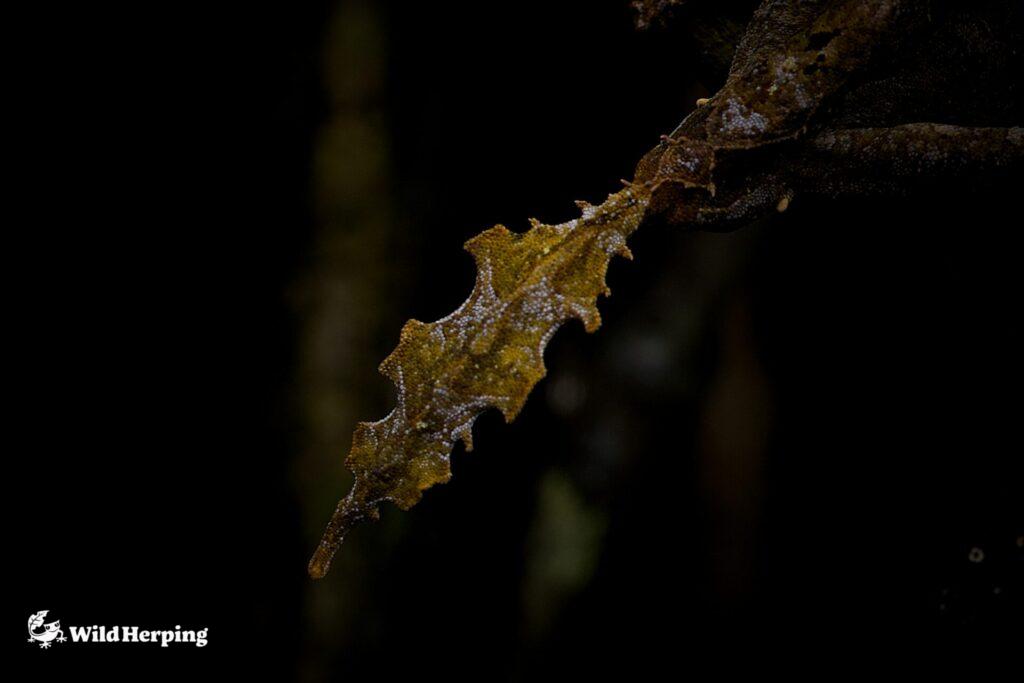
Finaritra Leaf-tailed Gecko (Uroplatus finaritra)
Formerly treated as part of Uroplatus phantasticus, this species was later recognized as distinct through genetic analyses. The observed individual lacked a tail, complicating field identification, particularly in comparison with U. ebenaui. However, its larger body size, distinctive markings beneath the eyes, and unique skin texture supported identification as U. finaritra. Observing a fully tailed individual remains a goal for future Madagascar herping expeditions.
Geckos Observed During Madagascar Herping
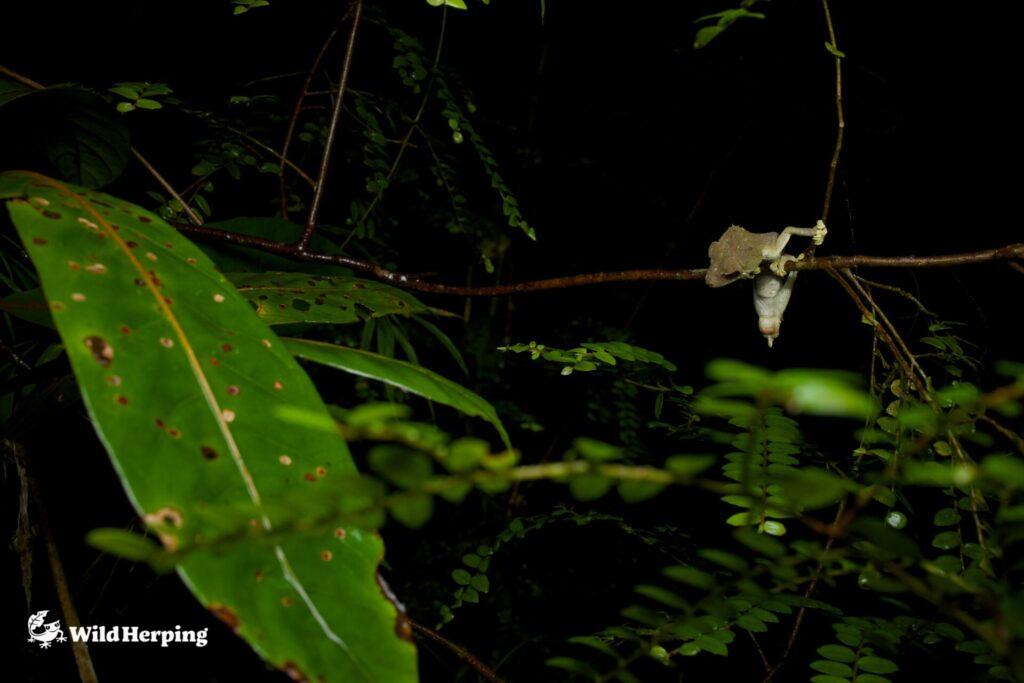
Graceful Madagascar Ground Gecko (Paroedura gracilis)
Characterized by its exceptionally large eyes. Despite its common name, this species is frequently observed up to 1 m above ground on vegetation. Its endearing appearance makes it a favorite among gecko enthusiasts.
Day Geckos (Phelsuma spp.)
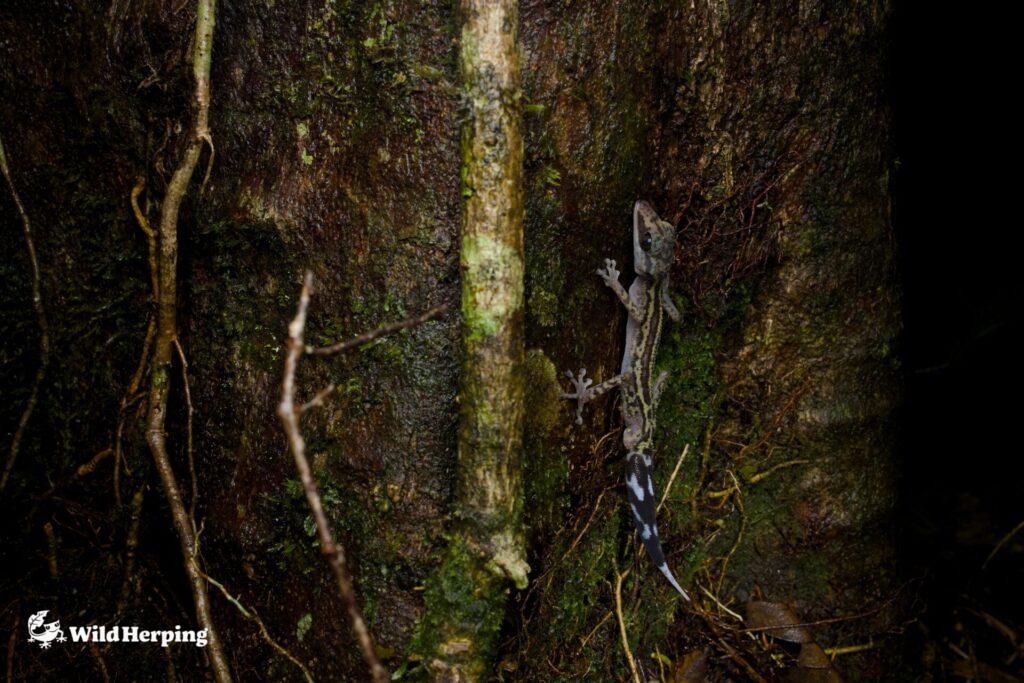
Several species of day geckos were observed during the expedition.
The Striped Day Gecko (Phelsuma lineata) was common around human dwellings and secondary forests. Tail coloration ranged from blue to green, and one individual exhibited a rare regenerated tail divided into three branches.
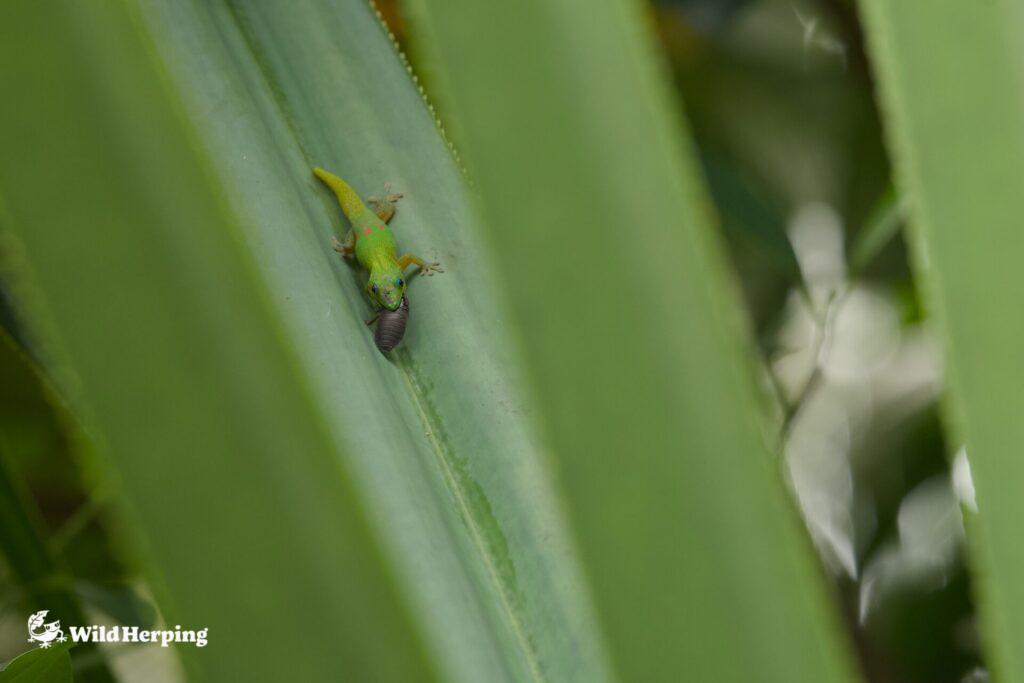
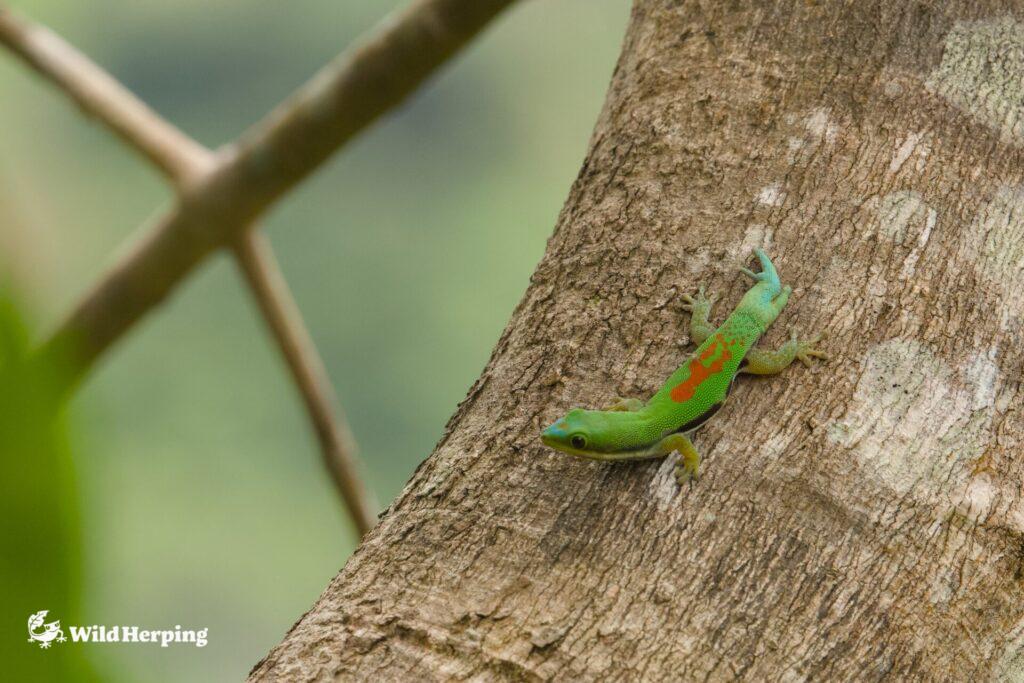
The Malagasy Giant Day Gecko (Phelsuma grandis) was frequently encountered in larger forested habitats such as vanilla plantations. While individuals can exceed 30 cm, most observed in this region were approximately 20 cm in total length.
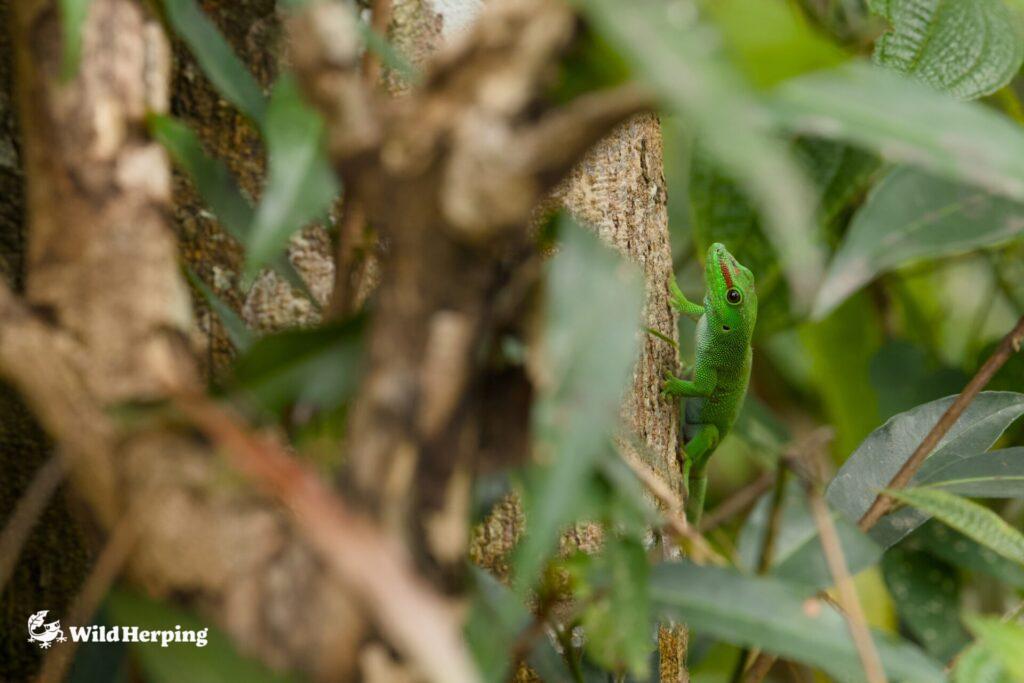
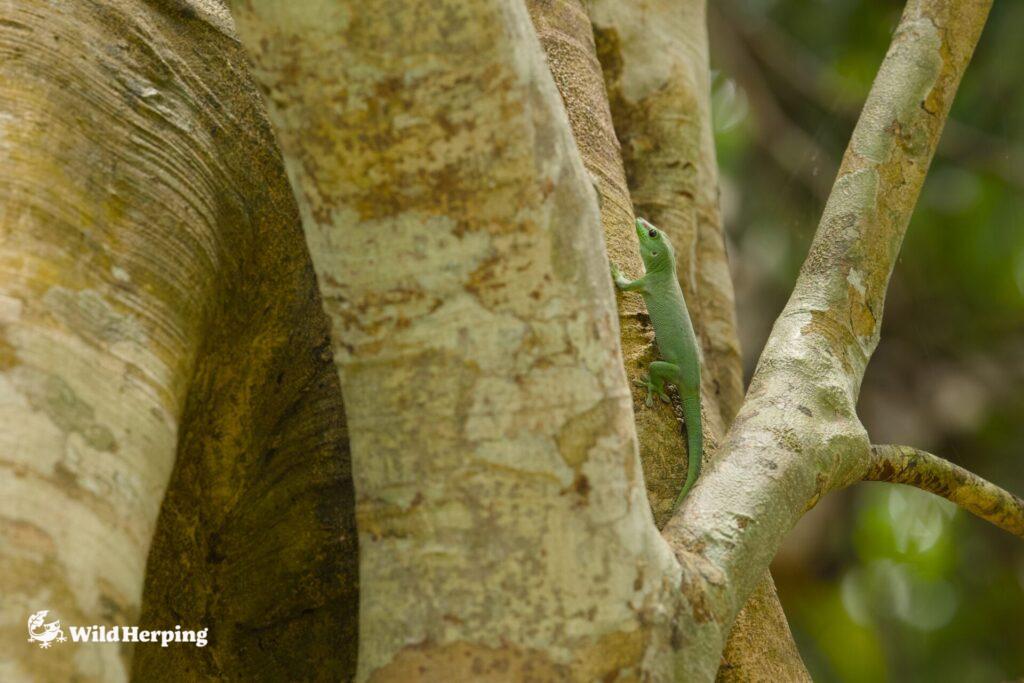
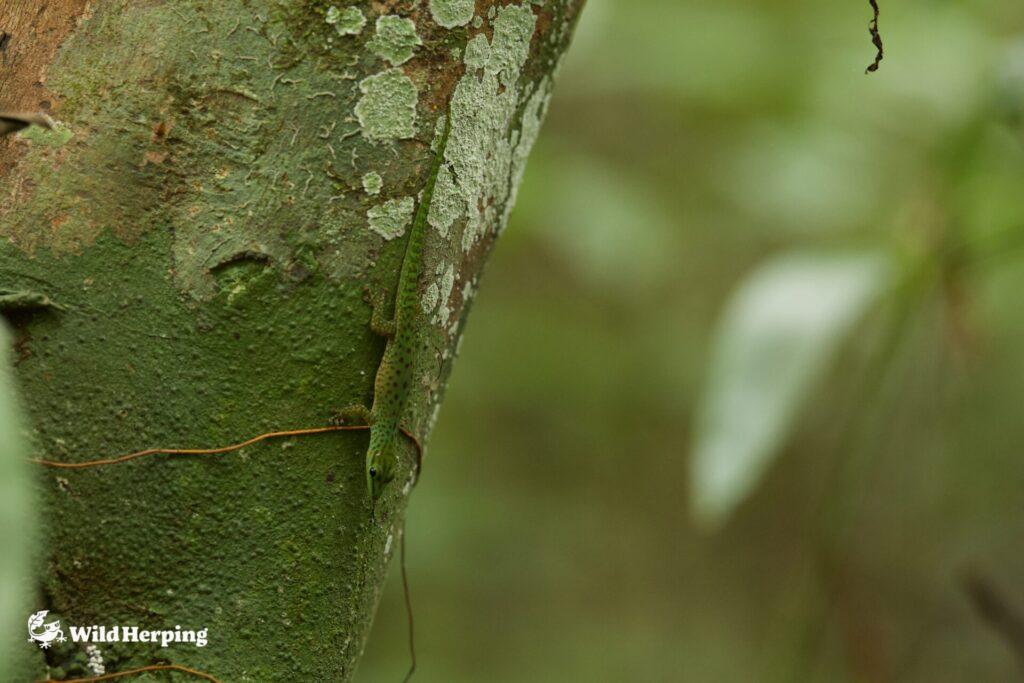
A Speckled day gecko (Phelsuma guttata) was observed exclusively within intact rainforest, where it was restricted to deep forest habitats.
nakes
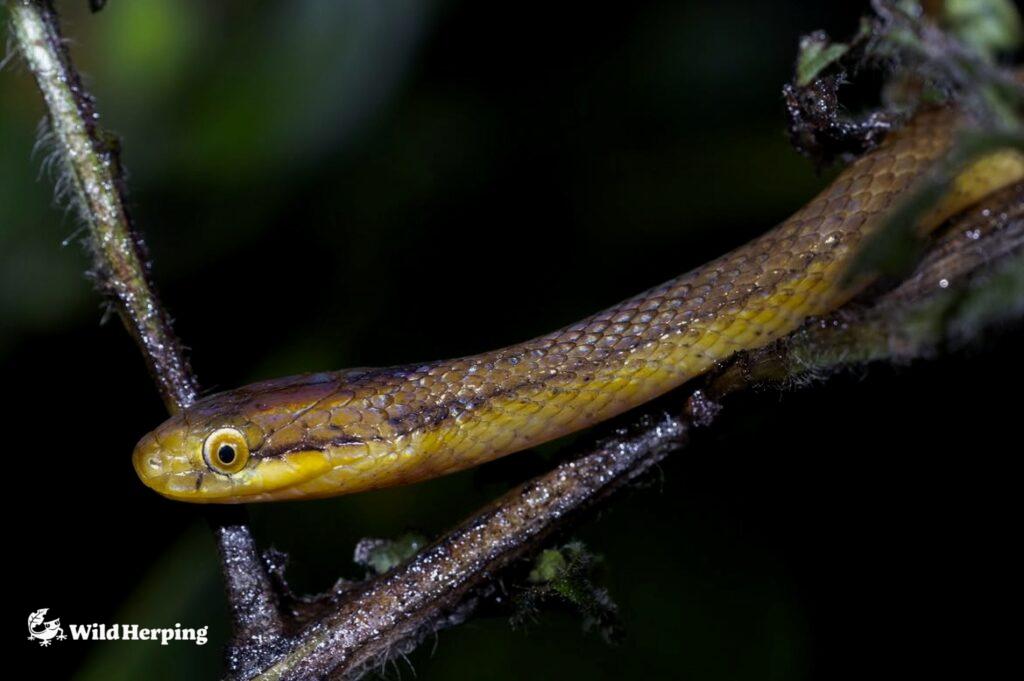
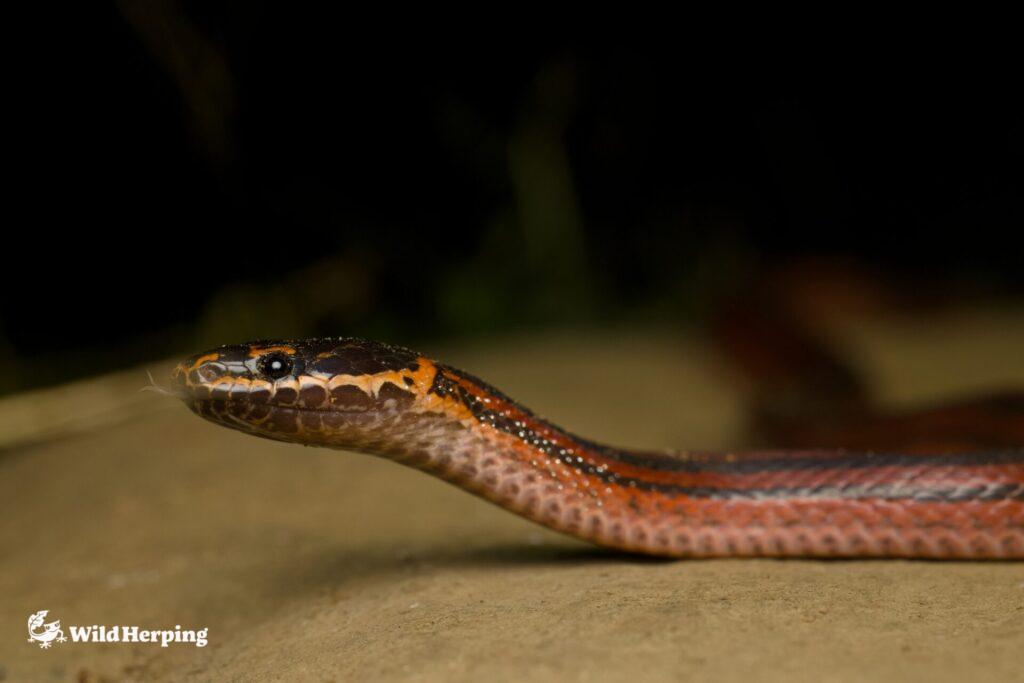
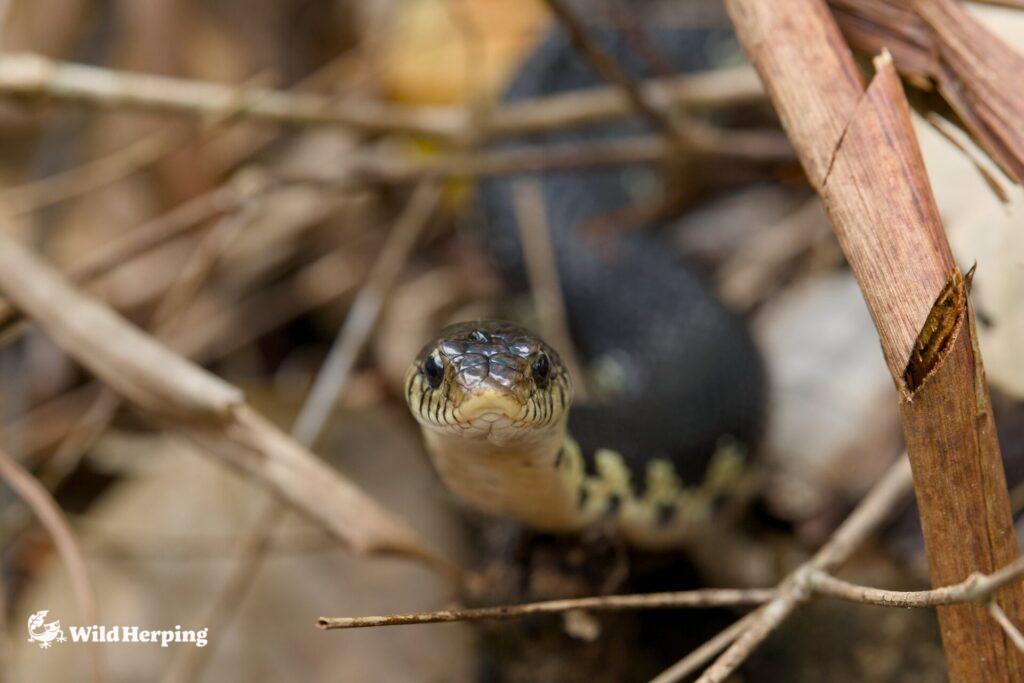
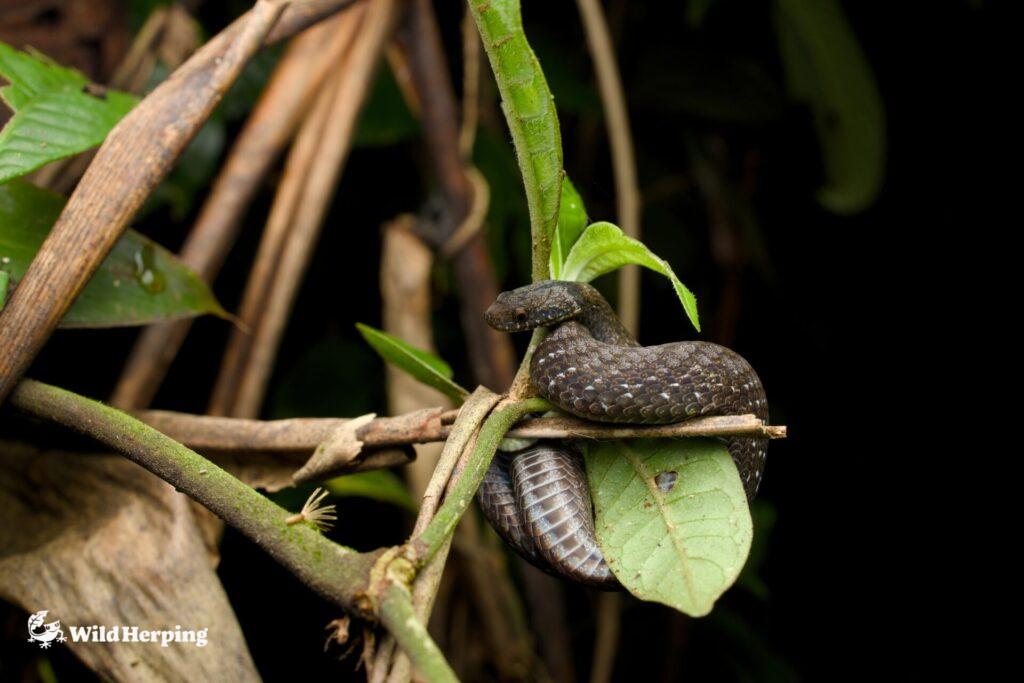
When it comes to herping, we must not forget about snakes. We observed the Malagasy Giant Hognose Snake (Leioheterodon madagascariensis), a large snake about 1.5 meters long, gracefully foraging for prey in areas where vanilla plantations spread. During nighttime observations, we also successfully spotted camouflaged snakes lying in wait for prey, such as the Brown Brook Snake (Pseudoxyrhopus microps). In Madagascar, one day I hope to observe snakes that prey on chameleons, which would be a truly remarkable sight.
Frogs Observed During the Madagascar Herping Expedition
Mantella Frogs
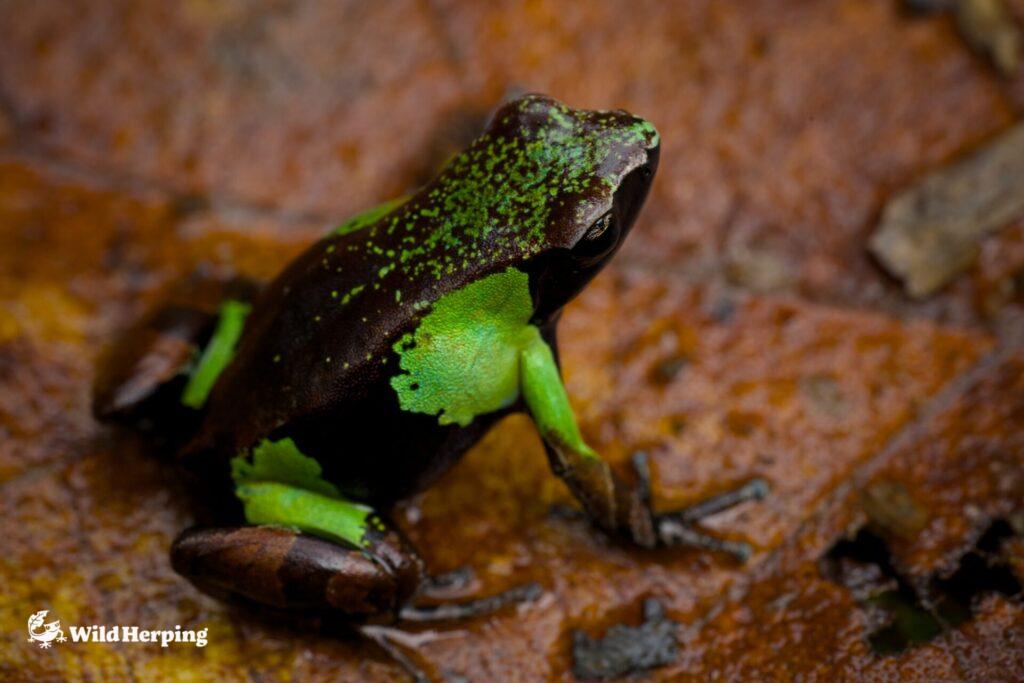
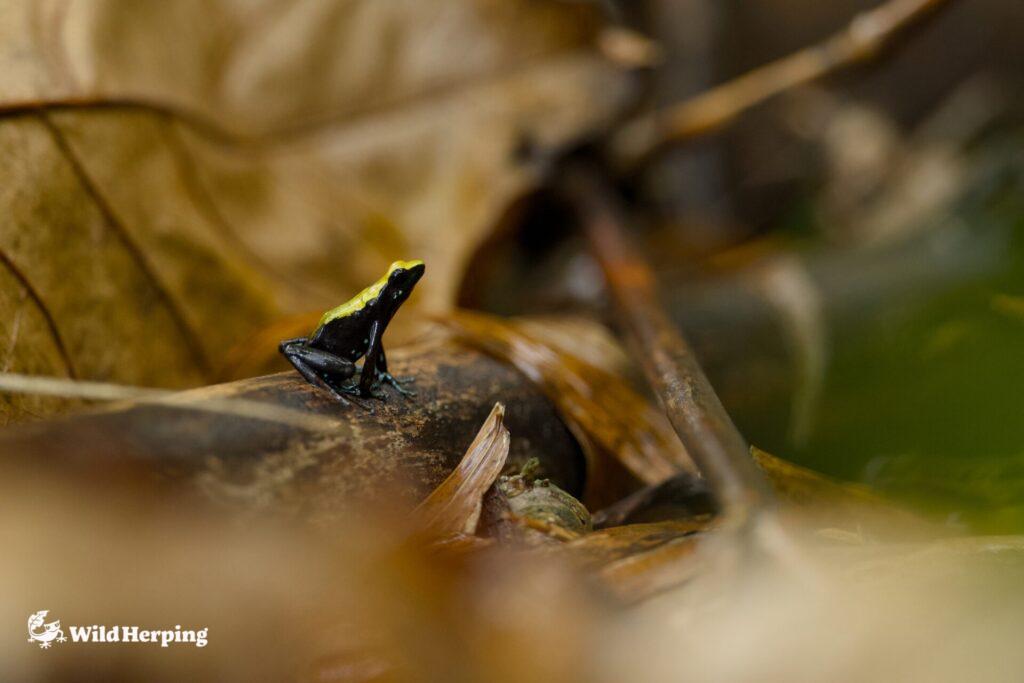
Two species of mantella frogs were recorded: Guibé’s Mantella (Mantella nigricans) and the Green-backed Mantella (Mantella laevigata). The latter was especially abundant, with calls frequently heard near the campsite, indicating a healthy population.
Other Malagasy Frogs
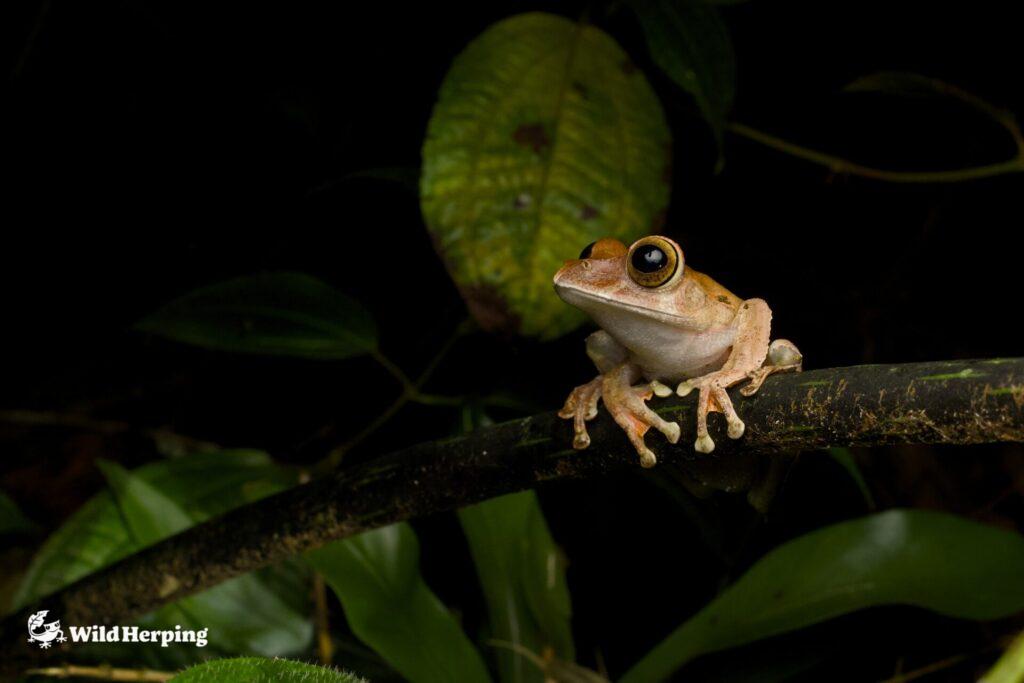
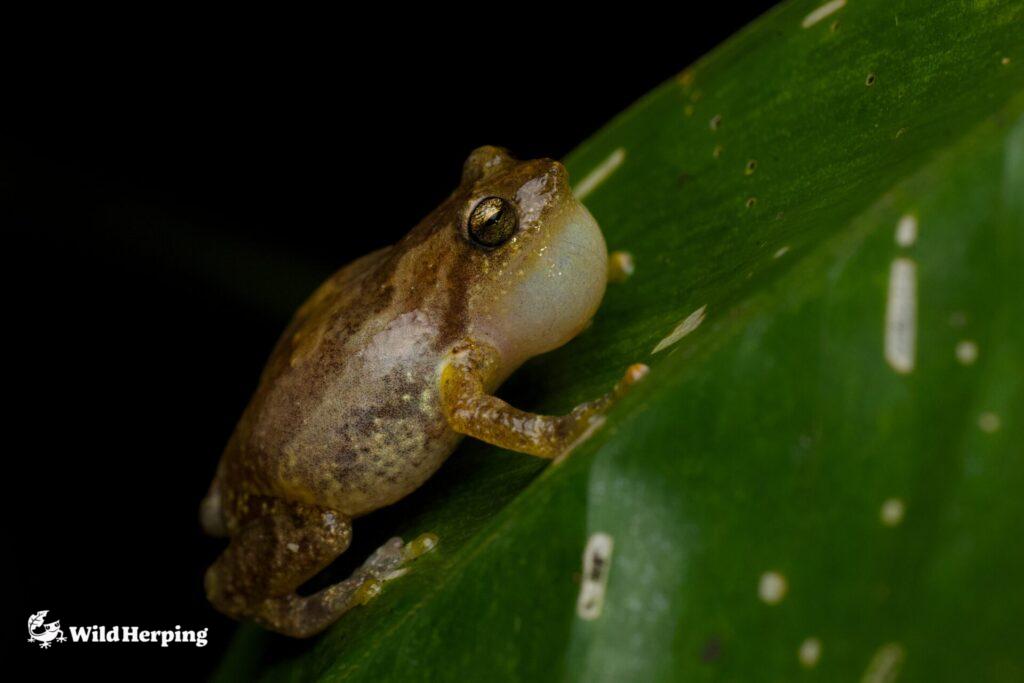
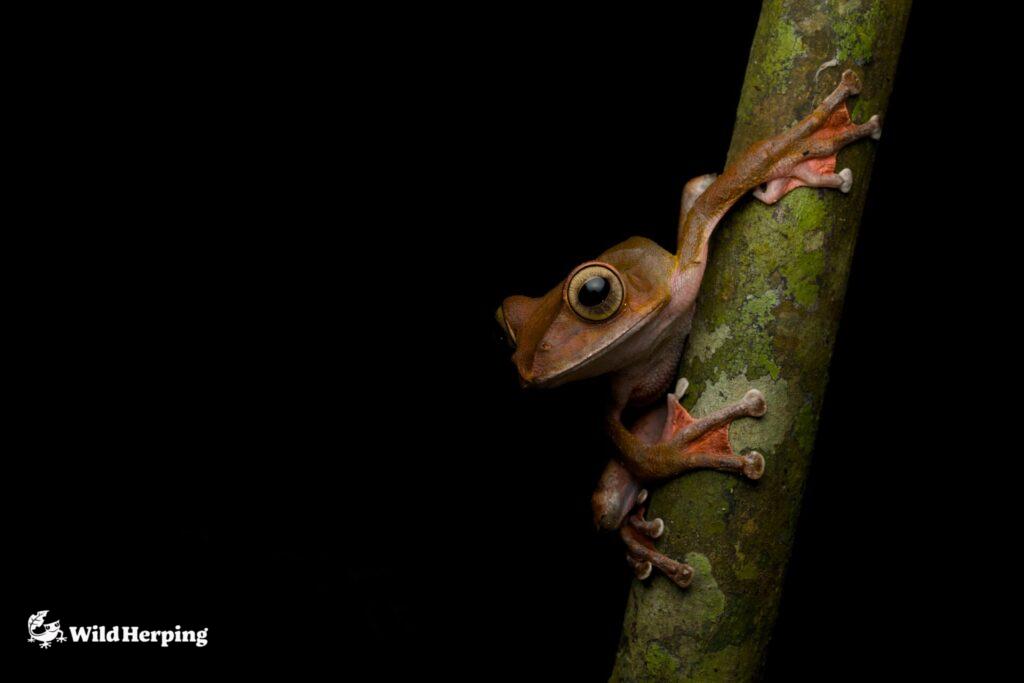
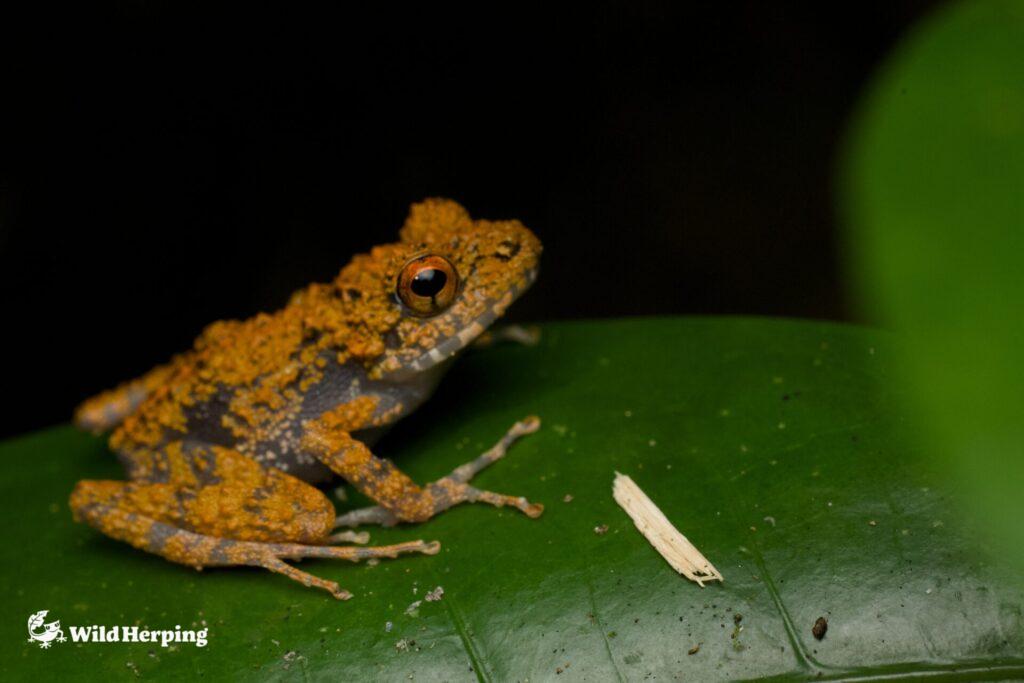
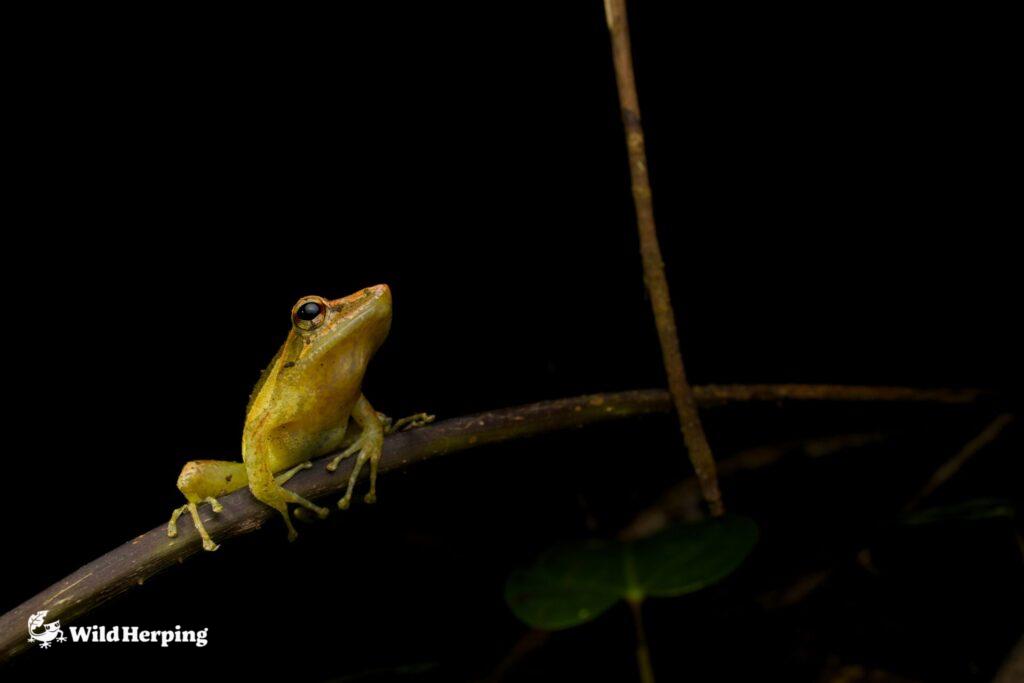
Due to the exceptional diversity of Malagasy amphibians and the presence of many undescribed species, not all frogs could be identified to species level. Frequent rainfall allowed observation of calling behavior as well as the Malagasy Flying Frog, resulting in a highly productive amphibian survey.

Summary of the Madagascar Herping Expedition
This expedition provided exceptional opportunities to observe a wide range of Madagascar reptiles and amphibians, particularly leaf-tailed geckos, chameleons, and mantella frogs within northeastern rainforest ecosystems. The combination of high rainfall, varied elevation, and intact habitats resulted in consistently productive herping conditions.
Additional wildlife observations will be presented in a subsequent report.


